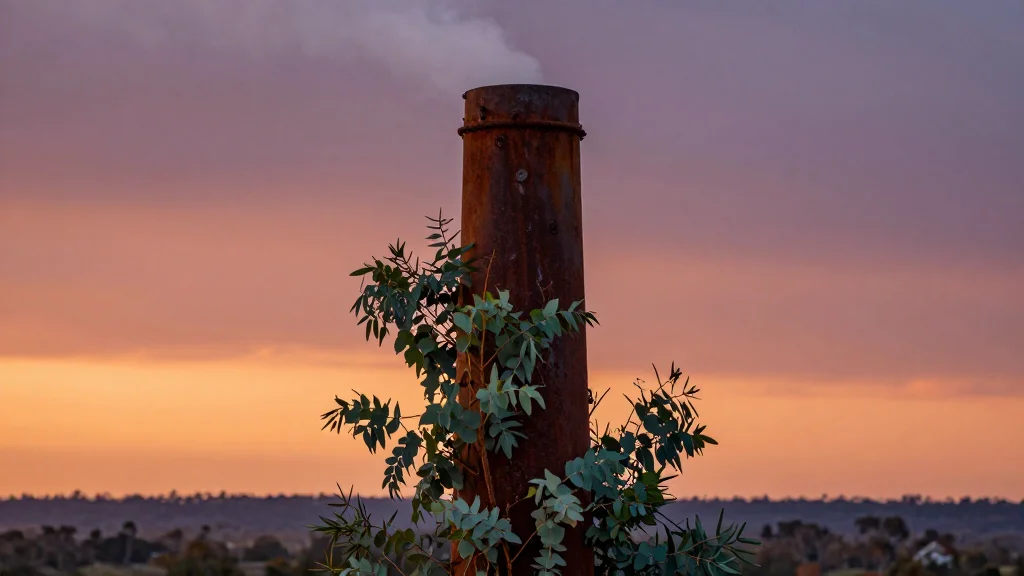
The Warning From This City to Other Towns on the Cusp of Closing Down Coal
Why It Matters
The story highlights the socioeconomic risks of abrupt energy transitions and underscores the need for robust, community‑focused “just transition” policies to avoid destabilising regional economies.
Key Takeaways
- •Port Augusta’s Northern Power Station closed May 2016, cutting 440 jobs.
- •Projected $650 million (≈$430 M USD) solar‑thermal plant never materialized.
- •Council lost $500 k (≈$330 k USD) annual revenue, raising rates.
- •Just‑transition funding varies: WA pledged $700 M (≈$460 M USD) for Collie.
- •Leigh Creek fell from 500 residents to under 100 after closure.
Pulse Analysis
Port Augusta’s experience illustrates how a rapid shift away from coal can leave a town economically stranded. When Alinta shuttered the Northern Power Station, the immediate loss of 440 jobs—260 in the mining town of Leigh Creek and 180 locally—triggered a cascade of social challenges, from soaring council rates to a sharp decline in housing values. The promised $650 million solar‑thermal project, which would have injected roughly $430 million USD into the regional economy, never got off the ground, deepening community cynicism toward renewable promises and highlighting the gap between policy rhetoric and on‑the‑ground investment.
The concept of a "just transition" has become a litmus test for governments handling coal phase‑outs. In Port Augusta, the abrupt loss of a $500 k (≈$330 k USD) annual payment to the city council forced rate hikes that strained already vulnerable households. Comparative analysis shows that jurisdictions like New South Wales have legislated community‑benefit packages, while Western Australia earmarked nearly $700 million (≈$460 million USD) for Collie’s transition. These examples suggest that targeted funding, coupled with genuine stakeholder engagement, can mitigate the social fallout that Port Augusta endured.
Looking ahead, policymakers must balance decarbonisation goals with realistic pathways for displaced workers. Successful models involve retraining programs, guaranteed employment pipelines in emerging sectors, and transparent timelines for renewable infrastructure delivery. Port Augusta’s lingering "power vacuum" and the lingering health concerns from fly‑ash dust underscore the importance of integrating environmental remediation with economic revitalisation. By learning from this cautionary case, other coal‑dependent towns can design transition strategies that preserve community cohesion while advancing Australia’s net‑zero ambitions.
The warning from this city to other towns on the cusp of closing down coal
Comments
Want to join the conversation?
Loading comments...