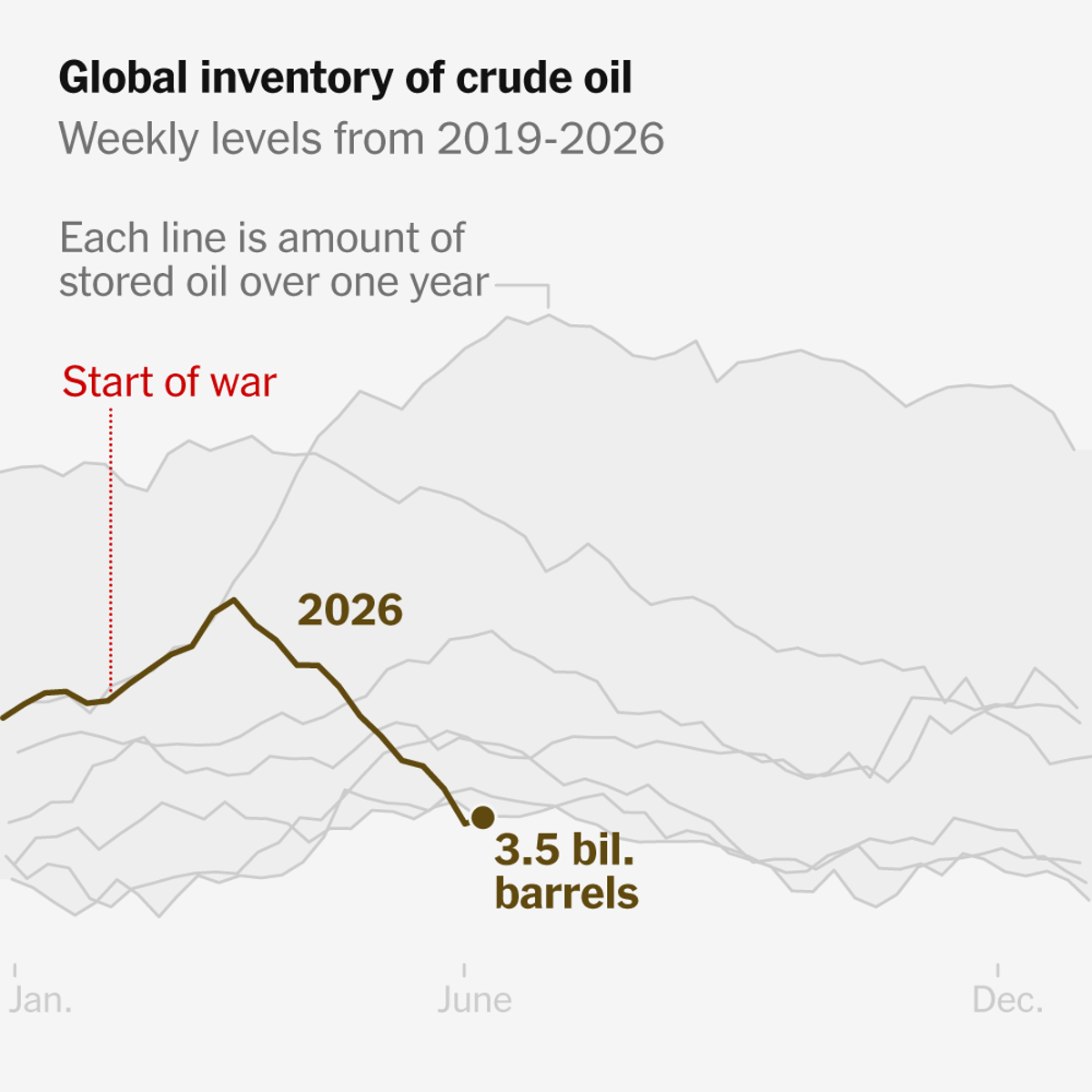
The World Is Draining Oil Reserves, Raising Pressure for a Peace Deal
Companies Mentioned
Why It Matters
The depletion of strategic reserves tightens global supply, amplifying price volatility and heightening the urgency for diplomatic resolutions to the Iran conflict. A sustained shortfall could force governments and industries to confront higher fuel expenses and supply‑chain disruptions.
Key Takeaways
- •Global oil inventories hit lowest since 1983, 349M barrels left.
- •U.S. crude stockpiles fell to 426.5M barrels, near minimum.
- •Trump‑Iran peace talks pushed oil price below $90 per barrel.
- •Experts warn Hormuz bottleneck keeps market fragile.
- •Depleting reserves could trigger higher energy costs worldwide.
Pulse Analysis
The current drawdown of global oil reserves reflects a convergence of geopolitical tension and pandemic‑era market dynamics. Since the U.S.–Israeli war with Iran began, strategic stockpiles—both government‑held and commercial—have been systematically released to cushion supply shocks. The U.S. Strategic Petroleum Reserve, once a buffer of over 600 million barrels, now mirrors its 1983 low point, underscoring how quickly the safety net can erode when demand spikes and export routes are threatened.
Market analysts point to the Strait of Hormuz as the single most critical chokepoint. Even a brief disruption could tighten an already fragile market, pushing Brent crude well above the current sub‑$90 level. While President Trump’s tentative peace overture with Iran has temporarily steadied prices, the lack of a concrete agreement leaves the supply chain vulnerable. Traders are closely watching diplomatic signals, as any escalation could trigger a rapid inventory drawdown, forcing refiners to tap emergency reserves and potentially inflating gasoline and diesel prices for consumers.
For policymakers, the situation presents a stark cost‑benefit calculus. Maintaining ample strategic reserves requires fiscal commitment, yet the economic fallout from a supply crunch—higher transportation costs, inflationary pressure on goods, and strained industrial output—could outweigh the expense of reserve replenishment. As the world edges toward a new energy equilibrium, the interplay between diplomatic progress, inventory management, and market expectations will shape oil price trajectories for the foreseeable future.
The World Is Draining Oil Reserves, Raising Pressure for a Peace Deal
Comments
Want to join the conversation?
Loading comments...