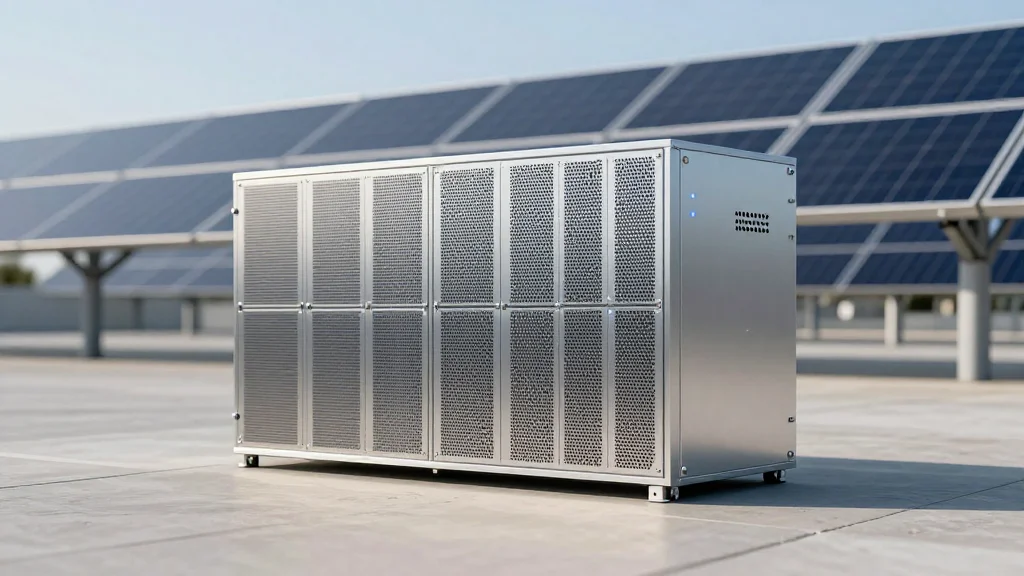
The World Is Installing Grid Batteries at a Blistering Pace
Companies Mentioned
Why It Matters
The battery surge accelerates renewable integration, cuts reliance on fossil‑fuel peaker plants, and underpins the electrification of transport, buildings and data centers.
Key Takeaways
- •112 GW of battery storage installed in 2025, ten‑fold 2021 level.
- •China installed >50% of global grid‑battery capacity last year.
- •U.S. contributed 16% of 2025 installations, driven by data‑center demand.
- •Lithium‑ion prices fell >90% over 15 years, spurring growth.
- •BNEF forecasts 158 GW in 2026 and >200 GW annually by 2030.
Pulse Analysis
The pace of grid‑scale battery deployment has entered a new era, with 112 GW added in 2025—enough to power millions of homes for a year. This explosion is anchored in a dramatic cost curve: lithium‑ion modules have shed more than 90% of their price tag over the past 15 years, making storage economically viable even in markets with modest renewable penetration. China’s dominant share reflects aggressive policy support and a massive manufacturing base, while the United States leverages storage to balance growing data‑center loads and the rollout of electric vehicles.
Beyond sheer capacity, the surge reshapes grid operations. Energy storage decouples generation from consumption, allowing solar and wind farms to capture excess output and release it during peak demand. Regions such as the United Kingdom and sub‑Saharan Africa are using batteries to replace retiring coal plants and to stabilize intermittent supply, reducing the need for costly fossil‑fuel backup. The improved storage‑to‑solar ratio—from 56:1 a decade ago to an anticipated 4:1 by year‑end—signals a maturing market where storage is no longer a peripheral add‑on but a core grid asset.
Looking ahead, BloombergNEF’s forecast of 158 GW in 2026 and over 200 GW annually by 2030 suggests sustained investor confidence and policy alignment. Continued price declines, advances in solid‑state chemistry, and the scaling of recycling infrastructure will further lower barriers. However, challenges remain: grid interconnection standards, long‑duration storage needs, and the environmental footprint of raw material extraction must be addressed to ensure the battery boom translates into a resilient, low‑carbon energy system.
The world is installing grid batteries at a blistering pace
Comments
Want to join the conversation?
Loading comments...