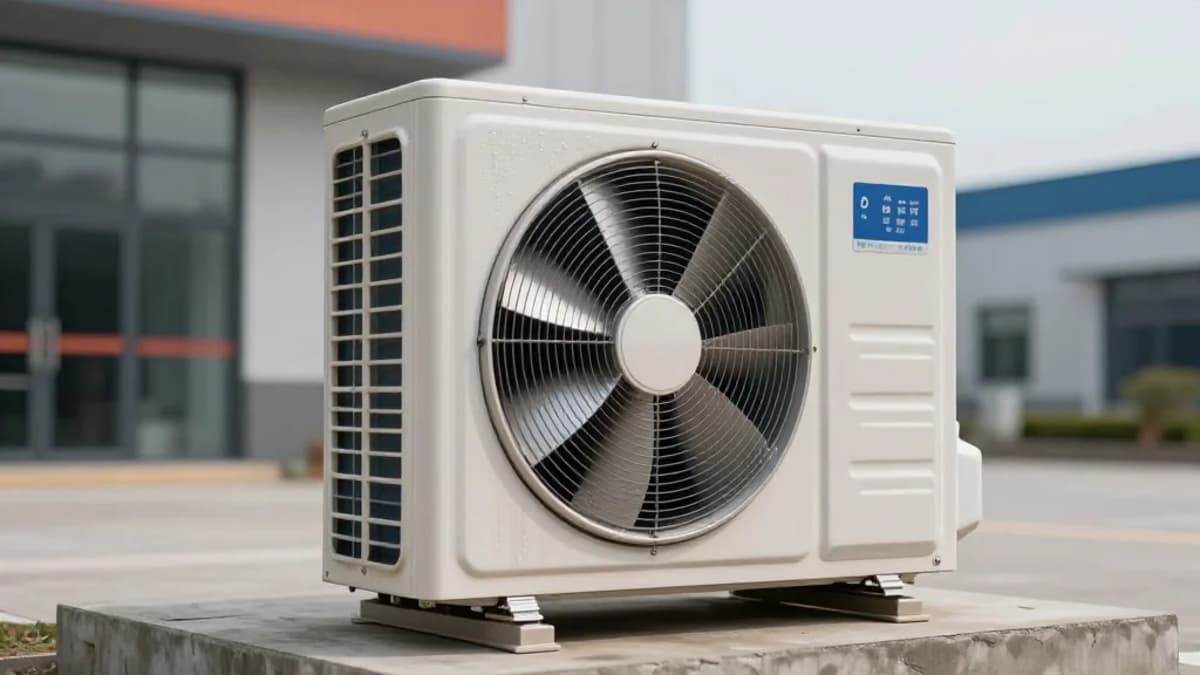
Thermocold Debuts Air-to-Water Heat Pump for Commercial Buildings
•March 9, 2026
0
Why It Matters
The high efficiency and low‑temperature performance enable commercial operators to lower energy costs while meeting tightening decarbonisation targets, accelerating heat‑pump adoption in the built‑environment market.
Key Takeaways
- •Capacity range 124‑644 kW heating, 128‑632 kW cooling.
- •COP up to 3.49, operating down to –15 °C.
- •Uses R454B or R410a refrigerants, compliant with regulations.
- •Axial EC fans reduce power and noise emissions.
- •Eligible for regional subsidy programs, easing ROI.
Pulse Analysis
Air‑to‑water heat pumps are becoming a cornerstone of Europe’s push toward net‑zero buildings, and Thermocold’s new AWA HP SEA/XEA series reinforces that trend. By covering a broad capacity envelope—from 124 kW to 644 kW for heating—the product line addresses the diverse load profiles of office towers, hotels, and hospitals. Its ability to deliver full‑capacity heating at –15 °C expands the geographic footprint of heat‑pump installations into colder climates, while the choice of low‑global‑warming‑potential refrigerants such as R454B aligns with upcoming EU F‑gas regulations.
Performance metrics set the series apart. A coefficient of performance ranging between 3.05 and 3.49 translates into roughly a 70‑80% reduction in primary energy consumption compared with conventional gas boilers. The integration of axial EC fans not only trims electrical input but also curtails acoustic output, a critical factor for urban deployments where noise ordinances are strict. Moreover, the modular design—offering 2 to 6 fans, optional water tanks, and soft‑start gear—simplifies installation and maintenance, reducing lifecycle costs and improving return on investment.
From a market perspective, the AWA HP SEA/XEA’s eligibility for regional subsidy schemes could accelerate its uptake in jurisdictions that reward high‑efficiency HVAC solutions. Competitors are racing to match these specifications, but Thermocold’s combination of wide capacity range, low‑temperature capability, and regulatory‑ready refrigerants provides a compelling value proposition for developers seeking to future‑proof their assets. As commercial real‑estate owners prioritize energy resilience and carbon reporting, heat‑pump technologies like Thermocold’s are poised to capture a growing share of new construction and retrofit projects.
Thermocold debuts air-to-water heat pump for commercial buildings
0
Comments
Want to join the conversation?
Loading comments...