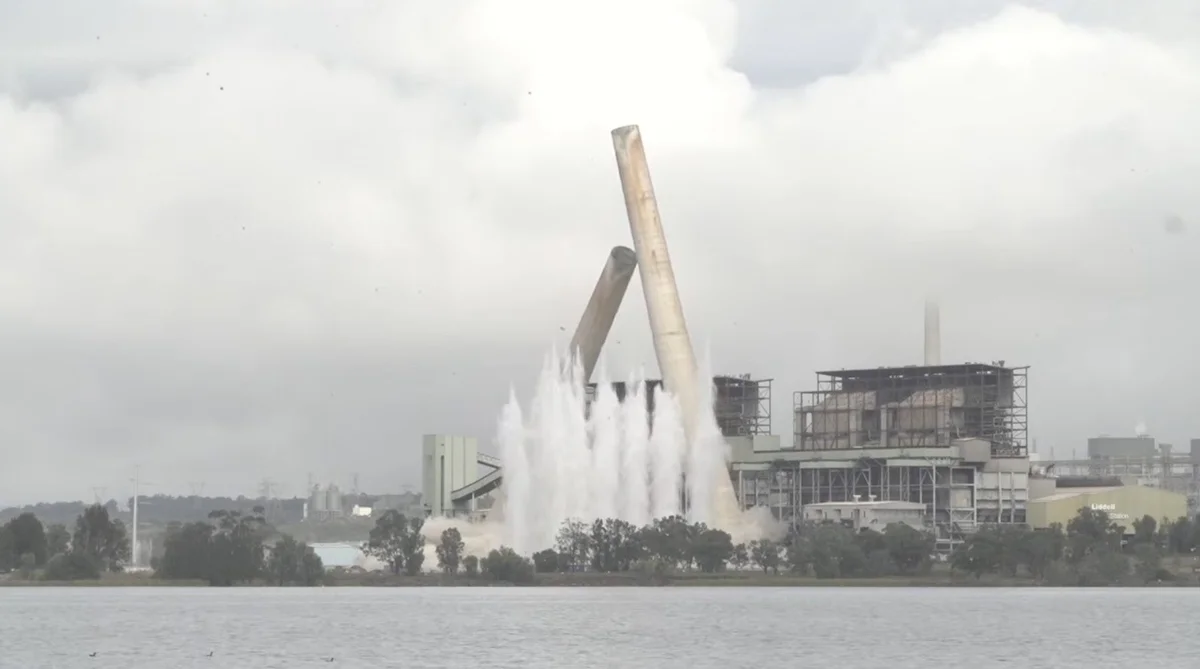
“They’re Gone:” End of an Era as Liddell Coal Plant Chimneys Demolished in Spectacular Explosion
Why It Matters
The chimney demolition underscores the rapid transition from coal to renewable‑energy infrastructure in regional Australia, signaling new investment opportunities and job creation while marking the final physical removal of legacy fossil‑fuel assets.
Key Takeaways
- •Two 169‑metre chimneys collapsed using 260 kg of explosives each
- •Demolition attracted 6,000 live viewers and local community applause
- •AGL cleared asbestos and weakened concrete walls over three years
- •Mayor expects over 40 renewable‑energy firms to locate at Liddell
- •Missed $5 million (≈$3.3 million USD) grant hampers master‑plan development
Pulse Analysis
The dramatic implosion of Liddell’s twin chimneys not only provided a visual closure to a plant that powered New South Wales for six decades, it also highlighted the logistical challenges of de‑commissioning coal infrastructure. AGL spent three years stripping asbestos, weakening concrete shafts and coordinating precise explosive timing to protect nearby ecosystems and the emerging 250‑MW battery installation. By broadcasting the event, the company turned a technical operation into a public moment, reinforcing transparency and community engagement as the site transitions to a renewable‑energy hub.
For the Muswellbrook region, the demolition is a catalyst for economic diversification. The mayor cited interest from more than 40 businesses—ranging from solar‑panel manufacturers to agribusiness processors—drawn by existing transmission lines, rail access and the promise of stable power supply. While the closure of Liddell eliminated dozens of direct plant jobs, the burgeoning renewable‑energy zones and the battery storage project are expected to generate construction and maintenance roles, shifting the local labor market toward higher‑skill, technology‑focused positions. However, the recent loss of an approximately $3.3 million USD federal grant hampers the council’s ability to fast‑track a comprehensive master plan, underscoring the importance of coordinated public‑private funding in regional transition strategies.
Liddell’s chimney demolition mirrors a broader global trend: coal plants are being retired faster than their physical structures can be safely repurposed. Safety concerns, such as concrete degradation and residual asbestos, often force operators to opt for controlled implosions rather than preservation. This approach accelerates site clearance, enabling quicker deployment of renewable assets but also raises questions about heritage conservation and community identity. As Australia phases out coal, policymakers must balance rapid infrastructure turnover with support mechanisms that ensure affected towns retain economic vitality and cultural continuity.
“They’re gone:” End of an era as Liddell coal plant chimneys demolished in spectacular explosion
Comments
Want to join the conversation?
Loading comments...