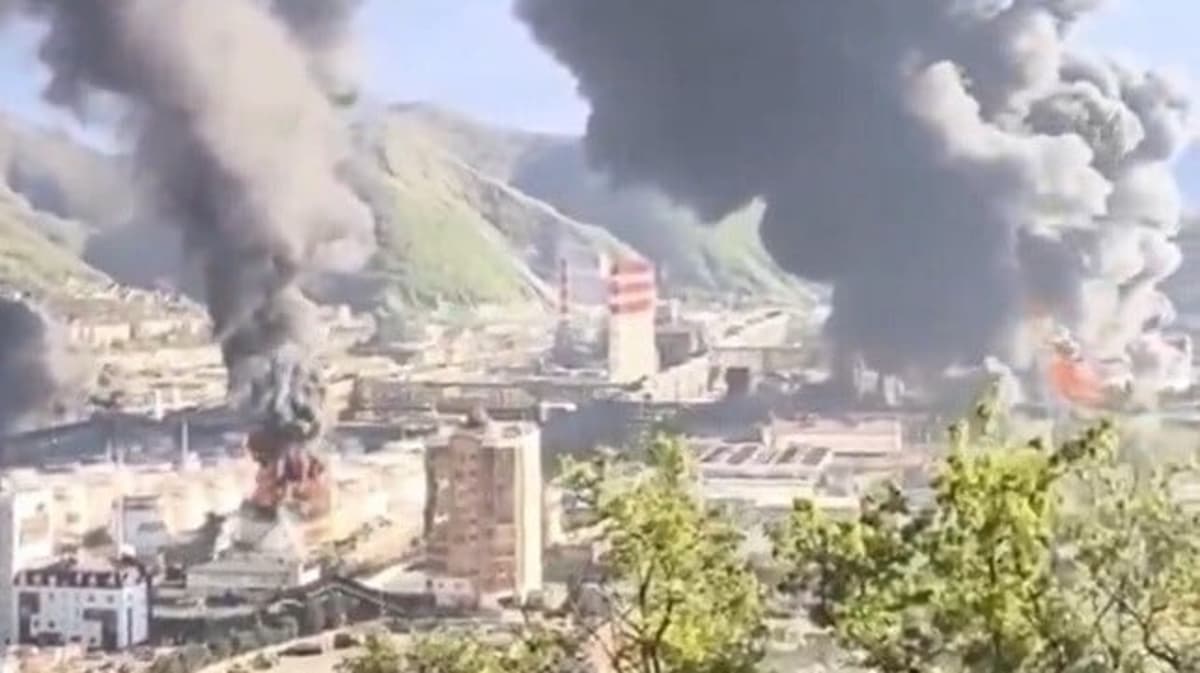
Third Ukrainian Strike Damages Russian Oil Terminal at Tuapse
Why It Matters
Disrupting Tuapse chips away at Russia’s oil export revenue and showcases Ukraine’s growing ability to strike strategic energy nodes far from the front line, potentially reshaping global oil supply dynamics.
Key Takeaways
- •Ukraine's drones struck Tuapse three times in April 2024
- •Facility refines ~12 million tonnes, 4‑5% of Russia's capacity
- •Attacks caused tank explosions, oil spill, beach tarballs
- •Residents evacuated; fire smoke reached thundercloud heights
- •Strikes pressure Russia's oil revenue amid global supply crunch
Pulse Analysis
Ukraine’s drone campaign has evolved from tactical harassment to strategic interdiction of Russia’s energy lifelines. By targeting Tuapse—a Black Sea port that refines roughly 12 million tonnes of crude each year—Kyiv is striking a node that accounts for 4‑5% of the nation’s refining capacity. The attacks, executed on April 16, 20 and 27, demonstrate a sophisticated ability to bypass layered air defenses, leveraging long‑range unmanned systems that can reach deep into Russian territory. This escalation reflects a broader shift toward using autonomous platforms to impose economic costs on an adversary.
The immediate fallout from the latest strike is both environmental and economic. Explosions ruptured dozens of storage tanks, releasing heavy fuel oil into the Black Sea and contaminating nearby beaches with tarballs. Local authorities evacuated residents and warned of hazardous smoke that rose to thundercloud levels. For Russia, the damage translates into lost refining throughput, repair costs, and a dip in export earnings at a time when oil revenues fund its military operations. Global markets have already felt pressure from the concurrent Hormuz crisis, and the Tuapse disruptions add another layer of uncertainty to supply forecasts.
Looking ahead, the persistence of Ukraine’s deep‑strike drones could force Moscow to reallocate air‑defense assets and harden its energy infrastructure, potentially diverting resources from the front lines. The attacks also signal to other nations that remote, high‑altitude drone strikes are a viable tool for economic warfare. As the conflict drags on, the ability to intermittently choke off Russian oil exports may influence price trajectories and shape diplomatic negotiations around energy security. Stakeholders in the energy sector should monitor further developments, as each successful strike could compound the fiscal strain on Russia and alter the balance of power in the broader geopolitical arena.
Third Ukrainian Strike Damages Russian Oil Terminal at Tuapse
Comments
Want to join the conversation?
Loading comments...