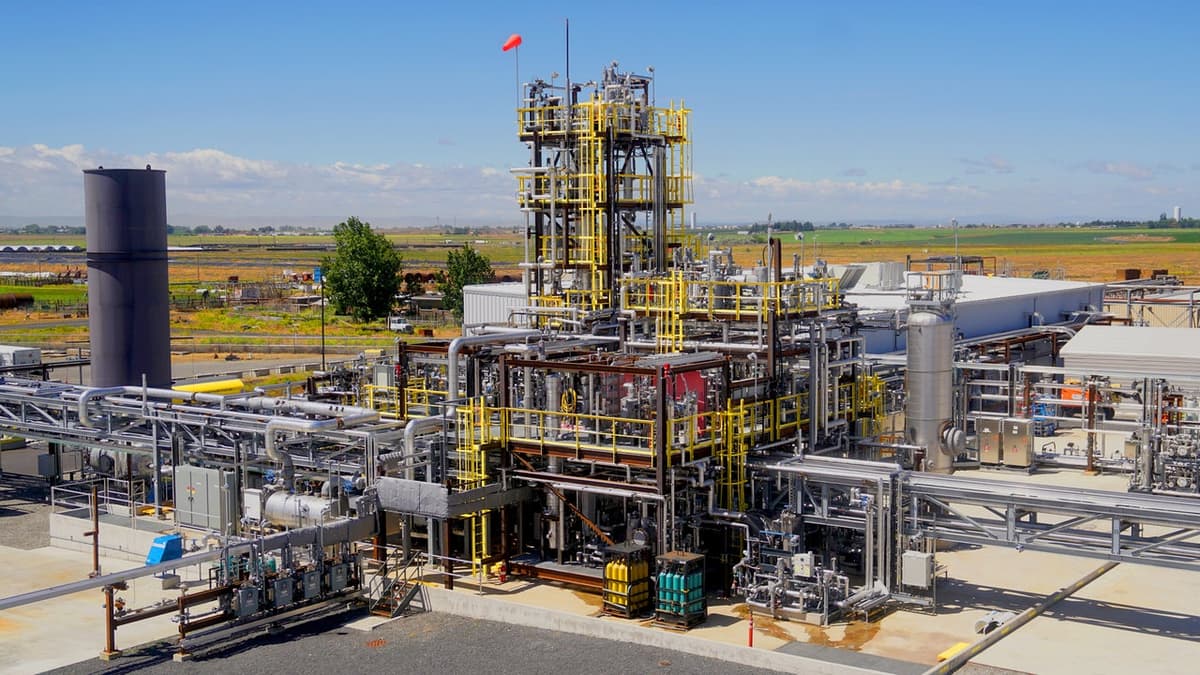
This New Factory Just Commercialized Jet Fuel Made From CO2
Why It Matters
The fuel offers up to 90 % lower lifecycle emissions and price certainty independent of volatile oil markets, giving airlines a viable path to decarbonize and secure supply.
Key Takeaways
- •AirPlant One begins commercial production of CO2-derived jet fuel
- •Initial output 55,000 gallons annually, scaling to tens of millions
- •Fuel offers up to 90% lower lifecycle emissions than conventional jet fuel
- •Alaska Airlines will use the fuel once carbon intensity targets are met
- •Synthetic fuel can be priced via long‑term electricity and CO2 contracts
Pulse Analysis
The opening of AirPlant One marks the first commercial-scale facility that converts captured carbon dioxide into drop‑in jet fuel. Using renewable electricity, the plant transforms CO2 from an ethanol plant into syngas, then into synthetic crude that meets the exact specifications of conventional kerosene. Although the current output is modest—about 55,000 gallons per year—the design is built for rapid expansion, with plans for future plants capable of producing tens of millions of gallons annually. This approach leverages abundant domestic CO2 streams, turning a waste product into a high‑value energy carrier.
Alaska Airlines, an early investor, will begin blending the fuel once Twelve meets its carbon‑intensity benchmarks, signaling airline confidence in synthetic alternatives. The product’s chemistry is identical to petroleum‑based fuel, allowing immediate use in existing aircraft under the FAA’s 50 % blend limit. While the current price exceeds conventional jet fuel, the cost structure is anchored to long‑term electricity and CO₂ contracts, offering price predictability independent of volatile oil markets. Partnerships such as Microsoft’s purchase of Scope 3 carbon credits further offset early expenses, illustrating how corporate sustainability budgets can accelerate market entry.
The emergence of CO₂‑derived jet fuel reshapes the aviation decarbonization narrative beyond emissions reductions. By securing a domestic, contract‑backed supply, airlines gain resilience against geopolitical shocks that have recently spiked jet‑fuel prices. As more players like Infinium launch similar plants, economies of scale are expected to drive costs toward parity with renewable electricity, making sustainable aviation fuel a viable long‑term substitute. Policymakers and investors will likely prioritize such carbon‑capture pathways, accelerating the transition toward a lower‑carbon, more secure global air transport system.
This new factory just commercialized jet fuel made from CO2
Comments
Want to join the conversation?
Loading comments...