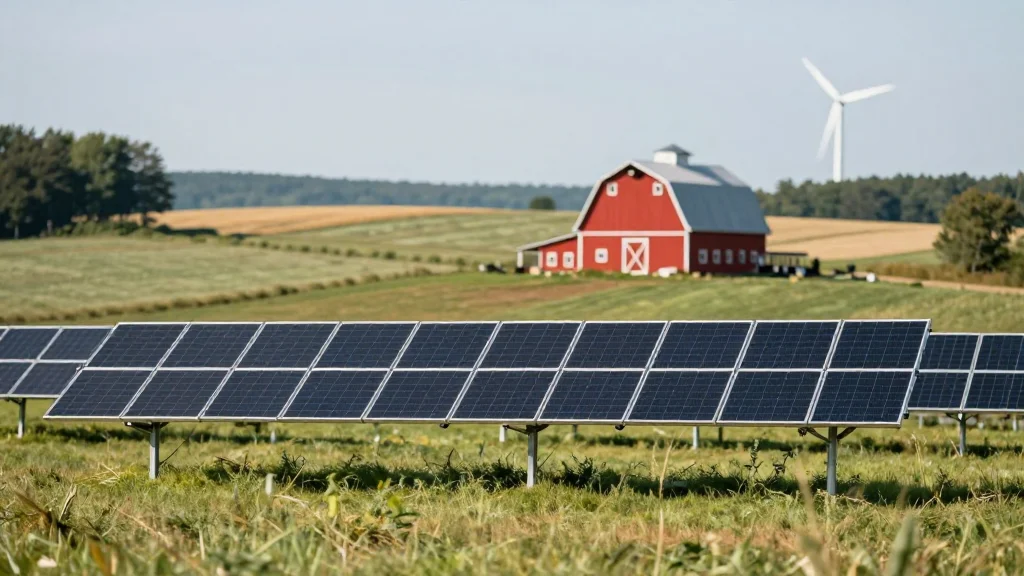
This Vermont Town Embraced a Wind Farm. Solar Is a Different Story.
Companies Mentioned
Why It Matters
The fight pits Vermont’s urgent need for low‑cost, carbon‑free power against local opposition that could stall statewide renewable‑energy goals and set precedents for land‑use policy across the region.
Key Takeaways
- •Northland Solar proposes 5 MW farm on 44‑acre Lowell hayfield.
- •Residents fear visual impact, loss of community space, low tax revenue.
- •Vermont must add 42‑80 MW solar yearly to meet targets.
- •Proposed farmland bills could block >1 MW projects statewide.
- •Solar farm yields ~$20k state tax vs $600k wind tax benefit.
Pulse Analysis
Vermont has positioned itself as a leader in the U.S. clean‑energy transition, aiming to replace fossil‑fuel generation with renewables faster than most states. The target translates into a need for dozens of megawatts of utility‑scale solar each year, a technology that can be deployed quickly and at relatively low cost. Yet the Lowell case illustrates a growing paradox: communities that once welcomed wind turbines now resist solar farms that threaten cherished vistas and public spaces. This tension is not unique to Vermont; a Columbia University study shows a 32 % rise in contested renewable projects nationwide, reflecting a broader backlash as the siting of large‑scale infrastructure collides with local identity and land‑use priorities.
Policy makers are attempting to reconcile these competing pressures. Legislative proposals to bar solar on "primary agricultural soils"—roughly one‑sixth of Vermont’s six million acres—could effectively shut down projects larger than one megawatt, curbing the state’s ability to meet its 2030 climate benchmarks. Proponents argue that protecting high‑quality farmland preserves food security, while opponents point out that most projected land loss stems from housing, not solar, and that agrivoltaic models can generate both clean electricity and agricultural revenue. The debate underscores the need for flexible siting strategies, such as leveraging industrial rooftops or parking structures, even though those alternatives raise costs by 50‑100 %.
The Lowell dispute also offers a micro‑economic lens on renewable incentives. The wind turbines that earned the town roughly $600,000 in annual payments generate far more tax revenue than the proposed solar array, which would contribute about $20,000 to the state and a modest municipal share. This disparity fuels community skepticism, especially when developers offer higher purchase prices for farmland, effectively outbidding local buyers. As the Public Utility Commission prepares to rule, the decision will signal whether Vermont can harmonize its climate agenda with rural sensibilities, or whether local opposition will force a recalibration of how and where renewable assets are sited across the state.
This Vermont town embraced a wind farm. Solar is a different story.
Comments
Want to join the conversation?
Loading comments...