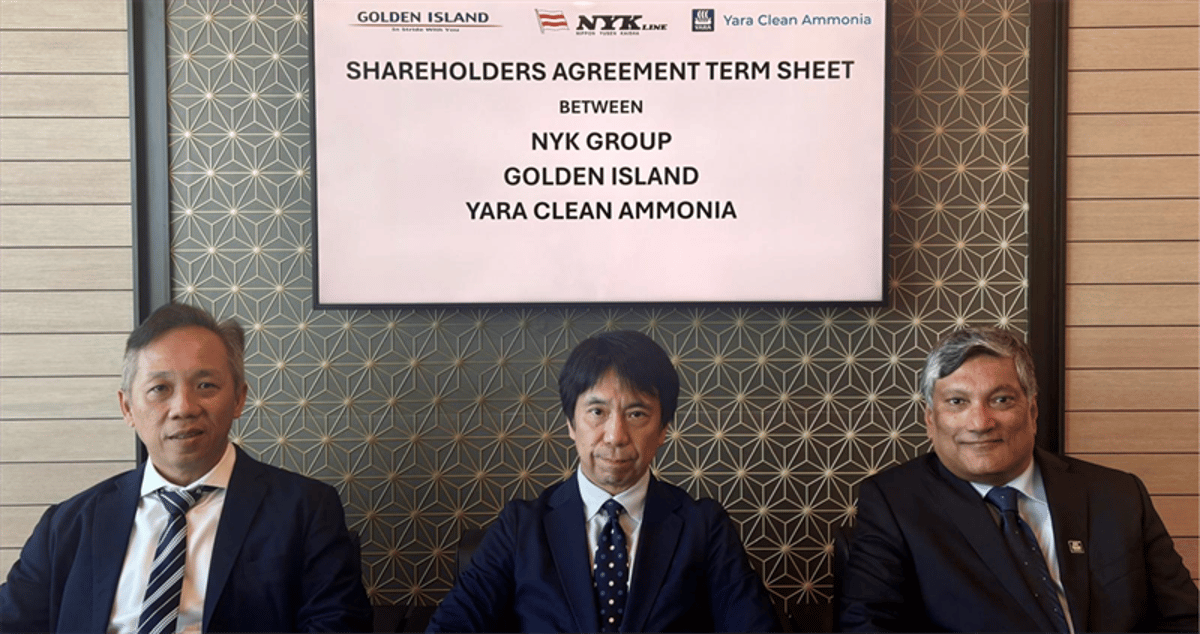
Three-Party Union in Singapore Targets Low-Carbon Ammonia as Marine Fuel
Companies Mentioned
Why It Matters
The collaboration accelerates the commercial rollout of zero‑or‑near‑zero‑emission ammonia, helping the maritime sector meet 2050 decarbonisation targets and cementing Singapore’s role as a global green‑fuel hub.
Key Takeaways
- •NYK Bulkship, Golden Island, Yara sign non‑binding term sheet
- •Partnership aims to launch low‑carbon ammonia bunkering in Singapore
- •NYK operates 900‑plus vessels, targeting net‑zero by 2050
- •Singapore positioned as global hub for ammonia marine fuel scaling
Pulse Analysis
Maritime decarbonisation is reaching a tipping point as regulators and ship owners hunt for fuels that can slash greenhouse‑gas emissions without compromising range or safety. Low‑carbon ammonia, which can be produced from renewable electricity, offers a zero‑or‑near‑zero‑emission (ZNZ) solution that sidesteps the storage challenges of hydrogen while delivering comparable energy density. Global initiatives, from the IMO’s 2050 carbon‑intensity target to national green‑fuel mandates, are driving investment in ammonia production, transport, and bunkering infrastructure.
The NYK‑Golden Island‑Yara alliance blends complementary strengths to fast‑track that infrastructure in Singapore, one of the world’s busiest ports and a self‑declared maritime decarbonisation hub. NYK brings operational expertise from its 900‑plus‑vessel fleet and LNG bunkering experience, Golden Island contributes four decades of local bunker logistics, and Yara supplies the technical know‑how to produce, store, and handle ammonia safely. Their non‑binding term sheet outlines a roadmap to establish a “last‑mile” supply chain, from on‑shore storage to ship‑to‑ship transfers, with a target launch window before 2030. This partnership signals confidence that commercial ammonia bunkering can move from pilot projects to scalable operations.
If successful, the Singapore model could be replicated in other strategic ports, reshaping the marine fuel market and creating a new revenue stream for bunker suppliers. However, challenges remain, including the need for robust safety standards, retrofitting vessels for ammonia combustion, and securing cost‑competitive renewable ammonia. Stakeholders will watch closely as the trio navigates these hurdles, because a functional ammonia ecosystem could accelerate the industry’s net‑zero timeline and unlock significant emissions reductions across global shipping.
Three-party union in Singapore targets low-carbon ammonia as marine fuel
Comments
Want to join the conversation?
Loading comments...