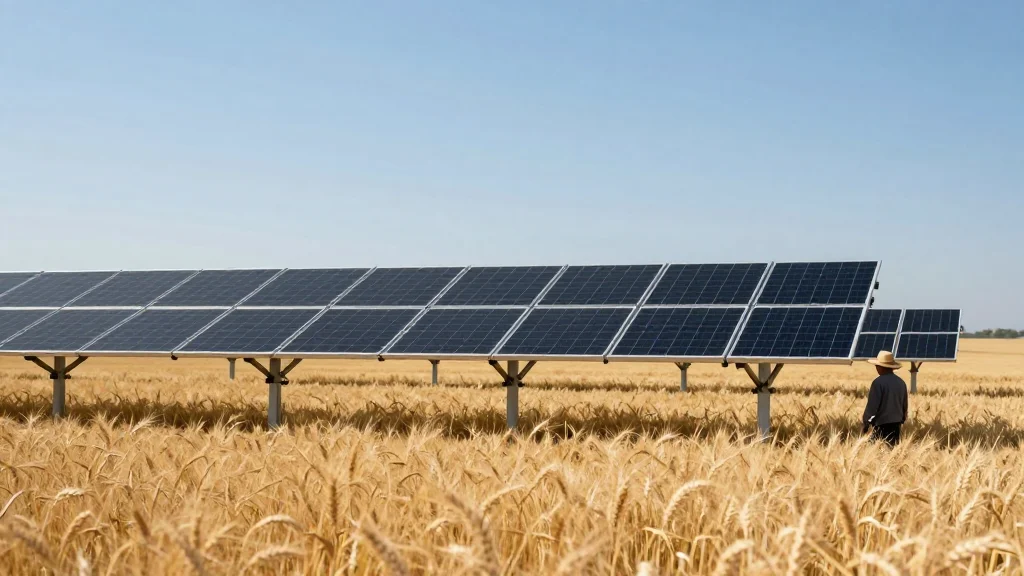
To Promote Renewable Energy with Farming, Odisha to Bring in AgriPV Policy by 2027: Dy CM Kanak Vardhan Singh Deo
Why It Matters
The policy creates a dual revenue model for farmers while accelerating Odisha’s clean‑energy transition, addressing both rural livelihoods and national climate commitments. It signals a scalable template for other Indian states grappling with land‑use constraints and renewable goals.
Key Takeaways
- •Odisha aims to launch AgriPV policy by 2027
- •Policy targets lakhs of farmers for extra solar income
- •AgriPV merges crops with solar panels, boosting land productivity
- •Limited adoption drives need for incentives and investment
- •Supports state renewable targets and climate‑resilient growth
Pulse Analysis
Across the globe, agricultural photovoltaics are emerging as a pragmatic solution to the competing demands of food security and renewable energy. In India, where agriculture occupies roughly 60% of the land base, integrating solar arrays with crop production can unlock idle or marginal fields for clean power without displacing farmers. Odisha, a state with a strong agrarian backbone and ambitious renewable targets, is positioning itself at the forefront by drafting a dedicated AgriPV policy that will codify standards, subsidies, and land‑use guidelines.
For farmers, the financial upside is compelling. A modest 1‑megawatt solar installation can generate upwards of $150,000 in annual revenue, a figure that can supplement traditional crop earnings, especially during off‑season periods. By allowing panels to be elevated or spaced to accommodate irrigation and sunlight, yields remain stable while electricity sales to the grid provide a reliable cash flow. However, barriers such as upfront capital costs, technical know‑how, and fragmented land ownership have kept adoption low. The upcoming policy seeks to address these gaps through low‑interest loans, capacity‑building programs, and streamlined permitting processes.
The broader economic and environmental implications are significant. Scaling AgriPV could help Odisha meet its 2030 renewable‑energy goal of 30 GW, reducing dependence on coal and cutting greenhouse‑gas emissions. Moreover, the model offers a replicable blueprint for other Indian states facing similar land‑use dilemmas. Successful implementation will hinge on coordinated action among government agencies, private investors, and farmer cooperatives, making the policy’s rollout a critical test of India’s ability to fuse agronomy with the clean‑energy transition.
To promote renewable energy with farming, Odisha to bring in AgriPV policy by 2027: Dy CM Kanak Vardhan Singh Deo
Comments
Want to join the conversation?
Loading comments...