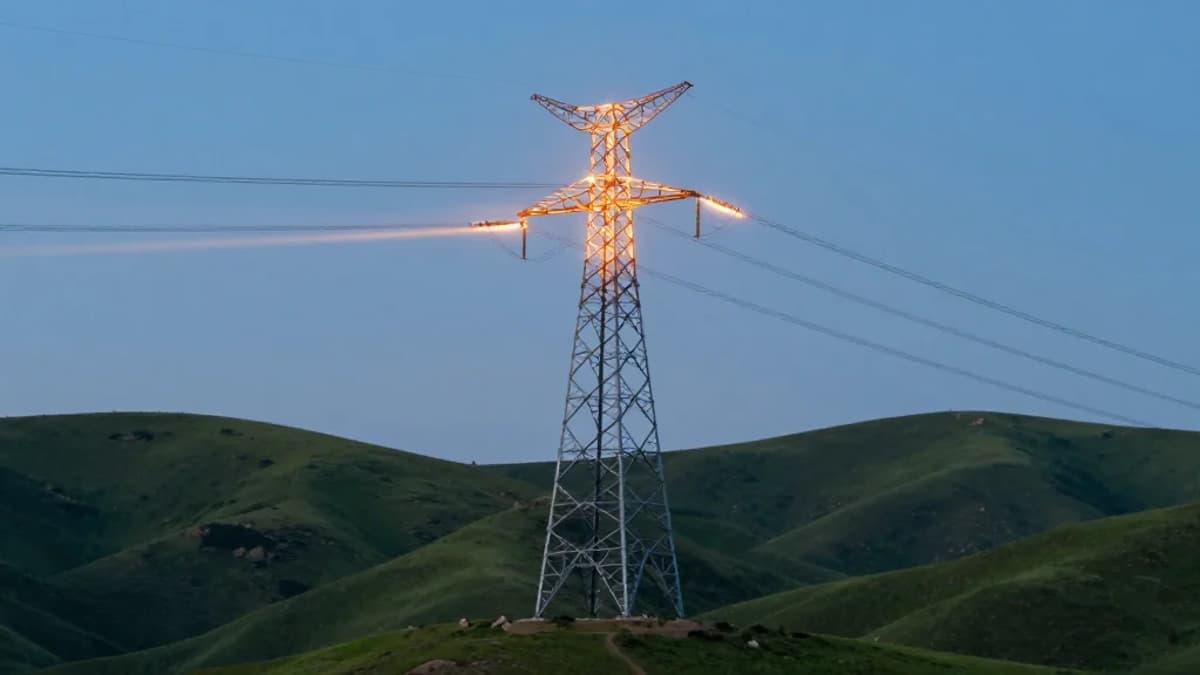
Transgrid Seeks $1.1 Billion in Extra Transmission Costs for Interstate Interconnector
•February 17, 2026
0
Why It Matters
If approved, the tariff increase will raise electricity costs for millions while testing the regulator’s willingness to pass infrastructure overruns onto consumers, influencing future large‑scale grid investments. The decision also signals how Australia will fund the transition to a fully renewable grid.
Key Takeaways
- •Transgrid seeks $1.1 bn from consumers via AER.
- •EnergyConnect total cost now $4.1 bn, $1.5 bn overrun.
- •Project promises $964 m net benefit after costs.
- •Delays caused by floods, COVID, inflation, JV collapse.
- •Additional charge could cut projected savings by up to 80%
Pulse Analysis
The 900‑kilometre EnergyConnect interconnector, linking South Australia with New South Wales and extending into Victoria via the VNI West line, is a cornerstone of the Australian Energy Market Operator’s grid roadmap. Designed to unlock abundant wind and solar resources in south‑west NSW and to bolster South Australia’s target of 100 percent renewable generation by 2027, the project was initially approved at $2.6 billion. Today, Transgrid reports a total capital requirement of $4.1 billion, reflecting a $1.5 billion escalation that it attributes to a series of unforeseen external pressures.
Transgrid’s request to the Australian Energy Regulator (AER) seeks to shift roughly $1.1 billion of the overrun onto household and business electricity tariffs. The company contends that, after accounting for an estimated $964 million net economic benefit, the burden on consumers is justified. Critics warn that the additional charge could erode projected savings by up to 80 percent, translating to a modest $5 annual increase for most users. The overruns stem from 2022‑23 flooding, pandemic‑related disruptions, soaring inflation, labour shortages and the collapse of a joint‑venture partner, all of which have strained project timelines and budgets.
The regulator’s decision will set a precedent for how Australia finances large‑scale transmission upgrades essential to the nation’s clean‑energy transition. Approving the tariff hike could signal a willingness to pass cost overruns onto ratepayers, potentially raising financing costs for future grid projects and prompting investors to demand stronger cost‑control mechanisms. Conversely, rejecting the request may force Transgrid’s shareholders to inject additional equity, altering the risk profile of infrastructure funds that back such ventures. Either outcome will influence policy discussions around network fee reforms, the equitable distribution of renewable integration costs, and the overall resilience of the National Electricity Market.
Transgrid seeks $1.1 billion in extra transmission costs for interstate interconnector
0
Comments
Want to join the conversation?
Loading comments...