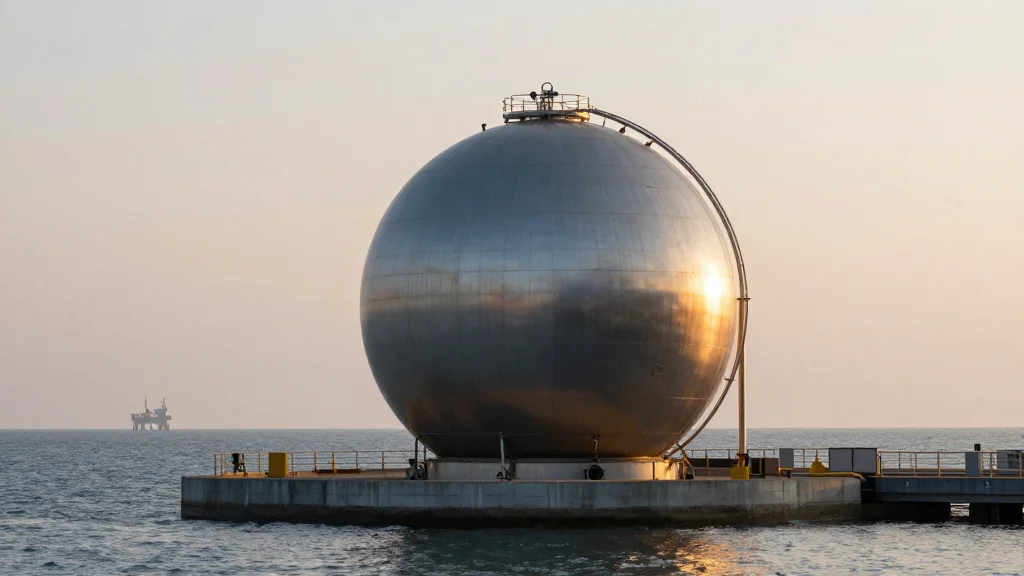
Trinidad's LNG Export Renaissance Finds New Momentum
Why It Matters
The expanded LNG supply strengthens Atlantic Basin energy security and diversifies Trinidad’s export earnings, positioning the country as a key gas player in a low‑carbon transition.
Key Takeaways
- •Trinidad & Tobago plans new LNG cargo for Atlantic Basin by 2030
- •Asset swap involves ExxonMobil and Shell to expand export capacity
- •Project adds 2.5 million tonnes annual LNG capacity
- •Deal secures $3.5 billion financing for infrastructure upgrades
- •Export boost expected to generate $1 billion in annual revenues
Pulse Analysis
Global demand for liquefied natural gas is accelerating as utilities seek lower‑carbon bridge fuels, and the Atlantic Basin is a prime growth market. Trinidad and Tobago, already a long‑standing LNG exporter, is leveraging its strategic location to tap this demand. By positioning a new cargo for delivery before 2030, the island nation aims to capture premium pricing and meet the region’s increasing gas‑for‑power needs, reinforcing its role in the energy transition.
The catalyst behind the project is a high‑profile asset swap between ExxonMobil and Shell, which consolidates upstream assets and channels capital toward export infrastructure. The agreement unlocks roughly 2.5 million tonnes of additional annual capacity and brings $3.5 billion in financing, enough to upgrade liquefaction trains, storage tanks, and port facilities. This infusion of capital not only accelerates construction timelines but also creates a pipeline of skilled jobs, bolstering the local economy and diversifying revenue streams beyond traditional oil exports.
For investors and market watchers, the move signals heightened competition in the Atlantic LNG space, where European and Asian buyers are also vying for supply. Trinidad’s expanded output could pressure spot prices downward while offering more stable, long‑term contracts for buyers seeking supply certainty. The project’s projected $1 billion in annual revenues underscores its financial viability, and the partnership with two energy majors adds credibility, potentially attracting further private‑sector participation in Caribbean gas projects.
Trinidad's LNG Export Renaissance Finds New Momentum
Comments
Want to join the conversation?
Loading comments...