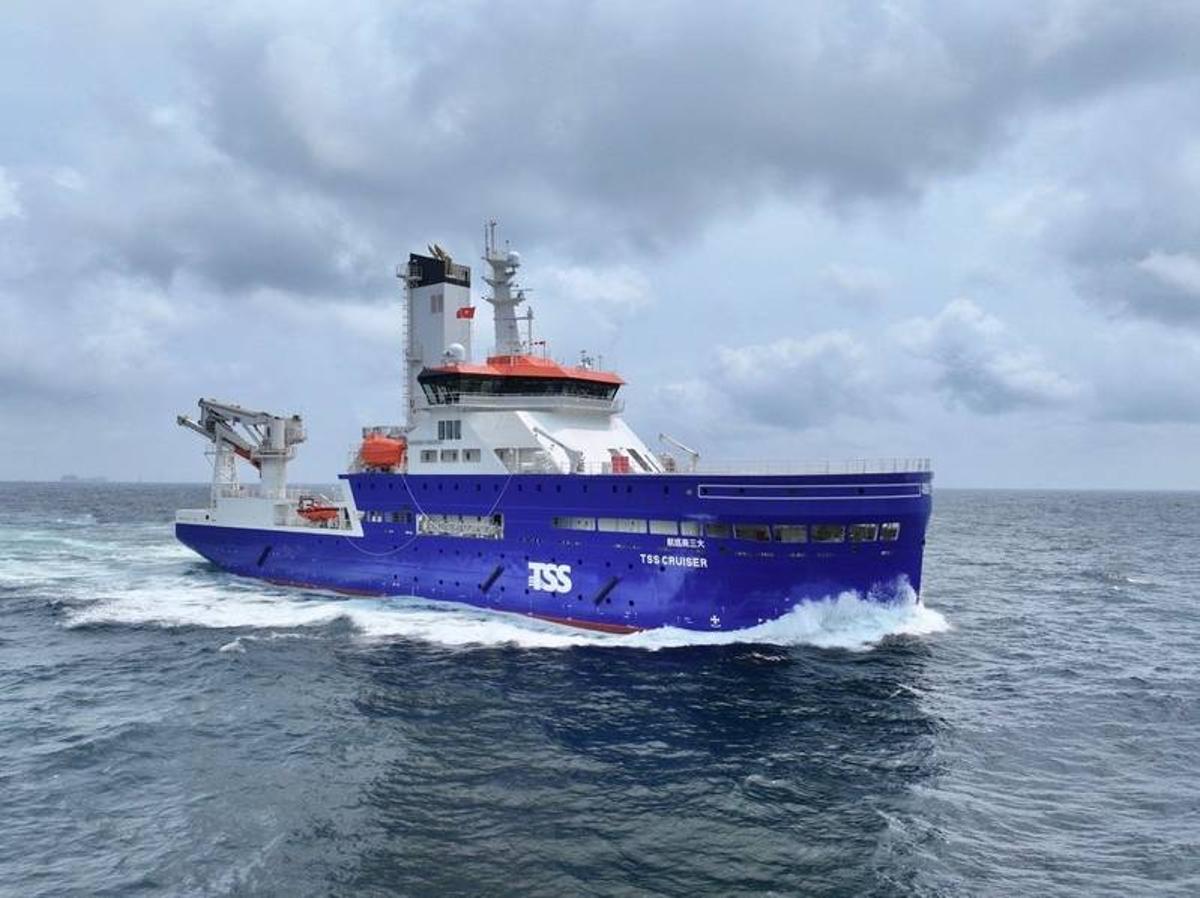
TSS Cruiser CSOV Ready to Support Taiwan's Offshore Wind Projects
Companies Mentioned
Why It Matters
The TSS Cruiser strengthens Taiwan’s offshore‑wind supply chain, accelerating project timelines while aligning with industry‑wide moves toward low‑carbon maritime operations.
Key Takeaways
- •TSS Cruiser adds 30 extra berths, housing up to 120 staff.
- •Vessel features upgraded crane capacity for heavier turbine components.
- •Methanol‑ready design supports future low‑carbon fuel transition.
- •MOL aims to grow offshore‑wind fleet across Taiwan, Japan, Asia.
Pulse Analysis
Taiwan’s offshore‑wind sector is on a rapid growth trajectory, targeting roughly 6 GW of new capacity by 2030 under government incentives and corporate power‑purchase agreements. That expansion creates a pressing demand for specialized vessels that can install, commission, and maintain turbines far offshore. Service‑operation vessels (SOVs) like the TSS Cruiser provide on‑site accommodation, heavy‑lift capabilities, and dynamic positioning, reducing reliance on shore‑based crews and cutting project schedules.
The TSS Cruiser, constructed by Damen Shipyards in Ha Long, Vietnam, builds on the capabilities of its predecessor, the TSS Pioneer. By increasing berths from 90 to 120, the vessel can host larger crews, essential for simultaneous installation and commissioning tasks. Its enhanced crane system lifts heavier turbine sections, addressing the trend toward larger, more powerful rotors. Notably, the ship’s methanol‑ready propulsion architecture positions it for a future shift to low‑carbon fuels, aligning with global maritime decarbonisation mandates and the vessel’s owner’s environmental roadmap.
For Mitsui O.S.K. Lines, the Cruiser is a strategic asset within the BLUE ACTION 2035 plan, which targets growth in low‑ and zero‑carbon businesses. Beyond Taiwan, MOL sees similar offshore‑wind opportunities in Japan, where the government aims for 10 GW by 2030, and other Asian markets poised for rapid deployment. By expanding its SOV fleet, MOL not only captures new revenue streams but also reinforces its reputation as a leader in sustainable maritime solutions, a critical differentiator as the industry pivots toward greener operations.
TSS Cruiser CSOV Ready to Support Taiwan's Offshore Wind Projects
Comments
Want to join the conversation?
Loading comments...