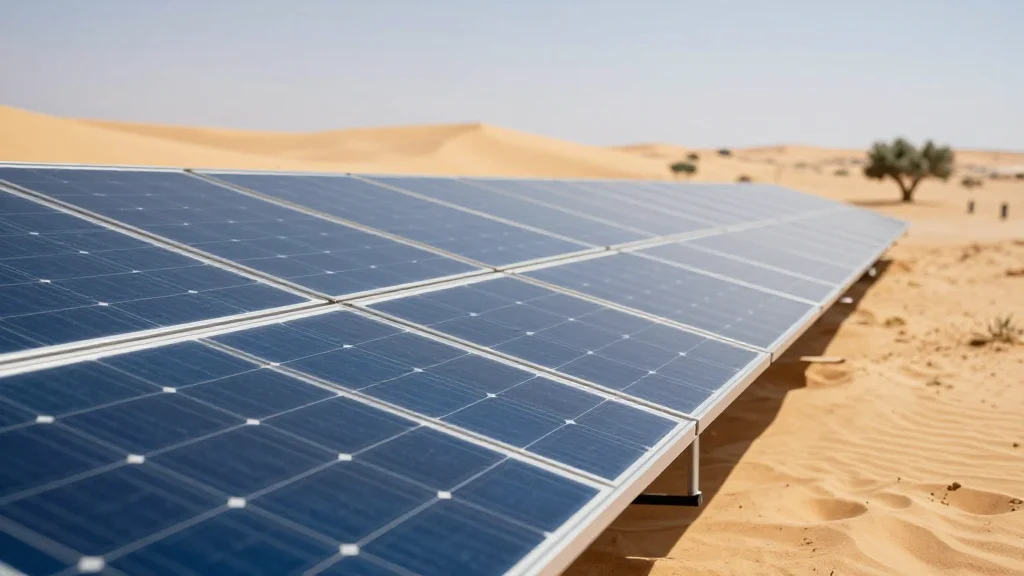
Tunisia Launches 200 MW Call for PV Projects Under New Licensing Scheme
Why It Matters
The round accelerates Tunisia’s transition to clean energy, diversifying its power mix and attracting foreign investment to meet growing electricity demand and climate commitments.
Key Takeaways
- •200 MW of solar capacity offered in Tunisia’s sixth licensing round.
- •Applications accepted April 15‑June 15, evaluated by submission date and grid limits.
- •Aims to boost national renewable share toward 1 GW target by 2026.
- •Complements recent 300 MW solar‑plus‑storage tender and 120 MW Amea Power plant.
Pulse Analysis
Tunisia is sharpening its renewable energy agenda with a targeted 200 MW solar call under a new licensing framework. By tying project approval to grid absorption capacity at high‑ and medium‑voltage nodes, the government ensures that new capacity integrates smoothly without overloading existing infrastructure. This pragmatic approach reflects lessons learned from earlier tenders, such as the 300 MW solar‑plus‑storage project, and signals a maturing market that balances ambition with technical feasibility.
The invitation arrives at a time when international investors are scouting North Africa for stable, policy‑driven opportunities. The clear timeline—applications between mid‑April and mid‑June—provides certainty, while the emphasis on full electricity sale to state utility STEG guarantees a predictable revenue stream. Combined with the recent commissioning of Amea Power’s 120 MW plant, the round positions Tunisia as a competitive hub for utility‑scale photovoltaics, potentially drawing capital from Europe and the Gulf seeking diversification.
Looking ahead, the 200 MW allocation is a stepping stone toward Tunisia’s broader 1 GW solar benchmark and aligns with Africa’s collective push for 300 GW of renewable capacity by 2030. Successful execution will hinge on grid upgrades, financing structures, and the ability to attract experienced developers. If managed well, the scheme could catalyze further large‑scale projects, reduce reliance on imported fossil fuels, and reinforce the country’s climate resilience.
Tunisia launches 200 MW call for PV projects under new licensing scheme
Comments
Want to join the conversation?
Loading comments...