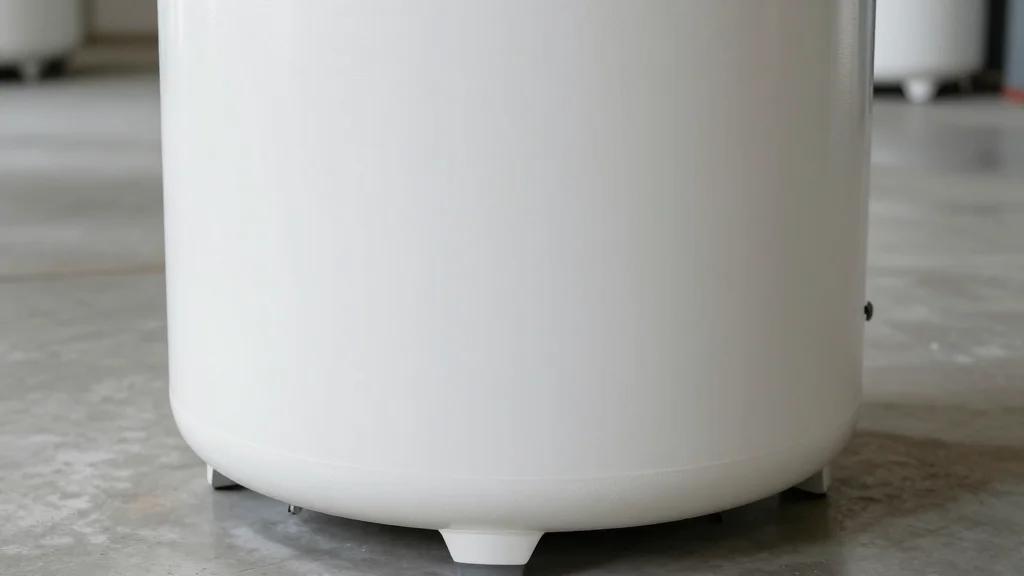
UAC Starts Large-Scale Hydrogen Storage Production in China
Why It Matters
By delivering lighter, high‑pressure storage at competitive cost, UAC’s China plant accelerates the scaling of hydrogen infrastructure in Asia‑Pacific and beyond, making zero‑emission transport and industrial applications more economically viable.
Key Takeaways
- •First composite cylinders roll off UAC's new Jiaxing line.
- •Facility triples UAC's global capacity, up to 24,000 cylinders annually.
- •Type IV glass fibre cylinders weigh 70% less than steel, 20‑year life.
- •New MEGCs will supply Hiringa Sundown project in Australia.
- •Local production cuts costs, boosts hydrogen logistics across Asia‑Pacific.
Pulse Analysis
The global push toward decarbonisation has placed high‑pressure hydrogen storage at the forefront of energy transition strategies. Among the three storage modalities—gas, liquid and solid—compressed gas remains the most mature, and Type IV composite cylinders have emerged as a game‑changer because their glass‑fibre shells combine safety, durability and a drastic weight reduction. UAC’s new Jiaxing facility produces cylinders ranging from 800 to 2,500 liters at pressures of 200‑450 bar, delivering up to three times the storage‑to‑volume efficiency of conventional steel vessels while promising a service life exceeding two decades.
UAC leverages decades of Norwegian composite expertise and pairs it with China’s manufacturing scale, a formula that slashes production costs and shortens lead times. The plant’s annual capacity of 20,000‑24,000 units—enough to triple the company’s worldwide output—means customers can source large‑capacity containers locally rather than importing from Europe. The first batch of Multi‑Element Gas Containers is earmarked for Hiringa Energy’s Sundown joint venture, supporting a solar‑powered green hydrogen and ammonia hub in New South Wales. This partnership demonstrates how near‑shoring can accelerate project timelines for emerging hydrogen markets.
With lighter, cheaper storage now viable, developers across Asia‑Pacific, South America and the Middle East can improve the economics of hydrogen‑fuelled transport, shipping and industrial processes. The Jiaxing plant also positions UAC to capture growing demand for compressed natural gas applications, further diversifying revenue streams. As governments pledge billions toward clean‑energy infrastructure, the ability to mass‑produce reliable composite cylinders will be a decisive factor in meeting ambitious hydrogen deployment targets by 2030. UAC’s move signals a broader industry shift toward localized, cost‑effective supply chains for the burgeoning hydrogen economy.
UAC starts large-scale hydrogen storage production in China
Comments
Want to join the conversation?
Loading comments...