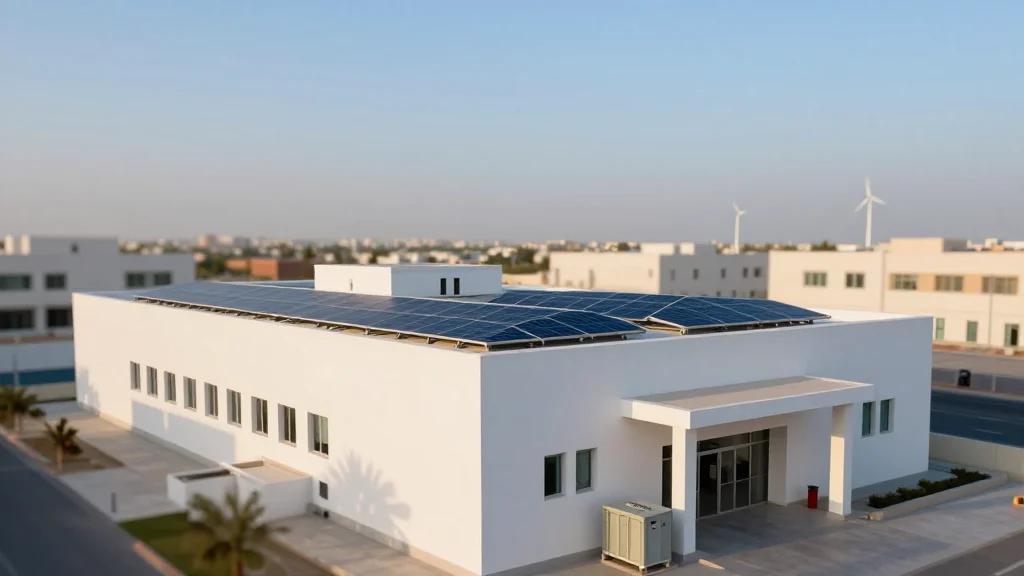
UAE Ministry of Energy Rolls Out First Nationwide Microgrid Project for Federal Buildings

Why It Matters
The microgrid rollout strengthens the UAE’s energy security by diversifying supply sources and providing a buffer against grid disruptions, a critical capability given the region’s exposure to geopolitical tensions and climate‑related extremes. It also demonstrates how policy‑driven pilots can translate into scalable, low‑carbon infrastructure, offering a template for other Gulf states seeking to meet their net‑zero commitments. Beyond resilience, the initiative accelerates the domestic clean‑energy market, encouraging local manufacturers, system integrators and software developers to innovate. As the government standardises technical and regulatory frameworks, private investment is likely to flow, creating jobs and positioning the UAE as a regional hub for microgrid technology.
Key Takeaways
- •UAE Ministry of Energy launches microgrid programme for federal buildings, first of its kind nationwide.
- •Pilot results: 362,000 kWh annual energy reduction, AED 110,000 (~$30,000) saved, 76 tons CO₂ cut.
- •Solar share rises to 30 % of load; system delivers 100 % resilience during outages.
- •National technical and regulatory guide to be drafted to standardise microgrid deployment.
- •Goal to power at least 50 % of federal building electricity via microgrids by 2028.
Pulse Analysis
The UAE’s microgrid push is more than a sustainability gesture; it is a strategic hedge against supply‑side risk. Historically, the Gulf’s power systems have relied on large, centrally‑managed plants fed by abundant natural gas. While that model has delivered cheap electricity, it also creates a single point of failure. By embedding generation, storage and digital controls at the building level, the Ministry is creating a distributed architecture that can isolate faults, maintain critical services and reduce peak‑load charges.
From a market perspective, the initiative could catalyse a new ecosystem of vendors. Local firms that have traditionally supplied diesel generators may need to pivot toward solar‑plus‑storage kits, while international players will see the UAE as a testbed for advanced microgrid controls and AI‑driven optimisation. The forthcoming regulatory guide will likely codify standards for interconnection, safety and data sharing, lowering entry barriers and encouraging competition.
Finally, the project dovetails with the UAE’s broader diversification agenda. Energy security, climate ambition and economic diversification are interlinked pillars of the “We the UAE 2031” vision. If the microgrid rollout meets its targets, it will provide a replicable model for other public sectors—healthcare, education and transportation—thereby amplifying the impact on national emissions and resilience. The next challenge will be scaling the solution cost‑effectively while ensuring that the digital layer remains secure against cyber threats, a concern that will grow as more critical infrastructure becomes software‑defined.
UAE Ministry of Energy Rolls Out First Nationwide Microgrid Project for Federal Buildings
Comments
Want to join the conversation?
Loading comments...