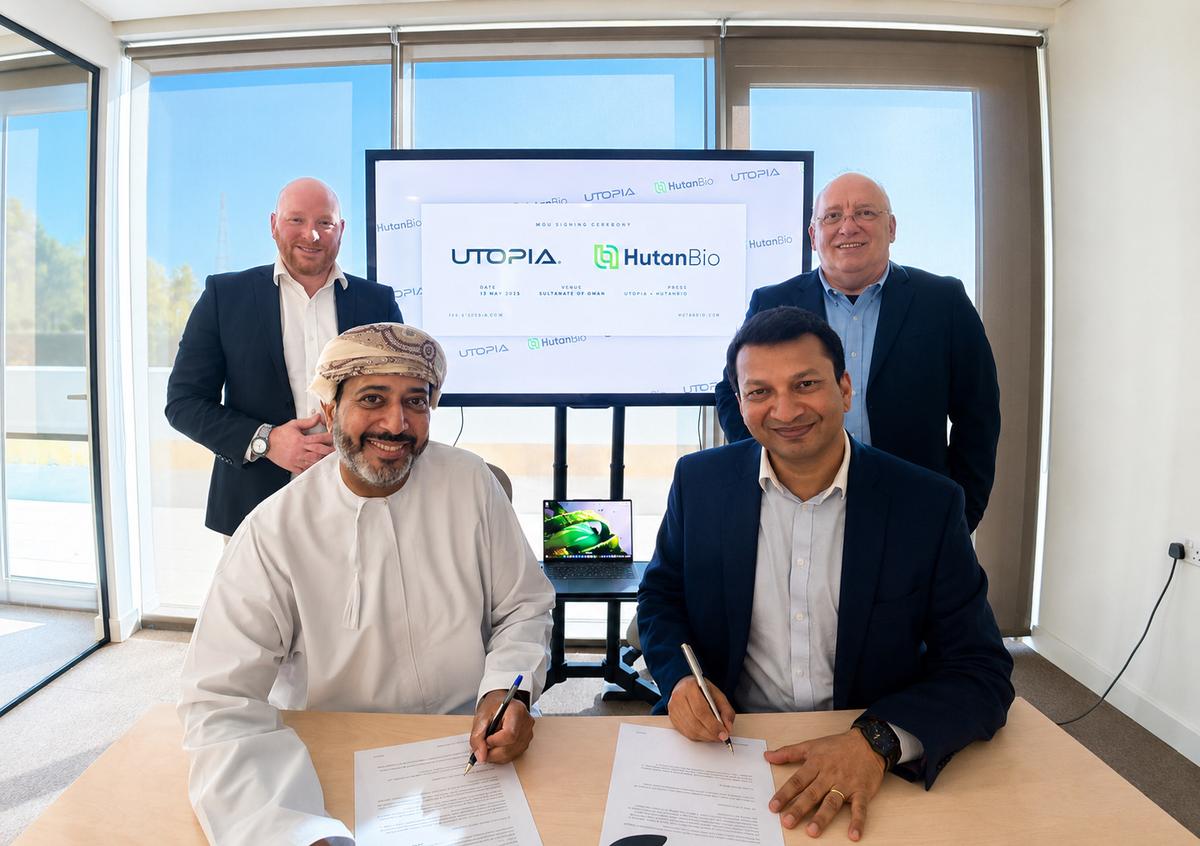
UK Biotech Firm Targets Scalable SAF Feedstocks with Oman Deal
Companies Mentioned
Why It Matters
Securing a scalable, land‑free feedstock removes a key barrier to SAF expansion, helping airlines meet decarbonisation targets while diversifying fuel supply chains.
Key Takeaways
- •HutanBio inks first commercial off‑take MoU with Wakud International.
- •Algae platform uses seawater, sunlight, CO₂, no arable land needed.
- •Oman’s solar desert and refinery infrastructure enable rapid scale‑up.
- •UK biotech expertise drives global low‑carbon fuel supply chain.
- •Feedstock security reduces geopolitical risk for aviation fuel.
Pulse Analysis
The aviation industry faces mounting pressure to replace fossil jet fuel with sustainable aviation fuel (SAF), yet the lack of abundant, low‑cost feedstocks remains a critical choke point. Traditional bio‑fuel crops compete with food production and strain freshwater resources, prompting a search for alternatives that can be produced at scale without land‑use conflicts. Algae‑based oils have emerged as a promising solution because they grow rapidly, can be cultivated in saline environments, and capture carbon directly from the atmosphere, offering a high‑energy‑density feedstock suitable for long‑haul flights.
HutanBio’s proprietary platform builds on research from the University of Cambridge and KAUST, employing marine micro‑algae that thrive on seawater, sunlight and CO₂. By locating its first commercial site in Oman, the company exploits the nation’s coastal desert terrain, intense solar radiation, and existing biodiesel refinery owned by Wakud International. The MoU secures an off‑take agreement that guarantees a market for the algae‑derived oil, accelerating the path to commercial production. This strategic alignment of technology, geography, and infrastructure reduces capital risk and shortens the timeline for delivering SAF‑grade feedstock to airlines and cargo operators.
Beyond the immediate commercial benefits, the partnership signals a broader shift toward decentralized, carbon‑negative fuel supply chains. UK investors, including the UK Innovation & Science Seed Fund, see the venture as a way to leverage British scientific expertise while diversifying energy security away from geopolitically sensitive regions. As the sector targets 2027 and beyond for large‑scale SAF adoption, scalable algae platforms could become a cornerstone of the industry’s decarbonisation roadmap, offering a repeatable model for other arid coastal nations seeking to join the low‑carbon fuel economy.
UK biotech firm targets scalable SAF feedstocks with Oman deal
Comments
Want to join the conversation?
Loading comments...