UK Government Funds Battery Recycling Consortium
Companies Mentioned

Innovate UK
Polaron Solar
Why It Matters
A home‑grown recycling loop will shield the UK’s battery supply from geopolitical shocks, lower carbon footprints, and spark a new industrial sector.
Key Takeaways
- •ReCam receives UK government funding for lithium‑ion recycling tech
- •Consortium includes Recyclus, UKBIC, Watercycle, Polaron
- •Funding aims to cut reliance on foreign battery imports
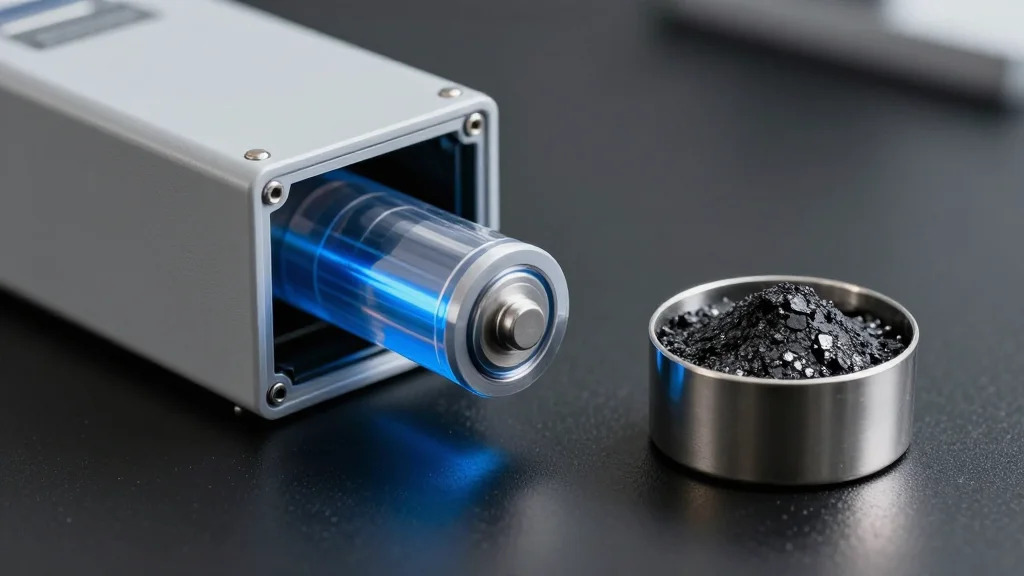
- •Project targets scaling “black mass” recovery for new batteries
- •Expected to create economic value and lower emissions
Pulse Analysis
The United Kingdom’s rapid electrification of transport and grid storage has exposed a structural weakness: more than 80 % of lithium‑ion cells and their critical minerals are sourced abroad. This dependence makes the domestic market vulnerable to trade restrictions, price volatility, and geopolitical tensions, especially in regions that dominate mining and refining of cobalt, nickel and lithium. Policymakers have therefore prioritized a circular‑economy approach, where spent batteries are reclaimed locally, to secure supply chains and meet the UK’s net‑zero commitments.
ReCam, the newly funded consortium, brings together Recyclus, the UK Battery Industrialisation Centre, Watercycle Technologies and Polaron to tackle the technical bottlenecks of “black mass” extraction. Leveraging Recyclus’s pioneering recycling plant, Watercycle’s patented hydrometallurgical process, UKBIC’s pilot‑scale testing facilities, and Polaron’s advanced materials expertise, the group aims to scale the recovery of lithium, cobalt, nickel and graphite from end‑of‑life packs. A multi‑million‑pound grant (roughly $12 million) from Innovate UK will support equipment upgrades, process optimisation and a demonstration line capable of handling several hundred tonnes per year.
If successful, the project could generate a domestic feedstock stream that lowers the cost of new battery packs, creates high‑skill jobs, and reduces the carbon intensity associated with overseas transport and primary mining. Analysts expect that a reliable UK recycling loop will make the country more attractive to electric‑vehicle manufacturers and energy‑storage developers seeking supply‑chain certainty. In the longer term, the technology could be exported, positioning Britain as a hub for sustainable battery value‑addition in Europe.
UK government funds battery recycling consortium
Comments
Want to join the conversation?
Loading comments...