UK Regulator Set to Grant Gas Storage Licence for EnergyPathways' MESH Project

Companies Mentioned
Why It Matters
Awarding the gas storage licence to EnergyPathways marks a concrete step toward diversifying the UK’s energy‑security toolkit. By potentially doubling national gas storage capacity and adding the country’s largest long‑duration energy‑storage (LDES) facility, the MESH hub could smooth out supply gaps caused by volatile gas markets and intermittent renewables. The integrated design also creates a clear pathway from natural‑gas storage to hydrogen, aligning with the UK’s net‑zero roadmap and supporting emerging low‑carbon industries in the north of England. Beyond the technical benefits, the project signals confidence from both the regulator and the government in hybrid storage solutions that blend legacy assets with new technologies. Successful execution could encourage further private investment in offshore storage, accelerate the rollout of CAES and hydrogen infrastructure, and set a template for similar projects across Europe.
Key Takeaways
- •North Sea Transition Authority to award EnergyPathways Irish Sea a gas storage licence for MESH
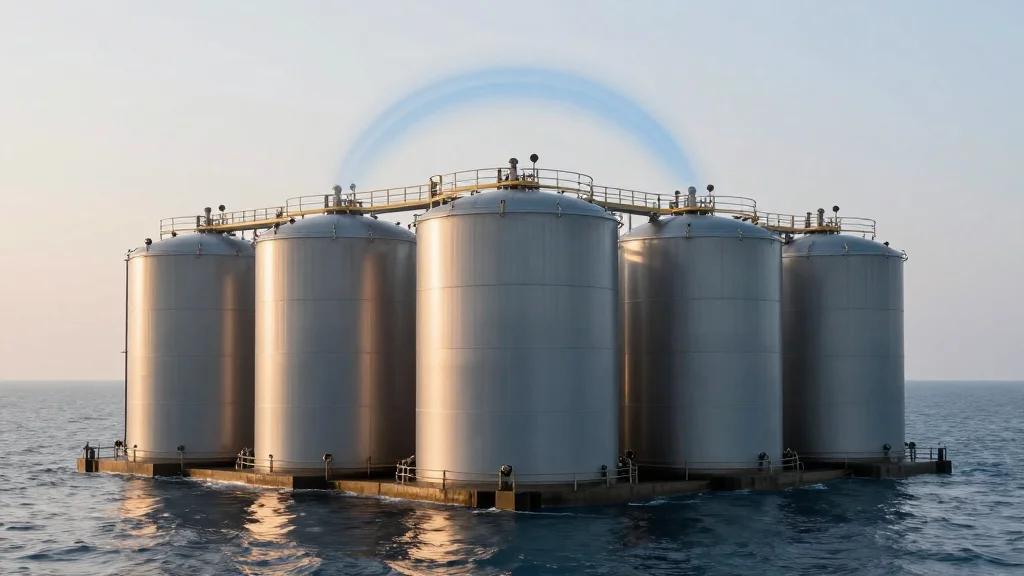
- •Licence area could host up to 60 offshore salt caverns for multi‑terawatt‑hour storage
- •Planned gas storage capacity would double the UK’s current reserves, delivering ~15 million m³/day
- •CAES component slated at 300 MW/55 GWh, the largest LDES facility in Britain
- •Final investment decision targeted for 2028; commercial start‑up expected by late 2031
Pulse Analysis
The pending licence underscores a strategic shift in the UK’s energy‑policy calculus: rather than betting solely on new renewable generation, policymakers are now endorsing hybrid storage that leverages existing fossil‑fuel infrastructure while charting a route to hydrogen. EnergyPathways’ MESH hub embodies this dual‑track approach, marrying proven underground gas caverns with cutting‑edge CAES technology. Historically, the UK’s gas storage fleet has been under‑invested, leaving the grid vulnerable to price spikes and supply shocks. By potentially doubling storage capacity, MESH could blunt the impact of future market turbulence, especially as the country phases out coal and leans on intermittent wind and solar.
From a market perspective, the involvement of heavyweight partners such as Siemens Energy and Costain adds credibility and may unlock additional financing avenues. Their engineering expertise will be crucial in navigating the complex permitting landscape for offshore caverns and integrating the CAES system with offshore wind. Moreover, the hydrogen production element positions MESH as a future‑proof asset; as the UK scales up its hydrogen strategy, the hub could serve as a low‑cost source of green hydrogen, feeding both power generation and emerging industrial clusters.
Looking ahead, the success of MESH will hinge on three variables: regulatory certainty, financing, and offtake contracts. If the NSTA formalises the licence quickly, EnergyPathways can accelerate procurement and lock in long‑term supply agreements, reducing project risk. Conversely, delays in consent or financing could push the FID beyond 2028, eroding the competitive advantage of early‑stage storage projects. Nonetheless, the licence announcement itself is a strong market signal that integrated, multi‑modal storage is now a cornerstone of the UK’s net‑zero transition.
UK regulator set to grant gas storage licence for EnergyPathways' MESH project
Comments
Want to join the conversation?
Loading comments...