UL Solutions Enhances Fire Testing for Large-Scale Battery Projects
Companies Mentioned
Why It Matters
With BESS projects expanding in size and proximity to communities, reliable fire‑behavior data is essential for safe design, code compliance, and effective emergency response. UL's enhanced testing fills a critical information gap, helping regulators and operators mitigate fire risk before incidents occur.
Key Takeaways
- •UL adopts ANSI/CAN/UL 9540A sixth edition for BESS fire testing.
- •Tests simulate full‑scale thermal runaway in realistic indoor and outdoor layouts.
- •Results guide code clearances, separation distances, and fire‑protection strategies.
- •Fire departments gain data for pre‑incident planning and response tactics.
- •Designers can justify alternative layouts and accelerate permitting.
Pulse Analysis
Battery energy storage systems are scaling rapidly, driven by renewable integration and grid‑stability needs. While the technology offers clear benefits, the concentration of lithium‑ion cells raises fire‑safety concerns, especially as installations appear in urban and industrial zones. Thermal runaway—a chain reaction that releases flammable gases—can quickly evolve into a full‑scale blaze, prompting regulators to tighten safety standards and stakeholders to seek more granular risk data.
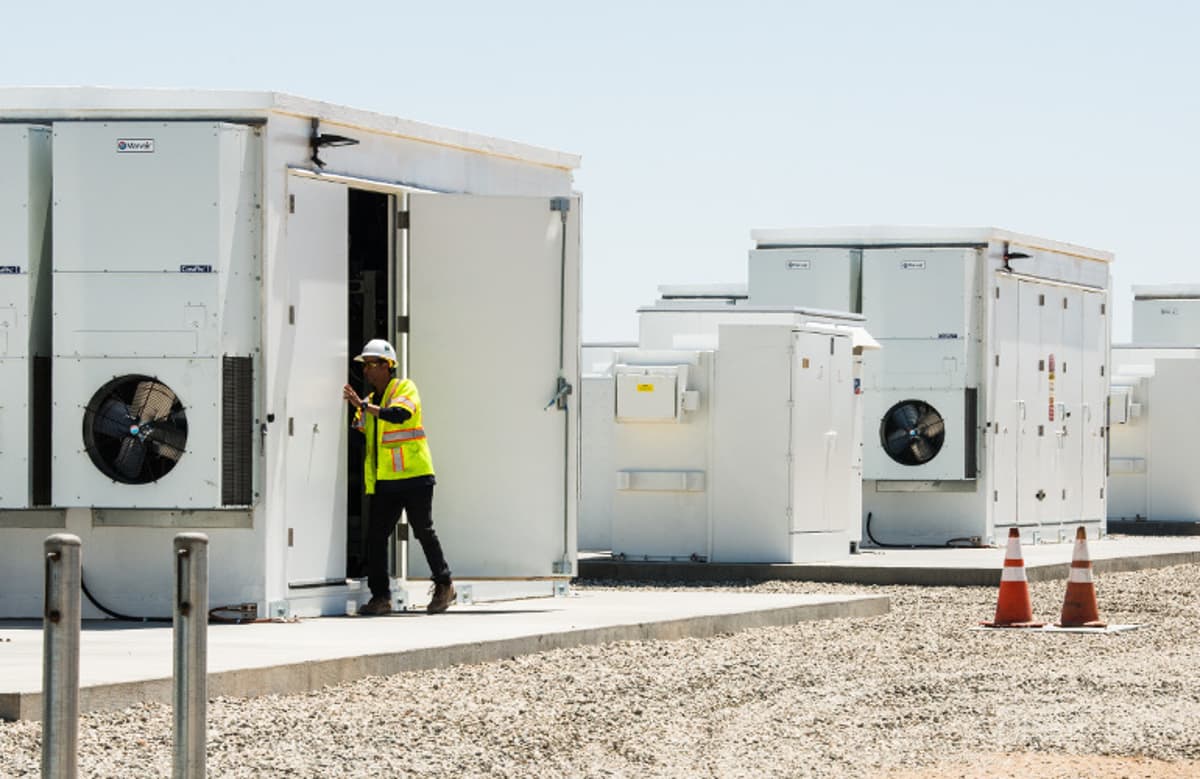
UL Solutions’ updated testing protocol, aligned with the sixth edition of ANSI/CAN/UL 9540A, addresses that demand by conducting full‑installation fire trials. The methodology deliberately ignites a battery pack within a representative enclosure, then monitors flame propagation, heat transfer, and the efficacy of active and passive fire‑suppression measures. By mirroring real‑world configurations—outdoor containers, indoor rooms, stacked units—UL generates results that reflect actual hazard scenarios, offering a robust evidence base for code development and engineering decisions.
The ripple effect across the industry is significant. Code authorities can refine clearance distances and ventilation requirements, reducing the need for costly redesigns later in the approval process. Fire departments receive actionable intelligence for pre‑incident planning, improving response times and safety outcomes. Meanwhile, BESS developers can leverage the data to justify innovative layouts, accelerate permitting, and demonstrate compliance to investors and insurers. In a market where safety and speed to market are competitive differentiators, UL’s enhanced testing is poised to become a benchmark for responsible battery deployment.
UL Solutions enhances fire testing for large-scale battery projects
Comments
Want to join the conversation?
Loading comments...