Understanding the Physics at the Anode of Sodium-Ion Batteries
•February 20, 2026
0
Why It Matters
Understanding and engineering hard‑carbon pore structures can close the energy‑density gap between sodium‑ion and lithium‑ion batteries, accelerating NIB adoption for grid‑scale storage. Faster ion transport and higher capacity directly support renewable‑energy integration and carbon‑neutral goals.
Key Takeaways
- •Hard carbon pores ~1.5 nm optimal for Na storage.
- •Na ions form 3D quasi‑metallic clusters early.
- •Defect‑adsorbed Na reduces Na‑C interaction, aids clustering.
- •Branching pores create bottlenecks, slowing diffusion.
- •Design guidelines target larger, connected nanopores.
Pulse Analysis
Sodium‑ion batteries (NIBs) are emerging as a cost‑effective, sustainable alternative to lithium‑ion systems because sodium is abundant and inexpensive. Yet, their commercial viability hinges on matching the energy density of LIBs, which is largely dictated by the anode material. Hard carbon, with its porous, amorphous structure, has become the default anode, but its nanoscopic ion‑storage mechanisms remained opaque, limiting rational design. Recent advances in computational power now allow researchers to probe these mechanisms at the atomic level, offering a pathway to bridge the performance gap.
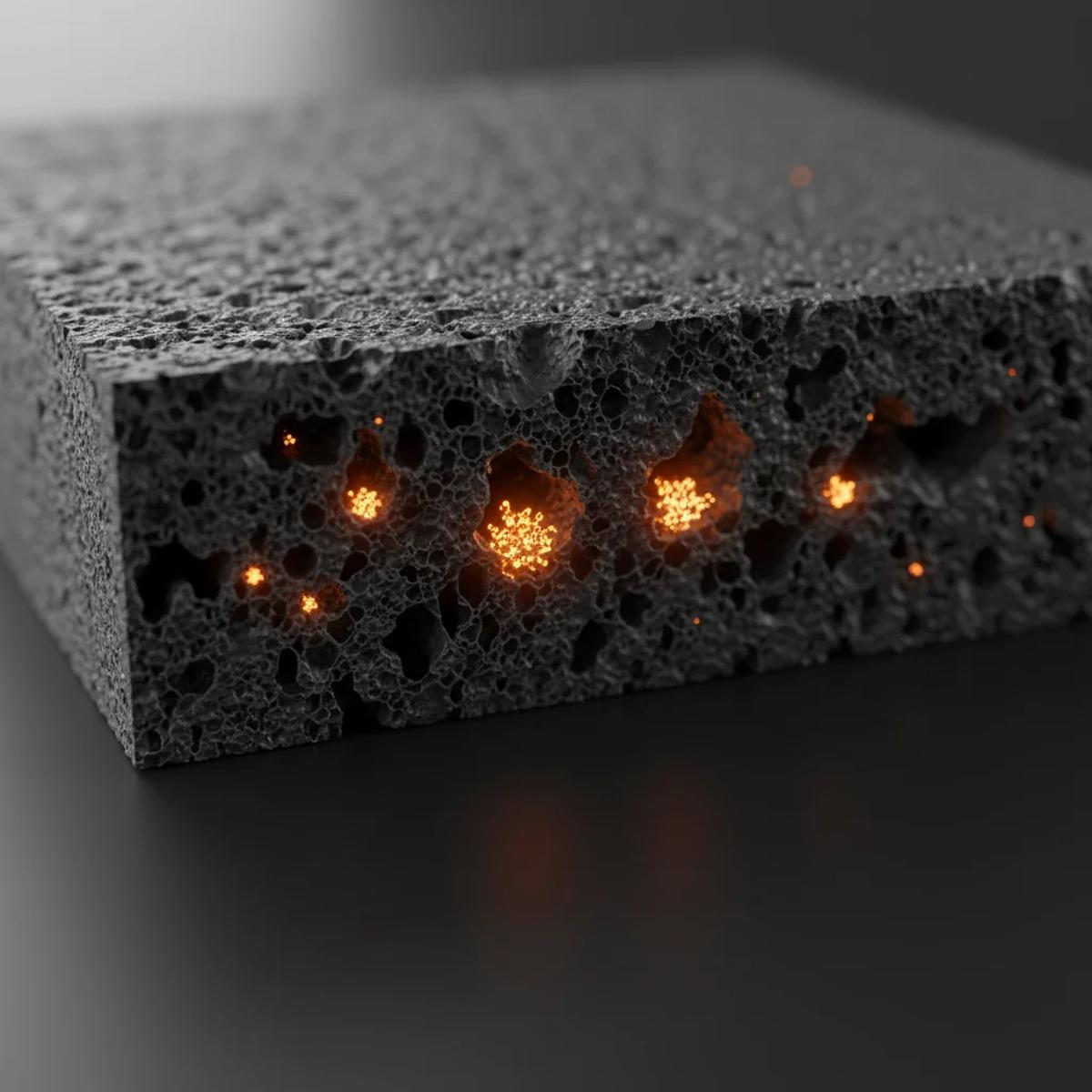
In the latest study, Professor Yoshitaka Tateyama’s team employed high‑accuracy density functional theory‑based molecular dynamics on the Fugaku supercomputer to model hard‑carbon nanopores. The simulations showed that sodium ions abandon a two‑dimensional adsorption state almost immediately, forming three‑dimensional quasi‑metallic clusters once the pore diameter reaches roughly 1.5 nm—exactly the size reported in experimental work. Interestingly, sodium ions bound to defects do not act as nucleation sites; instead, they weaken Na‑C bonds and free space, encouraging larger cluster growth. These atomistic insights clarify why certain pore geometries deliver higher reversible capacity.
The practical upshot is a clear set of design guidelines: engineer hard‑carbon anodes with uniformly sized pores around 1.5 nm and minimize abrupt branching that creates diffusion bottlenecks. By doing so, manufacturers can boost both the specific capacity and the rate capability of NIBs, making them more attractive for grid‑scale storage and electric‑vehicle applications. As renewable energy penetration rises, faster‑charging, high‑energy‑density sodium‑ion batteries could become a cornerstone of the carbon‑neutral transition, prompting further investment in material‑scale modeling and scalable synthesis techniques.
Understanding the physics at the anode of sodium-ion batteries
0
Comments
Want to join the conversation?
Loading comments...