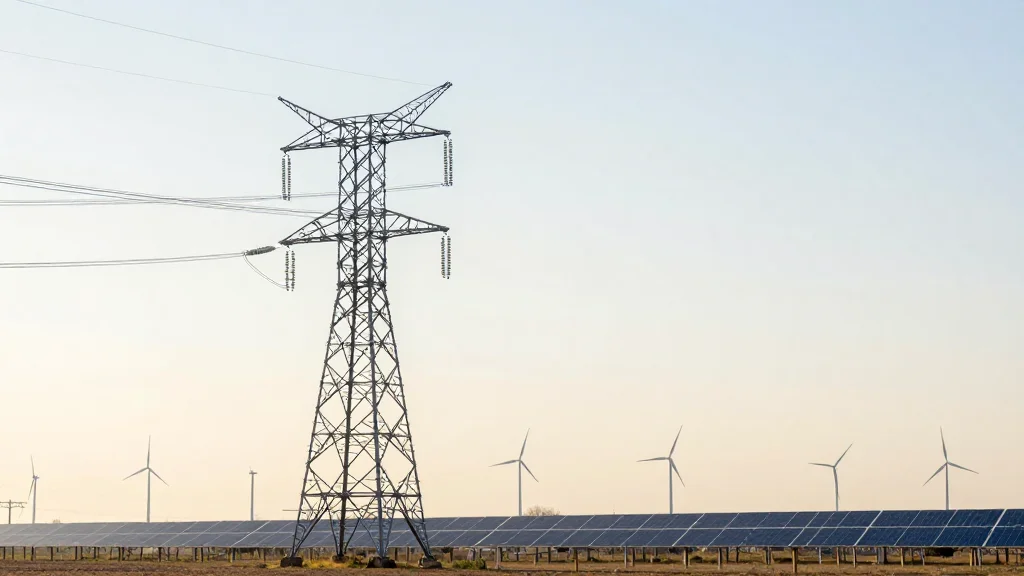
Union Min Manohar Lal Chairs Parliamentary Consultative Committee Meeting on Future-Ready Power Grid
Why It Matters
A resilient, flexible grid is essential for India to meet its aggressive renewable targets and avoid curtailment as demand and inverter‑based generation surge. The policy direction signals significant investment opportunities in transmission, storage and digital metering sectors.
Key Takeaways
- •Peak demand 270.8 GW in May 2026, met by 283 GW capacity
- •2024 peak demand hit 250 GW, showing rapid growth
- •Over 50 GW renewable capacity integrated in a single year
- •Minister calls for phased prepaid smart metering for high‑load consumers
- •Emphasis on transmission expansion and storage to evacuate solar power
Pulse Analysis
India’s electricity system is at a crossroads as demand accelerates and the government pushes an aggressive clean‑energy agenda. The Power Ministry’s consultative committee, chaired by Union Minister Manohar Lal, highlighted that peak demand reached 270.8 GW in May 2026, comfortably below the 283 GW installed capacity. This margin, while reassuring today, masks a trajectory that could push the grid toward 330 GW by 2027, underscoring the urgency of expanding both generation and transmission infrastructure to avoid bottlenecks. The ministry also flagged the need for coordinated planning between generation projects and transmission roll‑outs to prevent curtailment.
Integrating more than 50 GW of renewable capacity in a single year, the committee stressed that grid stability now hinges on three pillars: transmission reinforcement, large‑scale energy storage, and advanced grid‑management tools. Solar farms, in particular, require robust evacuation corridors and complementary battery or pumped‑hydro facilities to smooth intermittency. The minister also advocated a phased rollout of prepaid smart meters, starting with government and high‑load commercial users, to improve demand visibility and enable dynamic pricing that can balance supply fluctuations. Advanced forecasting algorithms and dynamic reactive power support were identified as essential to maintain power quality as inverter‑based resources proliferate.
The policy signals emerging from the meeting point to a more market‑oriented, technology‑driven grid that can accommodate India’s target of 450 GW renewable capacity by 2030. Investors are likely to see heightened appetite for transmission projects, grid‑scale batteries, and digital metering platforms, while state utilities may receive greater incentives to align with central standards. If the outlined measures are executed, the power system could not only meet projected demand but also reduce curtailment losses, bolstering the country’s energy security and its credibility in global climate commitments. Such coordinated action is expected to attract foreign direct investment, aligning with India’s broader goal of becoming a renewable energy hub.
Union Min Manohar Lal chairs parliamentary consultative committee meeting on future-ready power grid
Comments
Want to join the conversation?
Loading comments...