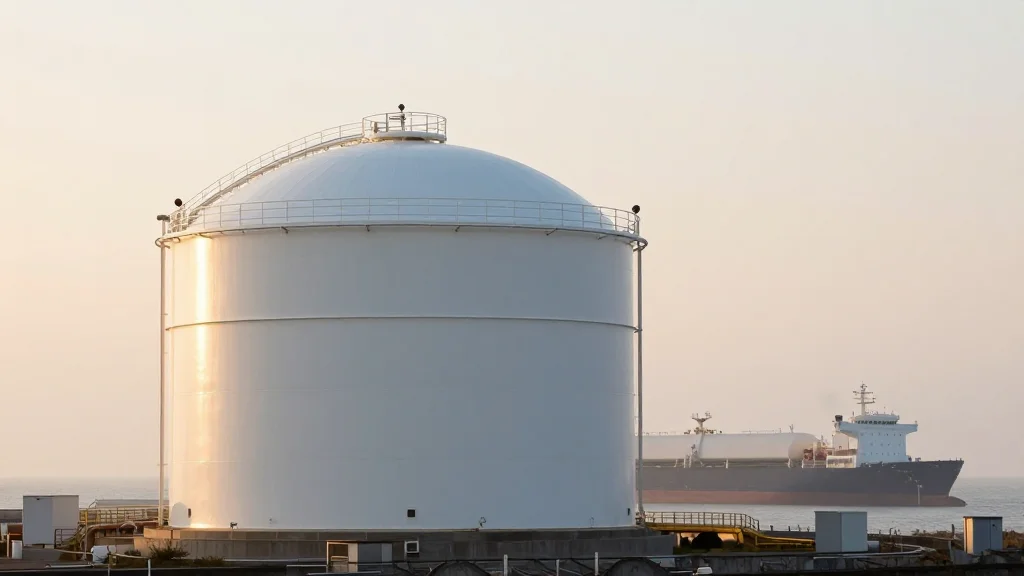
Unlocking LNG’s Potential Starts With Infrastructure
Companies Mentioned
Why It Matters
Integrated LNG projects secure long‑term supply for industrializing economies and hedge against geopolitical volatility, positioning investors to capture value in a market where energy security is becoming a policy priority.
Key Takeaways
- •US could supply up to 80% of Europe’s LNG by 2030
- •Commonwealth LNG is a $13 bn, 9.5 mtpa export facility in Louisiana
- •Caturus delivers >1 bcf/d, enabling a wellhead‑to‑water model
- •Integrated upstream‑to‑export platforms reduce volatility and lock in long‑term offtake
- •Energy security policies are driving higher investment in scalable LNG infrastructure
Pulse Analysis
The global energy landscape is shifting from a short‑term focus on renewables to a longer‑term view that balances decarbonisation with reliable baseload power. Natural gas, and especially liquefied natural gas (LNG), offers the dispatchability and low‑carbon footprint needed to support electrification, data‑center growth, and heavy‑industry processes. Analysts warn that years of under‑investment in gas extraction, liquefaction terminals, and shipping capacity have created a structural gap between demand—driven by Asia’s industrial expansion and Europe’s diversification goals—and supply. This gap is prompting governments to prioritize energy‑security projects that can be scaled quickly.
The United States, with its abundant shale resources and mature regulatory framework, is emerging as the world’s premier LNG hub. The Commonwealth LNG project, now at the final investment decision stage, exemplifies this trend. With a $13 billion price tag and a 9.5 mtpa capacity, the Louisiana facility will tap long‑term offtake contracts from global traders such as EQT, Glencore, Mercuria, Petronas and Aramco Trading. Its integration with the Caturus platform—producing more than 1 bcf/d—creates a “wellhead‑to‑water” value chain that lowers transportation costs, stabilises cash flow, and enhances resilience against market swings.
For investors, the message is clear: the next wave of value in the LNG sector will belong to integrated players that control both upstream supply and downstream export logistics. Such platforms can lock in customers, optimise margins, and navigate geopolitical risks more effectively than fragmented operators. As policy makers worldwide embed energy‑security mandates into climate strategies, capital will continue to flow toward projects that combine scale, flexibility, and long‑duration contracts, cementing LNG’s role as a bridge fuel for the coming decades.
Unlocking LNG’s Potential Starts With Infrastructure
Comments
Want to join the conversation?
Loading comments...