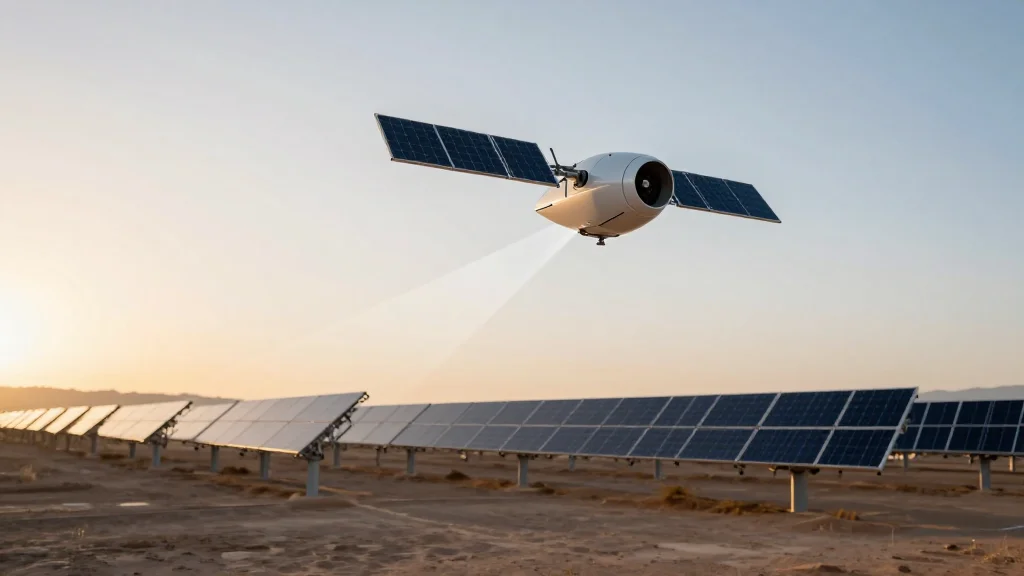
US Air Force Sets Its Sights On Space Solar Power
Companies Mentioned

Why It Matters
The partnership gives the Department of Defense a pathway to energy independence in contested environments while fast‑tracking a nascent technology that could reshape grid resilience and decarbonization for civilian markets.
Key Takeaways
- •Overview Energy raised $20 M from venture investors for space‑solar.
- •Air Force contract aims to power remote bases via geosynchronous satellites.
- •Planned launch to low Earth orbit in 2028, megawatt transmission by 2030.
- •Space‑solar could extend solar plant output, lowering grid peak prices.
Pulse Analysis
Space‑solar, once a speculative concept, is nearing commercial reality thanks to dramatic drops in launch costs and advances in high‑efficiency photovoltaics and lasers. Pioneered in the 1940s by Isaac Asimov, the idea of beaming continuous solar energy to Earth has been limited by expensive rockets and unreliable transmission. Today, mass‑manufactured satellites and inexpensive, high‑power lasers make the concept viable, prompting venture capital to pour $20 million into Overview Energy, a startup that plans to attach its orbiting collectors to existing solar farms.
The Air Force’s May 6 contract marks the first defense‑level endorsement of space‑solar, targeting installations where fuel supply chains are vulnerable. By positioning satellites at roughly 36,000 km in geosynchronous orbit, Overview can deliver low‑intensity infrared beams that are invisible and safe, providing power to remote bases such as Eielson in Alaska or Anderson in Guam. Reducing reliance on diesel and jet fuel not only cuts logistical risk but also aligns with the Pentagon’s broader push for energy security and carbon‑neutral operations.
Beyond military use, utilities see a potential revenue boost as space‑solar extends the operating hours of ground‑based solar arrays, which idle 65‑75 % of the day. The technology could flatten peak demand, lower electricity prices, and accelerate adoption of green‑hydrogen and e‑fuel production that depend on steady power. While scaling to gigawatt levels by the early 2030s remains ambitious, the convergence of lower launch costs, investor confidence, and strategic defense interest positions space‑solar as a disruptive addition to the renewable energy mix.
US Air Force Sets Its Sights On Space Solar Power
Comments
Want to join the conversation?
Loading comments...