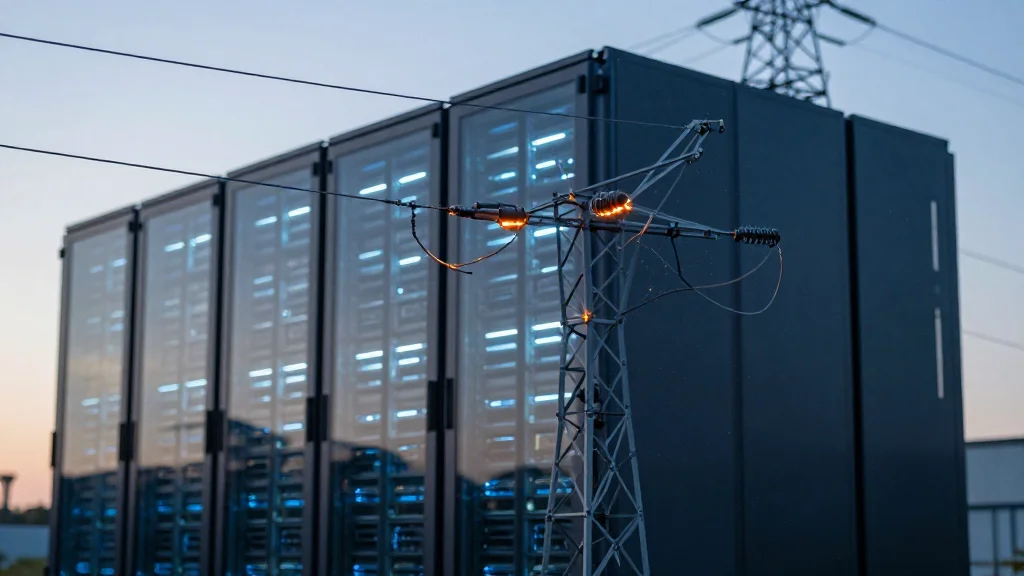
U.S. Army’s 3‑GW Fort Bliss Data Center Threatens to Outsize El Paso Electric’s Grid

Companies Mentioned


Why It Matters
The Fort Bliss data‑center proposal illustrates the growing tension between national security imperatives and regional energy capacity. A single military‑run facility could strain an already stretched grid, prompting utilities to consider new generation, demand‑response programs, or costly upgrades that may be passed on to ratepayers. Moreover, the project underscores how AI‑driven defense initiatives are reshaping traditional energy markets, pushing utilities and regulators to accommodate unprecedented, high‑intensity loads. Beyond the immediate grid concerns, the plan raises broader questions about the environmental footprint of defense‑related data centers. Relying on natural‑gas turbines could lock the region into higher carbon emissions unless mitigated by renewable offsets or future decarbonization policies. The outcome will signal how the U.S. balances its AI‑centric warfighting strategy with climate and community considerations.
Key Takeaways
- •U.S. Army proposes a 3 GW data center at Fort Bliss, exceeding El Paso Electric’s total generation capacity of 2.9 GW.
- •Initial compute capacity targeted at 100 MW by next year, scaling to 3 GW by 2029.
- •Carlyle Group will finance, build and operate the facility under a DoD AI rollout.
- •Combined‑cycle natural‑gas turbines are the likely power source, pending environmental review.
- •Utility connections, water supply and emissions remain unresolved, with El Paso Electric and El Paso Water awaiting formal requests.
Pulse Analysis
The Army’s Fort Bliss data‑center bid is a textbook case of demand‑side pressure reshaping the electricity market. Historically, large industrial customers have driven capacity additions, but a single defense‑owned load of 3 GW is unprecedented in a civilian grid. Utilities will likely need to secure firm generation—most plausibly natural‑gas turbines—while also exploring hybrid solutions that blend renewables and storage to meet reliability standards and mitigate emissions. The project could accelerate the adoption of on‑site generation and micro‑grid concepts within the defense sector, a trend already visible in other DoD installations.
From a strategic perspective, the data center is a linchpin in the Pentagon’s push to embed AI across warfighting domains. By centralizing compute on a dedicated campus, the Army hopes to reduce latency, secure data pathways, and achieve economies of scale. However, the financial and environmental externalities will fall on the local community and utilities, potentially sparking pushback similar to the opposition faced by Meta’s El Paso facility. Stakeholder engagement, transparent power‑purchase agreements, and a clear decarbonization roadmap will be essential to reconcile national security goals with regional sustainability.
Looking ahead, the outcome of the environmental review will set a precedent for future defense‑related data‑center projects on federal lands. If the Army proceeds with on‑site gas turbines, regulators may demand carbon‑capture or renewable‑energy offsets, nudging the market toward cleaner baseload options. Conversely, a decision to tap the regional grid could force El Paso Electric to accelerate its own capacity expansion, possibly reshaping the utility’s investment plan for the next decade. In either scenario, the Fort Bliss proposal is a bellwether for how AI‑driven defense initiatives will intersect with the broader energy transition.
U.S. Army’s 3‑GW Fort Bliss Data Center Threatens to Outsize El Paso Electric’s Grid
Comments
Want to join the conversation?
Loading comments...