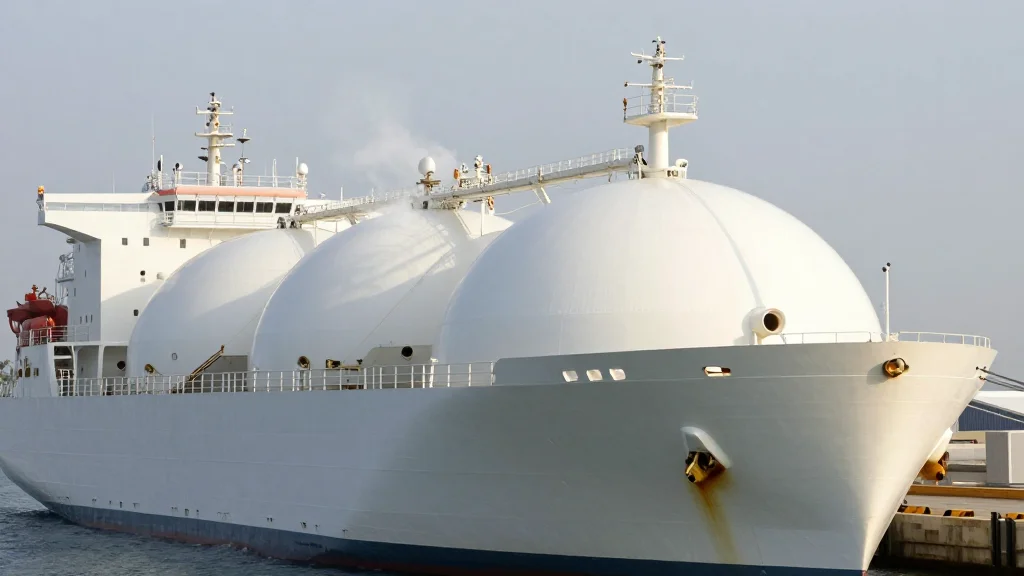
US' Golden Pass LNG Exports Second Cargo
Companies Mentioned
Why It Matters
The second export signals that Golden Pass is moving beyond initial start‑up, adding meaningful U.S. LNG supply to Asian markets and underscoring the rapid scale‑up of U.S. export infrastructure.
Key Takeaways
- •Golden Pass shipped 76,000 tonnes to Asia on May 9.
- •Second export confirms terminal's 18.1 mn t/yr capacity.
- •Record 412 mn ft³ feedgas equals half of Train 1 capacity.
- •Weekend average feedgas flow fell to 365 mn ft³/d.
- •Second train targeted for Q4 mechanical completion; third by Q2 2025.
Pulse Analysis
The United States is accelerating its LNG export ambitions, and Golden Pass LNG in southeast Texas is a flagship example. Operated by ExxonMobil and owned jointly with QatarEnergy, the facility boasts an 18.1 million‑tonne‑per‑year capacity, roughly 2.4 billion cubic feet per day. Its second cargo, a 76,000‑tonne shipment bound for Asia, demonstrates that the terminal is transitioning from commissioning phases to regular commercial operations, a critical step for meeting growing global demand.
Operational data reveal a robust feedgas intake, with a record 412 million cubic feet received on May 8—about 50% of Train 1’s design capacity. Although weekend flows moderated to an average of 365 million cubic feet per day, the volumes remain substantial enough to sustain steady export schedules. The second export is particularly telling because it reflects true production rates, unlike the inaugural shipment that often includes residual cool‑down cargo. ExxonMobil’s roadmap projects mechanical completion of the second train by the fourth quarter of this year, with the final train expected by the second quarter of 2025, aligning with a six‑month staggered rollout.
For the broader market, Golden Pass’s ramp‑up diversifies supply sources for Asian importers traditionally reliant on Middle Eastern and Russian LNG. The additional U.S. capacity enhances price competition and reduces geopolitical risk, especially as Europe seeks alternative sources. As more U.S. terminals reach full output, the nation solidifies its role as a key LNG exporter, potentially reshaping global trade flows and influencing long‑term contract structures. Stakeholders should watch nomination trends and upcoming train completions for clues on future export volumes and pricing dynamics.
US' Golden Pass LNG exports second cargo
Comments
Want to join the conversation?
Loading comments...