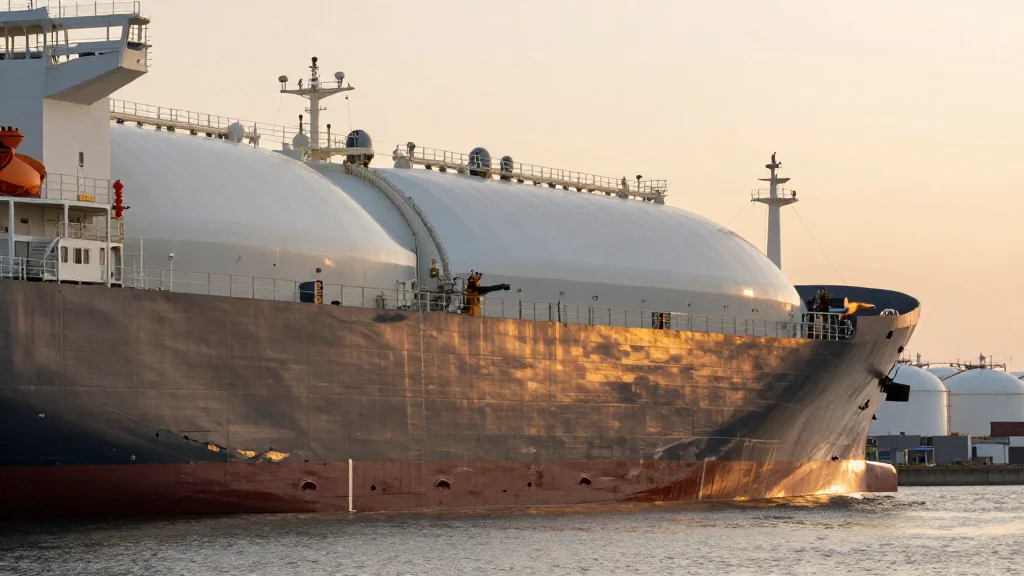
US LNG Feed Gas Flows Retreat From April Highs as Terminal Work Weighs on Demand
Why It Matters
The drop in feed‑gas volumes curtails U.S. LNG export capacity, tightening global supply and pressuring spot prices. This slowdown signals that terminal readiness issues could delay the United States’ goal of expanding its share in the growing international gas market.
Key Takeaways
- •Feed‑gas nominations dip below 17 Bcf/d, the lowest since March.
- •Freeport LNG outage curtails Texas terminal deliveries, reducing overall flow.
- •Corpus Christi terminal maintains reduced nominations amid ongoing maintenance.
- •Extended commissioning at new U.S. LNG sites dampens near‑term demand.
- •Spot LNG prices face pressure as U.S. export volumes decline.
Pulse Analysis
The United States has rapidly expanded its liquefied natural gas (LNG) export infrastructure over the past decade, positioning itself as a key supplier to Europe and Asia. Feed‑gas nominations—essentially the volume of natural gas earmarked for liquefaction—have surged, reaching a record‑high of roughly 18 billion cubic feet per day (Bcf/d) in April. That peak reflected both higher domestic demand for gas‑fired power generation and the ramp‑up of new export terminals such as Port Arthur and Rio Grande. Analysts view feed‑gas levels as a bellwether for the sector’s capacity utilization and revenue potential.
The latest data, however, show a retreat to just under 17 Bcf/d, as a combination of operational setbacks bites into supply. A forced outage at Freeport LNG, one of the nation’s largest Texas‑based facilities, removed several hundred million cubic feet per day from the export pipeline, while the Corpus Christi terminal continues to run with reduced nominations due to ongoing maintenance. In addition, several greenfield projects remain in extended commissioning phases, postponing their contribution to the feed‑gas pool. The immediate effect is a modest dip in spot LNG pricing, as buyers adjust to a tighter short‑term supply outlook.
While the dip is likely transitory, it underscores the fragility of the United States’ export growth model, which hinges on flawless terminal operations and timely project completions. Global LNG demand remains robust, driven by Europe’s energy security concerns and Asia’s transition away from coal, so any supply shortfall can translate into higher contract premiums. Investors and policymakers will be watching how quickly the affected terminals return to full service and whether new projects can meet their commissioning schedules, factors that will determine whether the U.S. can sustain its ambition to capture a larger slice of the multi‑trillion‑dollar LNG market.
US LNG Feed Gas Flows Retreat From April Highs as Terminal Work Weighs on Demand
Comments
Want to join the conversation?
Loading comments...