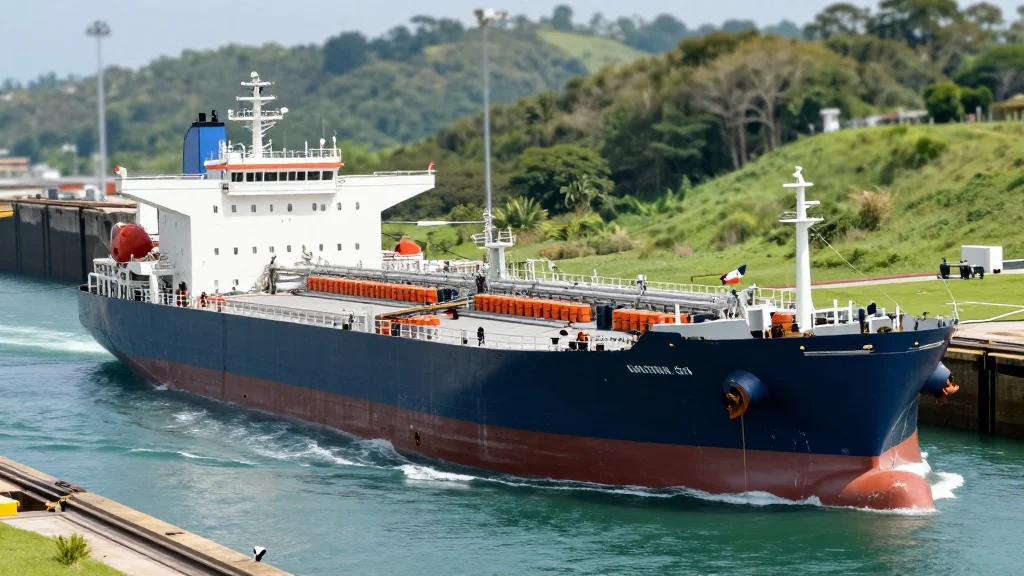
US Oil Shipments Via Panama Canal Near 4-Year High
Companies Mentioned
Why It Matters
The surge reshapes global oil logistics, giving U.S. exporters a temporary market edge while highlighting the strategic importance of the Panama Canal in supply‑chain resilience. Higher transit premiums also pressure shipping costs and downstream fuel prices in Asia.
Key Takeaways
- •U.S. crude via Panama hits ~200,000 bpd, near 4‑year high
- •Asian refiners shift to U.S. supply amid Hormuz disruption
- •Shippers paying $3‑$4 million to skip canal backlog
- •Canal cuts Gulf‑to‑Asia route time versus Cape of Good Hope
- •Largest tankers still barred; Panama handles medium‑size vessels
Pulse Analysis
The sudden bottleneck in the Strait of Hormuz has forced Asian refiners to re‑evaluate their supply chains, turning to the Panama Canal as the fastest conduit for U.S. Gulf‑coast crude. While the canal cannot accommodate the ultra‑large crude carriers that dominate long‑haul routes, its capacity for medium‑size tankers offers a viable shortcut, shaving weeks off voyages that would otherwise round Africa. This shift illustrates how geopolitical flashpoints can instantly redirect trade flows, amplifying the canal’s role as a strategic chokepoint in the global energy market.
Beyond the logistical advantage, the premium paid to bypass the canal’s queue signals a broader pricing dynamic. Shippers are shelling out $3 million to $4 million per transit, a cost that quickly passes to refiners and, ultimately, consumers. The surge in premium fees reflects both the scarcity of available slots and the urgency of securing timely deliveries in a tight market. For Asian refiners, the added expense is justified by the need to maintain refinery runs and avoid price spikes that could erode margins, especially as alternative Middle‑East supplies remain uncertain.
Looking ahead, the episode may accelerate discussions about expanding the canal’s lock dimensions or enhancing its scheduling algorithms to better handle volatile demand. A sustained increase in U.S. crude exports via Panama could also reshape market share dynamics, giving American producers a stronger foothold in Asia. However, the reliance on a waterway that cannot host the largest vessels underscores the importance of diversified routes and the potential for future infrastructure investments to mitigate similar disruptions.
US Oil Shipments Via Panama Canal Near 4-Year High
Comments
Want to join the conversation?
Loading comments...