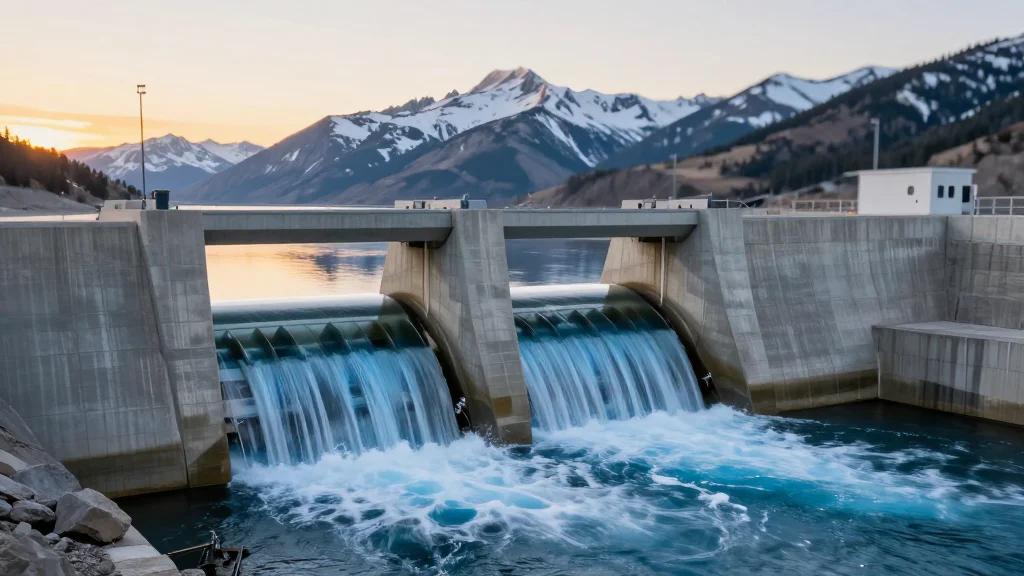
U.S. West Hydropower Generation Projected to Rise 5% in 2026 After Snow Drought

Why It Matters
Hydropower accounts for roughly one‑quarter of the West’s renewable electricity portfolio. A 5% increase in generation can reduce reliance on fossil‑fuel peakers, lower emissions, and improve grid stability during heat‑driven demand spikes. The forecast also signals that, despite climate‑induced snow deficits, existing reservoir capacity can still deliver meaningful output when weather anomalies, such as atmospheric rivers, replenish supplies. The broader implication is a test of the region’s resilience. If water‑management strategies and new storage projects can mitigate the volatility of snow‑drought cycles, hydropower could remain a cornerstone of the West’s clean‑energy transition. Conversely, persistent deficits could accelerate the shift toward alternative renewables and demand‑response solutions, reshaping investment priorities for utilities and regulators.
Key Takeaways
- •EIA projects 259 BkWh of hydropower generation in 2026, a 5% increase over 2025.
- •Northwest output expected to rise 17% to 125 BkWh, still 4% below the ten‑year average.
- •California generation forecast at 28.5 BkWh, 6% lower than 2025 but 15% above the ten‑year average.
- •2025 generation was 245 BkWh, up from a record low in 2024.
- •Hydropower will represent about 6% of total U.S. electricity generation in 2026.
Pulse Analysis
The EIA’s modest optimism reflects a broader trend: hydropower’s performance is increasingly tied to short‑term weather events rather than long‑term climate baselines. The 17% jump in the Columbia Basin is largely a statistical outlier driven by back‑to‑back atmospheric rivers, which, while beneficial this year, are not guaranteed to recur with the same frequency. Utilities that have historically counted on steady river flows must now embed greater flexibility into their resource portfolios, including fast‑response storage and demand‑side management.
From a market perspective, the forecast may temper the urgency of new large‑scale hydro projects in the West, shifting capital toward pumped‑storage and battery installations that can capture excess water‑year flows and release them when generation dips. The $1.3 billion Lewis Ridge pumped‑storage project in Kentucky, though outside the western basin, exemplifies the type of infrastructure that could become a template for the West’s next wave of investments.
Looking ahead, the key variable will be the timing and magnitude of spring melt. If early snowmelt continues to deplete reservoirs before the summer peak, the West could see a resurgence of gas‑fired peaker plants, eroding recent emissions gains. Conversely, a return to more balanced snowpack levels would reinforce hydropower’s role as a low‑cost, low‑carbon baseload resource, supporting the region’s aggressive renewable‑energy targets. Stakeholders should monitor the October STEO and emerging climate‑adaptation policies to gauge whether the 2026 rebound is a one‑off correction or the start of a more resilient hydropower era.
U.S. West Hydropower Generation Projected to Rise 5% in 2026 After Snow Drought
Comments
Want to join the conversation?
Loading comments...