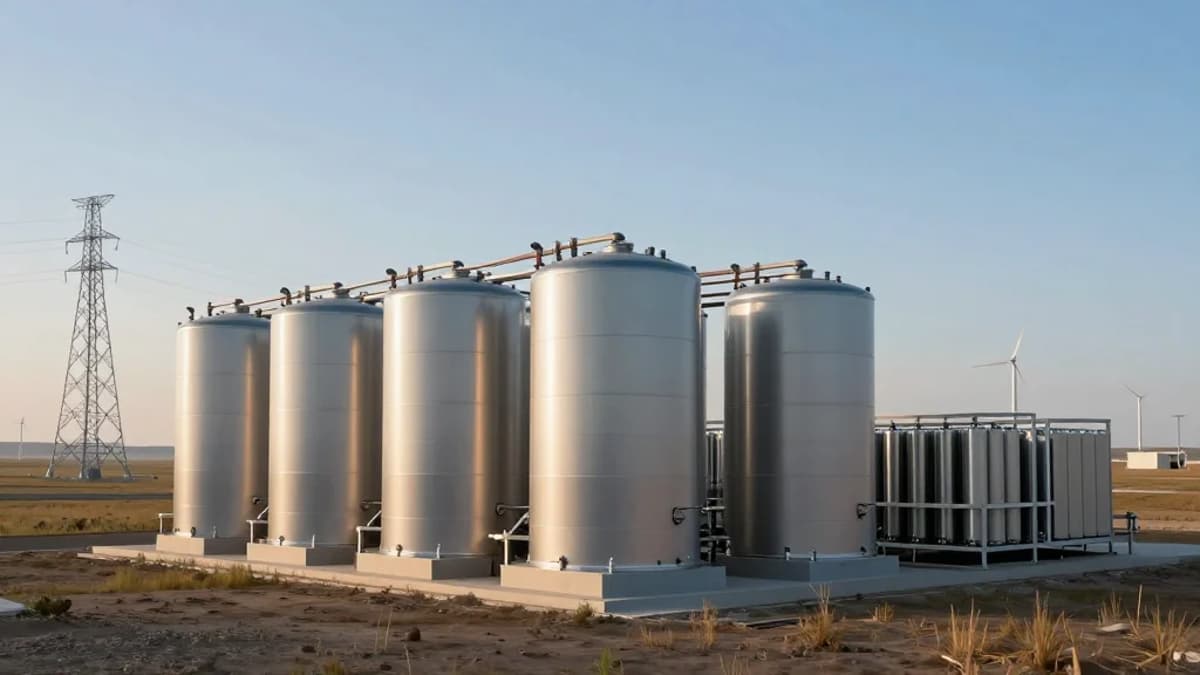
Vanadium Flow and Lithium-Ion Combine in World’s Largest Grid-Forming Hybrid Storage Plant in China
•February 27, 2026
0
Why It Matters
The hybrid design merges fast‑acting LFP power with long‑duration flow storage, addressing both short‑term frequency regulation and extended renewable firming needs, a critical capability for China’s expanding clean‑energy grid.
Key Takeaways
- •300 MW/1,200 MWh hybrid BESS now operational in Inner Mongolia
- •Combines LFP batteries with vanadium flow for speed and duration
- •Grid‑forming converters deliver virtual inertia, damping, black‑start capability
- •Part of 3 GW/12.8 GWh Gushanliang storage expansion
- •Enables millisecond‑level response to grid disturbances
Pulse Analysis
Hybrid energy storage is gaining traction as grid operators seek solutions that can both react instantly and sustain output over several hours. By pairing lithium‑iron‑phosphate cells, which excel at delivering high‑power bursts, with vanadium redox flow batteries, known for their scalable energy capacity, the Ordos plant achieves a balanced profile that mitigates the trade‑offs inherent in single‑technology systems. This architecture not only smooths the intermittency of wind and solar farms across Inner Mongolia but also reduces reliance on fossil‑fuel peaker plants, aligning with China’s carbon‑neutral targets.
The deployment of grid‑forming power‑conversion units marks a technical leap beyond traditional grid‑following inverters. Sineng Electric’s converters can synthesize virtual inertia, a synthetic analogue of the mechanical inertia lost when coal plants retire, thereby dampening frequency swings and enhancing overall system resilience. Their ability to execute black‑start procedures means the storage facility can re‑energize sections of the grid after a blackout without external generation, a capability increasingly valued as China expands its ultra‑high‑voltage network.
Strategically, the Ordos facility serves as a pilot for the 3 GW/12.8 GWh Gushanliang storage complex, signaling a broader shift toward large‑scale, multi‑technology storage hubs. Investors and manufacturers are watching closely, as the project demonstrates commercial viability, regulatory support, and performance reliability at scale. Success here could accelerate global adoption of hybrid storage models, prompting utilities worldwide to reconsider legacy storage architectures in favor of more flexible, cost‑effective solutions.
Vanadium flow and lithium-ion combine in world’s largest grid-forming hybrid storage plant in China
0
Comments
Want to join the conversation?
Loading comments...