Companies Mentioned
Why It Matters
The installation proves that vertical bifacial PV can generate comparable energy on low‑load roofs while preserving green‑roof functions, unlocking new urban solar opportunities.
Key Takeaways
- •100 kW vertical array yields up to 140 MWh/year
- •System weighs 2.4 lb/ft², no roof penetration needed
- •Combines solar with green roof, preserving stormwater retention
- •Yield comparable to conventional tilt, up to 1,400 kWh/kWp
- •Enables solar on low‑load roofs, expanding urban deployment
Pulse Analysis
Vertical solar technology is gaining traction as developers seek ways to add generation capacity without overloading existing roof structures. Over Easy Solar’s xM3 VPV Unit leverages bifacial heterojunction cells that capture sunlight from both sides, boosting output on flat surfaces where traditional tilted panels would require heavy ballast. By eliminating roof penetrations, the system reduces installation time and maintenance risk, making it attractive for dense urban environments where structural limits often preclude conventional solar arrays.
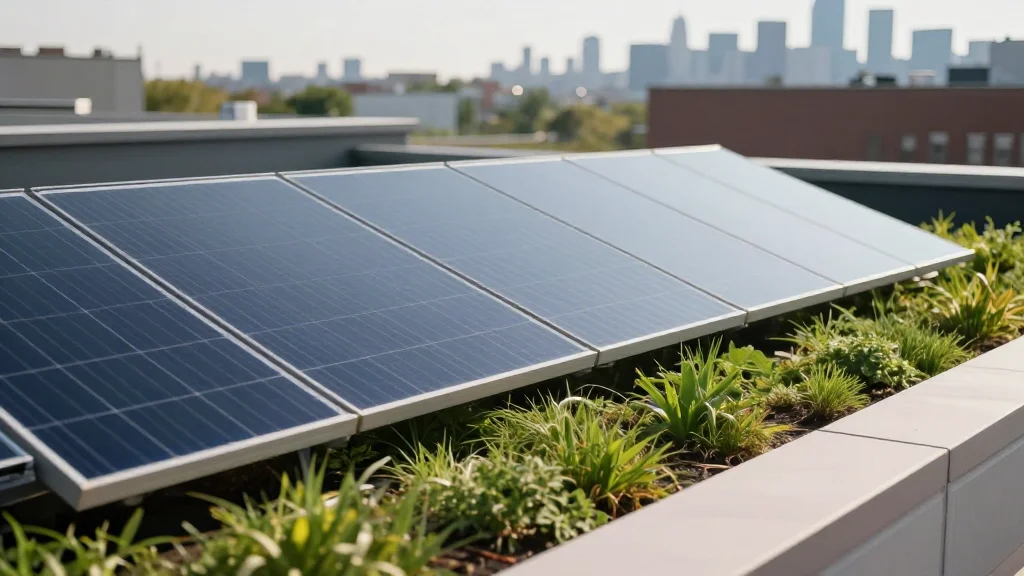
The Queens project uniquely pairs the vertical array with a pre‑grown green‑roof mat, addressing New York City’s Department of Environmental Protection mandates for stormwater management and biodiversity. The lightweight design (2.4 lb per square foot) allows the vegetation to receive rain and sunlight unimpeded, preserving plant health and runoff retention—benefits that ballasted systems typically compromise. This synergy demonstrates how renewable energy and green infrastructure can coexist, delivering both power and environmental services from the same footprint.
Performance data suggests vertical bifacial installations can match or exceed conventional east‑west tilt systems, with specific yields ranging from 1,000 to 1,400 kWh per kW per year. As Over Easy Solar expands its yield‑modeling portal and partners in markets like Australia, the technology could accelerate solar adoption on low‑load commercial roofs worldwide. By offering a modular, low‑impact solution, vertical PV addresses a key barrier to urban solar scaling, positioning itself as a strategic asset for cities aiming to meet aggressive climate targets.
Vertical rooftop PV debuts in the U.S.
Comments
Want to join the conversation?
Loading comments...