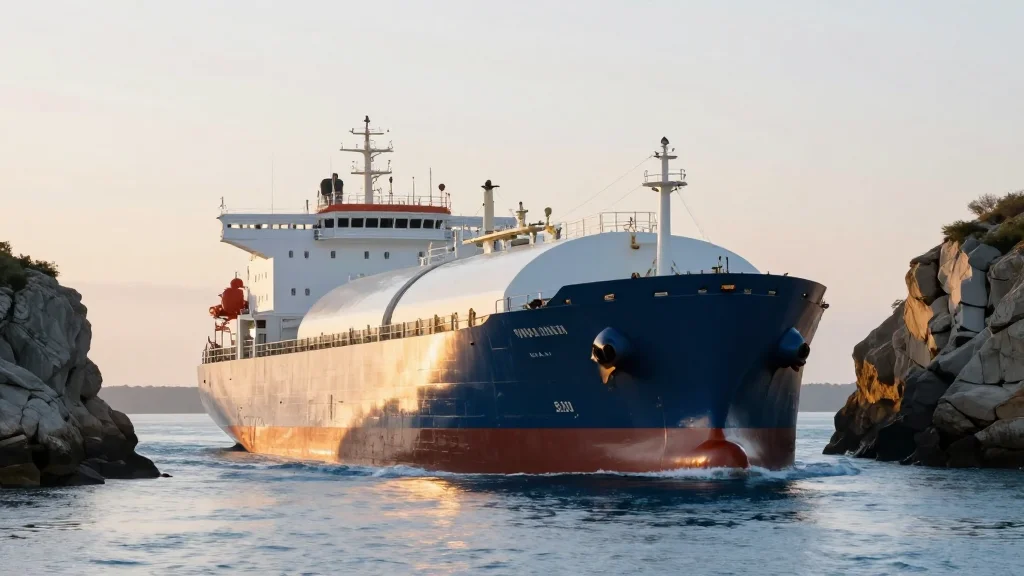
Vessels Carrying Middle East Oil, LNG Exit Hormuz, Head for Pakistan, China
Companies Mentioned
Why It Matters
The limited but resuming shipments demonstrate that critical Asian energy imports can still flow despite heightened geopolitical risk, easing short‑term supply pressure and stabilizing market sentiment.
Key Takeaways
- •LNG tanker Fuwairit leaves Hormuz for Pakistan, loaded at Qatar.
- •VLCC Eagle Verona carries ~2 million barrels Iraqi crude to China.
- •Only handful of supertankers have departed since war began Feb 28.
- •Iran‑mandated route limits traffic, stranding 20,000 seafarers inside Gulf.
- •Asia’s energy imports resume, easing pressure on global markets.
Pulse Analysis
The Strait of Hormuz, a chokepoint through which roughly 20 % of global oil and liquefied natural gas passes, has become a flashpoint since the U.S.–Israeli coalition launched its war on Iran on Feb 28. Naval threats, missile activity and Iran’s directive that all vessels use a prescribed corridor have slashed daily transits from a pre‑war average of 125‑140 to just a few per week. The resulting bottleneck has left an estimated 20,000 seafarers stranded on hundreds of ships, prompting insurers and traders to reassess risk premiums across the energy supply chain.
Amid the constrained traffic, two high‑profile shipments have broken out of the Gulf. The LNG tanker Fuwairit, flagged in the Bahamas and loaded at Qatar’s Ras Laffan on March 28, is crossing Hormuz on May 25 and will off‑load its cargo in Pakistan on May 26. Meanwhile, the VLCC Eagle Verona, chartered by Sinopec’s trading arm Unipec, departed on May 23 carrying nearly two million barrels of Iraqi Basrah crude destined for Ningbo, China, with an expected arrival on June 12. These moves signal that critical energy flows to Asia are beginning to re‑establish, offering a modest relief to tight spot markets.
Nevertheless, the broader outlook remains fragile. Iran’s enforced routing limits flexibility, and any escalation could again choke the strait, forcing shippers to divert around the Cape of Good Hope—a route that adds weeks and costs hundreds of dollars per barrel. Traders are watching spot price spreads between Middle East crude and Asian benchmarks for signs of renewed strain, while insurers are tightening coverage terms for Hormuz transits. For the next several months, the ability of a handful of vessels like Fuwairit and Eagle Verona to navigate the corridor will be a key barometer of market stability and supply‑chain resilience.
Vessels carrying Middle East oil, LNG exit Hormuz, head for Pakistan, China
Comments
Want to join the conversation?
Loading comments...