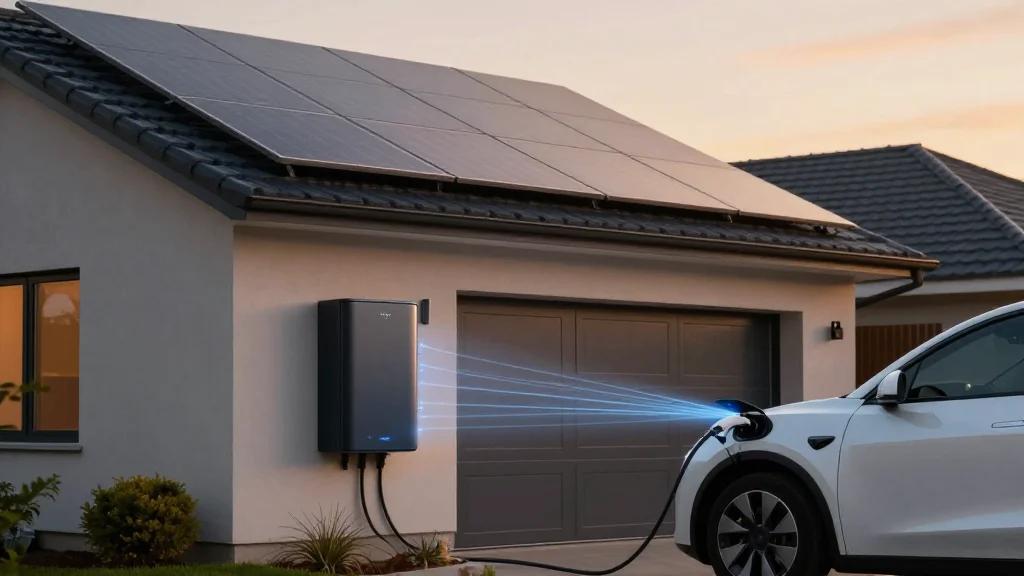
Video: Flexible Homes, Flexible Grid – Interview with Adam Cameron (SA Power Networks)
Why It Matters
Smart‑home flexibility directly tackles South Australia’s over‑generation risk, protecting revenue for utilities and enabling higher renewable penetration without costly infrastructure upgrades.
Key Takeaways
- •South Australia’s rooftop solar exceeds 70% of residential capacity
- •Smart appliances can shift 15‑20% of household load daily
- •Pilot projects link home batteries to SA Power Networks’ distribution system
- •Regulators are drafting data‑privacy rules for grid‑home communication
Pulse Analysis
South Australia has become a global benchmark for rooftop solar adoption, with more than two‑thirds of households generating their own electricity. While this renewable surge reduces emissions, it also creates a paradox: during sunny afternoons the grid can become oversupplied, forcing operators to curtail solar output or dispatch expensive peaking plants. Traditional solutions—building new transmission lines or large‑scale storage—are capital‑intensive and slow to deploy. The emerging alternative is demand‑side flexibility, where residential loads actively respond to grid conditions, smoothing the supply‑demand curve in real time.
In the EN2026 interview, Adam Cameron described how "smart homes" equipped with IoT‑enabled thermostats, water heaters, and electric‑vehicle chargers can automatically adjust consumption based on price signals or direct commands from the distribution network. By aggregating these modest adjustments across thousands of homes, the system can absorb up to 20% of excess solar generation, reducing curtailment and deferring the need for new infrastructure. Pilot programs in Adelaide already demonstrate that coordinated home battery dispatch can shave peak demand by several megawatts, while dynamic tariffs incentivize consumers to shift usage to midday when solar is abundant.
The broader implication for utilities and policymakers is clear: integrating residential flexibility into grid planning can accelerate the transition to a 100% renewable energy mix. However, scaling this model requires robust data‑exchange standards, clear privacy safeguards, and market mechanisms that reward both consumers and network operators. As regulators in South Australia draft new rules for grid‑home communication, other jurisdictions are watching closely, seeing a replicable pathway to balance high solar penetration with reliable, cost‑effective electricity supply.
Video: Flexible homes, flexible grid – Interview with Adam Cameron (SA Power Networks)
Comments
Want to join the conversation?
Loading comments...