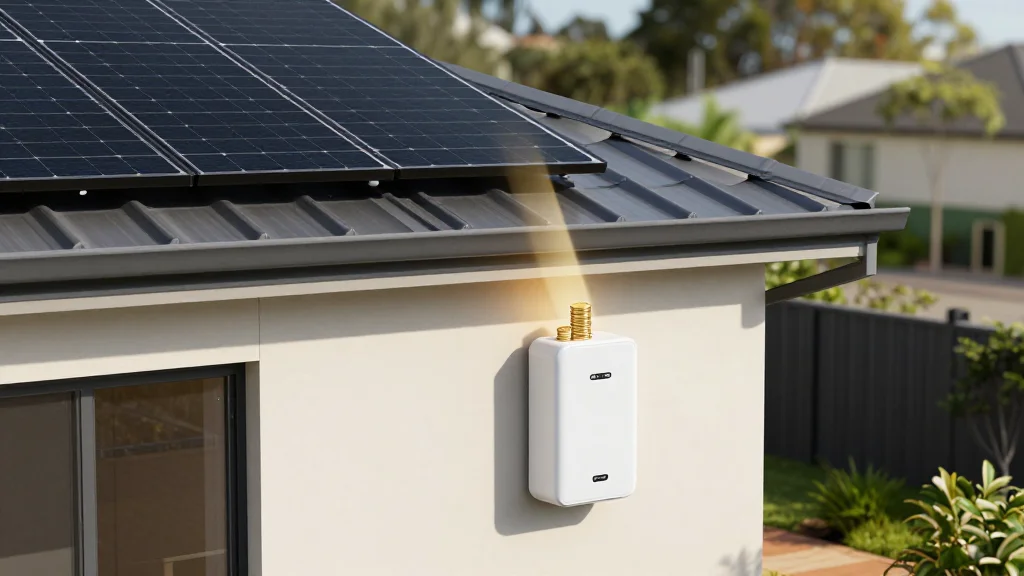
Video: From $200 Bills to $190 Credit – 1 Month with Solar & Battery
Companies Mentioned
Why It Matters
The case proves residential solar‑plus‑storage can generate immediate cash flow, accelerating consumer adoption and easing pressure on the grid.
Key Takeaways
- •Monthly net savings of ~AU$390 (~US$257) after one month
- •Battery storage turned excess solar into export credits
- •Projected payback period under five years with current rates
- •Residential micro‑grid reduces grid imports and stabilizes demand
Pulse Analysis
Australia’s residential solar market has matured rapidly, driven by falling panel costs and supportive feed‑in tariffs. Adding battery storage, once a premium add‑on, is now financially viable for many households as battery prices have dropped by more than 60% over the past five years. Utilities and policymakers are watching these deployments closely because they can defer expensive network upgrades while providing homeowners with a tangible revenue stream from exported power.
In the featured installation, the homeowner’s solar array generated enough electricity to cover daytime consumption, while the battery stored surplus for evening use and exported excess during peak price windows. The resulting grid import fell from roughly 400 kWh to under 50 kWh, and export credits turned a $200‑AU monthly bill into a $190‑AU credit, a swing of about $390‑AU (≈US$257). When converted to U.S. dollars, the economics become even clearer, highlighting a net monthly cash flow that can shave years off the system’s payback horizon.
The broader implication is a shift toward decentralized, profit‑making micro‑grids that can smooth demand peaks and lower wholesale market volatility. As more Australian homes adopt similar setups, utilities may need to redesign tariff structures and invest in smarter grid management tools. For consumers, the message is clear: pairing solar with storage is no longer a long‑term gamble but a short‑term revenue generator that also contributes to grid resilience.
Video: From $200 bills to $190 credit – 1 month with solar & battery
Comments
Want to join the conversation?
Loading comments...