Vietnam’s Race to Go Nuclear Leaves Villagers in Limbo
Why It Matters
The project could secure Vietnam’s long‑term power supply, but rushed implementation risks cost overruns, safety concerns, and further hardship for displaced communities.
Key Takeaways
- •477 households (~2,000 people) slated for relocation
- •Ninh Thuan 1‑2 aim to add 4‑6.4 GW by 2035
- •Vietnam’s power demand outpaces supply, causing $1.4 bn losses
- •Compensation offers rose from $570 to $910 per grave
Pulse Analysis
Vietnam’s renewed push for nuclear energy reflects a broader scramble to close a widening power gap. Over the past decade the country’s GDP has nearly doubled to $484 billion and installed capacity has more than doubled to 87 GW, yet peak‑load shortages in 2023 cost manufacturers $1.4 billion. Renewable expansion has been hampered by costly feed‑in tariffs, prompting Hanoi to import nearly 2.4% of its electricity from Laos and China and to consider nuclear as a baseload solution. The revived Ninh Thuan project, backed by Rosatom, promises up to 6.4 GW of low‑carbon generation, positioning Vietnam as a regional energy heavyweight.
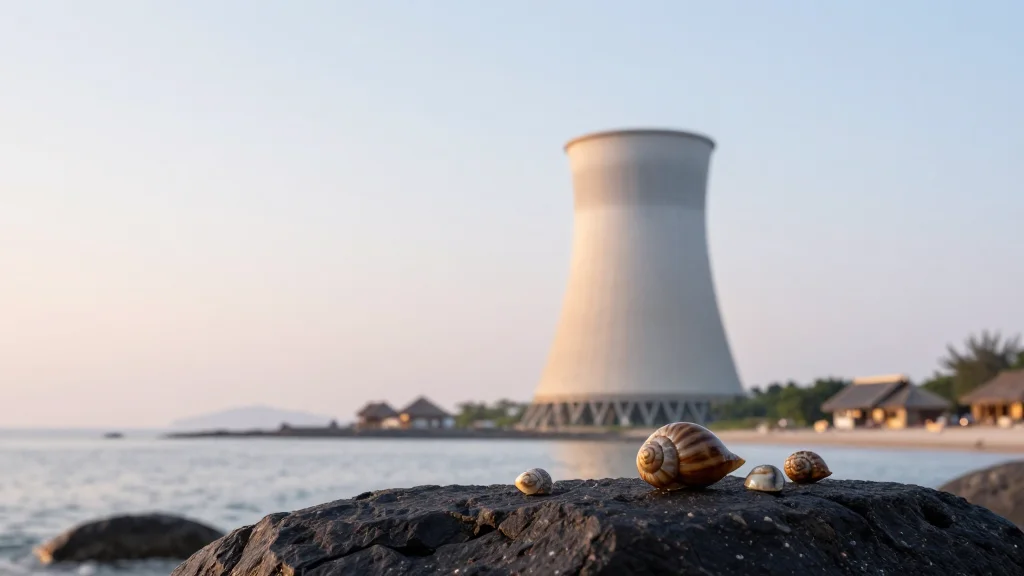
The human dimension of the nuclear revival is stark. Vinh Tuong village, earmarked for the first plant, is already seeing snail farms—once the main livelihood for hundreds—shut down. Authorities plan to move 477 households about five kilometres north, yet construction of the new settlement has not begun and a clear compensation package remains elusive. Initial offers of VND 15 million (≈$570) per family grave have been nudged to VND 24 million (≈$910), still far below the cost of relocation and rebuilding. Without robust resettlement support, the project risks deepening rural poverty and fueling social resistance.
Technical and regulatory hurdles further cloud the 2031 commissioning goal. Vietnam currently has roughly 400 nuclear‑trained workers, far short of the 2,500 specialists needed to operate two reactors, and a 15‑year timeline—more in line with global precedents like Britain’s Hinkley Point C—appears more realistic than the government’s aggressive schedule. While Vietnam’s active IAEA membership and ASEAN nuclear safety network provide a regulatory foundation, the pressure to meet the Communist Party’s centenary deadline could strain safety oversight. A measured approach that aligns staffing, training, and transparent compensation could make nuclear a viable pillar of Vietnam’s energy future without compromising safety or social stability.
Vietnam’s race to go nuclear leaves villagers in limbo
Comments
Want to join the conversation?
Loading comments...