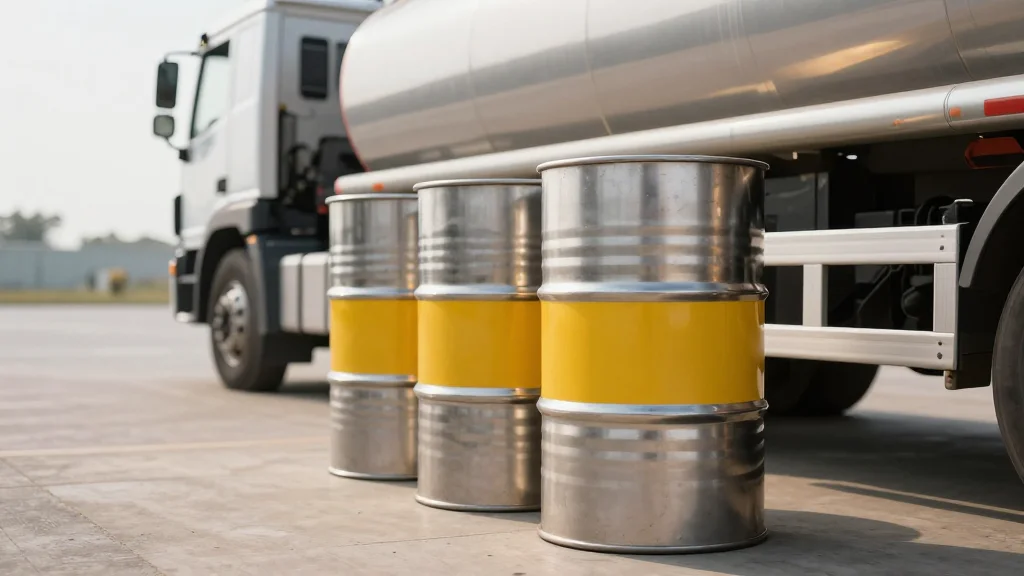
WA Establishes 2 Hour Strategic Diesel Reserve
Key Takeaways
- •WA to store 4 million liters diesel for two‑hour supply buffer
- •Deal signed with Cambridge Gulf Ltd.; delivery expected within weeks
- •Reserve could expand to 12 million liters, covering six‑hour usage
- •State consumes ~25 million liters diesel daily, exposing supply risk
- •May prompt other states to adopt strategic fuel reserves
Pulse Analysis
Western Australia’s diesel consumption dwarfs most regional economies, with roughly 25 million liters burned each day to power mining equipment, transport fleets, and remote generators. By securing a two‑hour buffer, the state aims to mitigate the risk of sudden supply disruptions caused by port congestion, refinery outages, or geopolitical shocks. The partnership with Cambridge Gulf Ltd. leverages existing storage infrastructure, allowing rapid deployment of fuel to critical sites while the government evaluates the cost‑benefit of scaling the reserve to a six‑hour capacity.
Strategic fuel reserves are not new; nations maintain oil stockpiles to meet International Energy Agency mandates, and several U.S. states hold gasoline buffers for emergencies. However, diesel’s role in heavy‑industry and remote power generation makes it a distinct challenge. A 4‑million‑liter reserve represents only 0.16 % of daily usage, prompting debate over its practical impact. Expanding to 12 million liters would still cover merely six hours, suggesting the initiative is as much a political signal of preparedness as a logistical safeguard. The storage logistics—temperature control, contamination prevention, and rapid distribution—add layers of operational complexity that will test the reserve’s effectiveness.
The broader implications touch on Australia’s energy‑security narrative and investment climate. If WA’s pilot proves valuable, other states may follow, creating a fragmented but coordinated network of diesel buffers that could stabilize regional markets during supply shocks. Such moves may also influence diesel pricing, as traders factor in a new, albeit modest, strategic demand source. For investors, the development signals heightened attention to infrastructure assets—storage terminals, rail links, and distribution fleets—potentially unlocking capital for upgrades and new projects aimed at bolstering supply resilience across the continent.
WA establishes 2 hour strategic diesel reserve
Comments
Want to join the conversation?