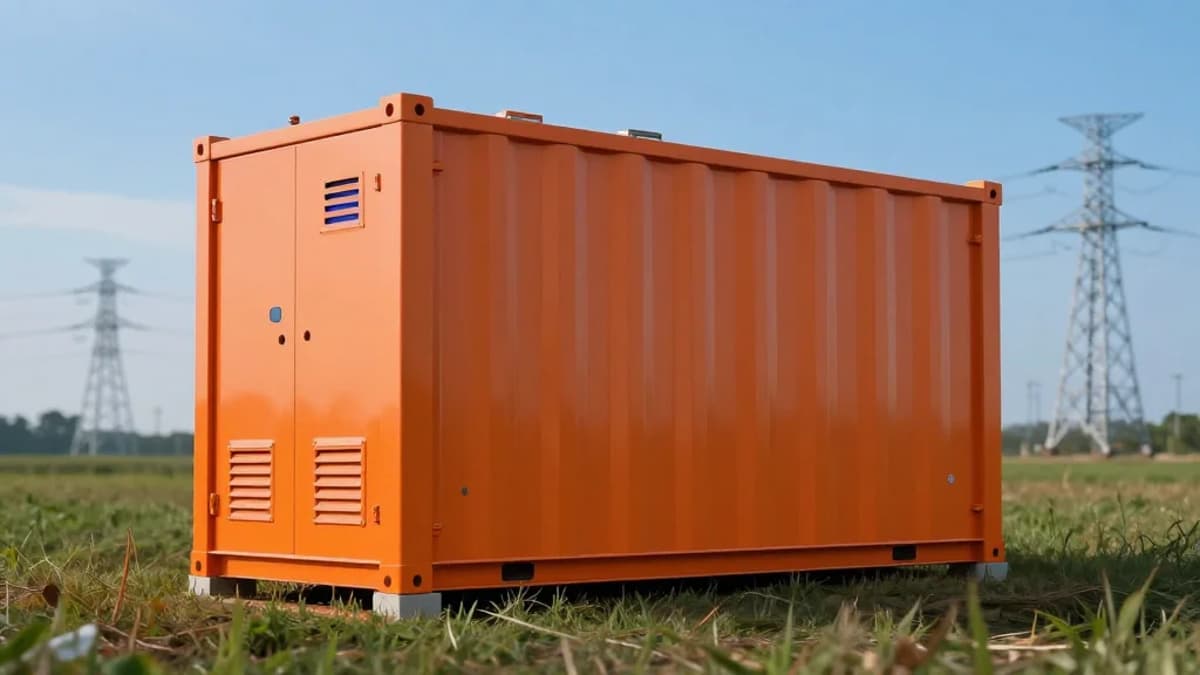
Wartsila Building Energy Storage in Support of Belgian Grid
Why It Matters
The storage asset bolsters Belgium’s grid reliability during a rapid renewable transition, showcasing the growing commercial role of large‑scale batteries in European energy markets.
Key Takeaways
- •50 MW/100 MWh BESS slated for Belgium by 2027
- •Supports Belgium’s Capacity Remuneration Mechanism for grid stability
- •Wärtsilä’s GridSolve Quantum 2 paired with GEMS software
- •First Wärtsilä project participating in Belgian CRM
- •Belgium renewable share now 30%, aiming higher
Pulse Analysis
Belgium’s power system is at a crossroads, shifting from a fossil‑heavy mix to a renewable‑centric portfolio that now accounts for roughly 30 percent of generation. This transition creates a pressing need for flexible resources that can smooth intermittent wind and solar output, especially as the nation phases out nuclear capacity. The Capacity Remuneration Mechanism, a market framework that rewards assets for providing ancillary services, has emerged as a key policy tool to ensure supply security, and large‑scale battery storage is positioned as a primary solution.
The Wärtsilä‑Gramme Storage 1 project leverages the GridSolve Quantum 2 platform, a modular lithium‑ion system capable of rapid response and high round‑trip efficiency. Integrated with the GEMS optimization suite, the BESS can autonomously manage frequency regulation, voltage support, and peak‑shaving tasks while meeting performance guarantees outlined in an engineered equipment delivery contract. With a 50‑MW power rating and 100‑MWh energy capacity, the installation can deliver up to two hours of full‑load output, providing essential grid‑balancing services that traditional generators struggle to match.
Strategically, the project marks Wärtsilä’s first foray into Belgium’s CRM and pushes its European storage footprint beyond 2.7 GWh, reinforcing its position as a leading provider of turnkey energy‑storage solutions. The successful deployment will likely accelerate investor confidence in similar battery projects across the continent, where policy incentives and renewable targets are converging. As utilities and developers seek to de‑risk grid modernization, Wärtsilä’s combined hardware‑software offering could become a benchmark for future large‑scale storage contracts, driving both market growth and technological innovation.
Wartsila Building Energy Storage in Support of Belgian Grid


Comments
Want to join the conversation?
Loading comments...