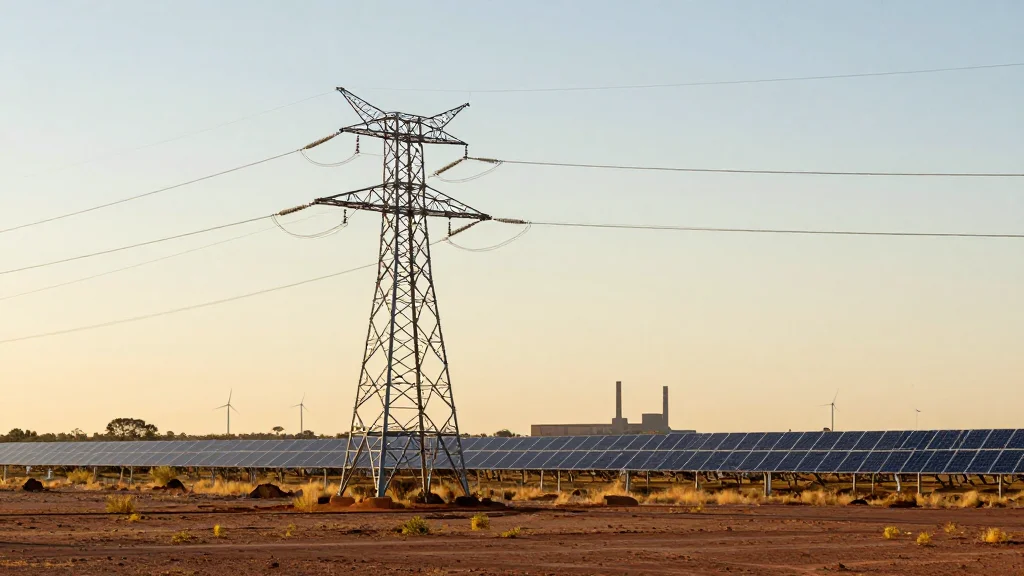
Western Australia Backs Grid Buildout Ahead of Coal Exit
Why It Matters
The fund bridges the gap between coal retirement and renewable integration, safeguarding grid reliability while accelerating Western Australia’s clean‑energy ambitions and economic diversification.
Key Takeaways
- •$1 bn clean‑energy fund targets transmission upgrades as coal retires
- •CEL‑East will supply renewable power to ~1 million Western Australian homes
- •CEL‑North and CEL‑East together add 3 GW of clean capacity
- •Project approvals fast‑tracked under the State Development Act 2025
Pulse Analysis
Western Australia’s energy landscape is at a pivotal juncture. With the retirement of the 340 MW Collie plant by 2027 and the 454 MW Muja D facility by 2029, the state faces a looming generation shortfall. The newly announced AUD 1.4 billion clean‑energy fund, equivalent to roughly $1 billion, is designed to plug that gap by financing high‑voltage transmission corridors and ancillary network services. By earmarking capital for grid reinforcement, the government is ensuring that the influx of solar and wind generation can be reliably moved from remote resource zones to demand centres, mitigating curtailment risks that have plagued earlier renewable rollouts.
The Clean Energy Link projects are the flagship components of this strategy. CEL‑East will extend the South West Interconnected System eastward, unlocking new solar and wind farms near Collie and delivering clean power to about one million households. Meanwhile, CEL‑North will connect the Mid West’s burgeoning renewable portfolio to the Perth basin, featuring high‑capacity lines, substations and transformers. Together, the two links will inject 3 GW of renewable capacity into the grid and generate roughly 800 construction jobs, underscoring the dual economic and environmental objectives of the rollout. Their designation as priority projects under the State Development Act 2025 accelerates permitting, a critical advantage in a sector where regulatory delays can erode project economics.
Beyond state borders, Western Australia’s aggressive grid investment signals a broader shift in Australia’s energy transition. The AUD 1.6 billion network spend over recent years, coupled with the fresh fund, positions the region as a testbed for large‑scale renewable integration and could attract private capital seeking stable, policy‑backed returns. By coupling infrastructure funding with clear timelines for coal plant retirements, the government reduces market uncertainty, encouraging developers to commit to multi‑gigawatt projects. This approach may serve as a template for other jurisdictions grappling with similar decarbonisation timelines, reinforcing Australia’s emerging role as a renewable energy exporter and a hub for green technology innovation.
Western Australia backs grid buildout ahead of coal exit
Comments
Want to join the conversation?
Loading comments...