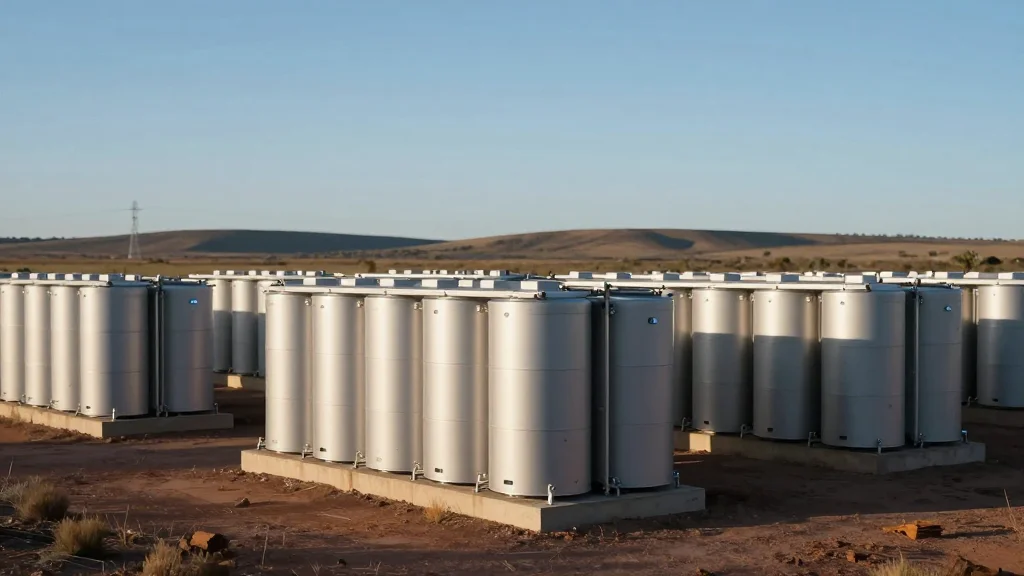
Western Australia Battery Storage Supplies Record 37.2% of Peak Demand

Companies Mentioned
Why It Matters
The 37.2% peak‑load contribution demonstrates that large‑scale batteries can play a decisive role in meeting demand on isolated grids, reducing reliance on coal and diesel generation. For policymakers, the result validates the Capacity Investment Scheme’s approach of bundling renewable generation with storage, offering a template for other regions facing similar decarbonisation challenges. For investors and developers, the achievement signals a maturing market where storage assets are no longer niche frequency‑control tools but core components of energy supply. The record also raises questions about the future pricing of electricity in the SWIS, the profitability of remaining thermal plants, and the potential for export of Australian storage expertise to other island or remote systems.
Key Takeaways
- •Utility‑scale batteries supplied 37.2% of SWIS peak demand on May 9, a world‑record for an isolated grid.
- •The figure excludes behind‑the‑meter batteries, meaning actual contribution may be higher.
- •Synergy’s 2,400 MWh and Neoen’s 2,200 MWh Collie batteries together provide over 4 GWh of storage capacity.
- •Federal CIS has funded 1.9 GW of renewables and 3.7 GWh of storage slated for 2030 operation.
- •Western Australia joins South Australia and California as the only jurisdictions with >35% battery penetration at peak.
Pulse Analysis
Western Australia’s battery milestone is more than a statistical curiosity; it marks a structural shift in how isolated power systems can achieve deep decarbonisation. Historically, such grids relied on dispatchable coal or diesel plants to meet peak demand, with storage relegated to short‑duration frequency support. The 37.2% figure shows that when storage is sized to gigawatt‑hour levels and paired with abundant solar, it can shoulder a substantial share of the load curve, effectively acting as a virtual peaker plant.
The policy backdrop is critical. The Capacity Investment Scheme’s bundling of renewable generation with storage creates a de‑risked investment environment, encouraging developers to think in terms of integrated energy hubs rather than stand‑alone assets. This contrasts with the NEM, where market rules have historically rewarded short‑term arbitrage, limiting the economic case for long‑duration storage. As the SWIS moves toward the retirement of its coal fleet, the economics will increasingly favour storage‑rich portfolios, potentially accelerating the decline of remaining thermal generators.
Looking forward, the next wave of projects due by 2030 will test whether the current record can be sustained and expanded. Key variables include the ability of the grid to manage simultaneous large‑scale charge‑discharge cycles, the evolution of market pricing mechanisms to reward storage for capacity and energy services, and the integration of emerging technologies such as hydrogen‑based power‑to‑gas. If Western Australia can navigate these challenges, it will set a replicable blueprint for other remote grids—from Alaska to the Pacific islands—seeking to replace fossil peakers with clean, dispatchable storage.
Western Australia Battery Storage Supplies Record 37.2% of Peak Demand
Comments
Want to join the conversation?
Loading comments...