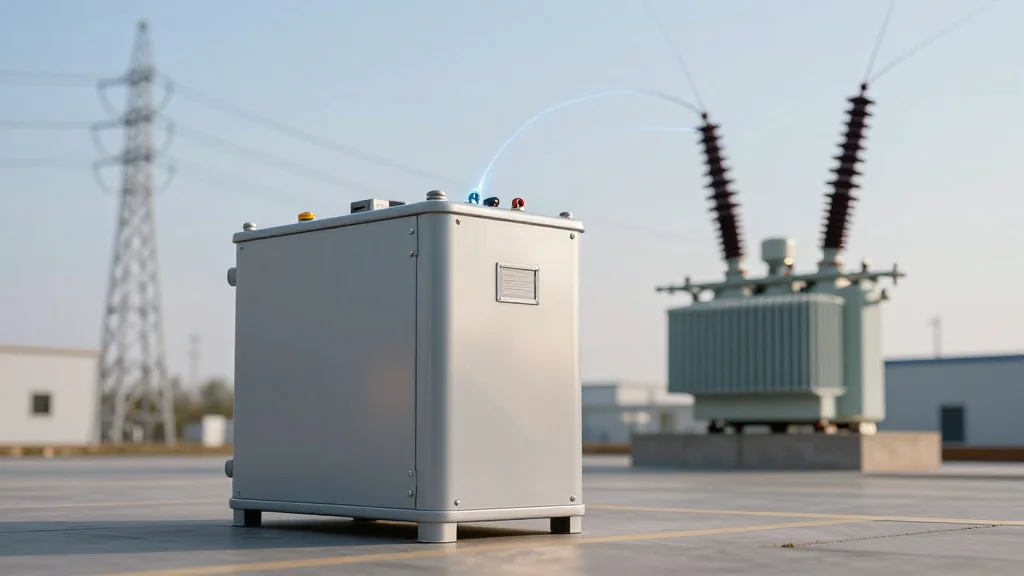
Westnetz’s 21 MW Battery Stabilizes German Grid Frequency in Real‑Time Test

Why It Matters
The ability of battery storage to provide inertia‑like services directly addresses one of the most pressing technical hurdles to high renewable penetration—frequency stability. By demonstrating real‑time grid‑forming control, Westnetz offers a blueprint for other DSOs to replace or supplement conventional generators, reducing carbon emissions and operational costs. Moreover, the test provides concrete data that regulators can use to design market mechanisms that compensate storage for ancillary services, unlocking new revenue streams and encouraging further investment in large‑scale batteries. In a broader context, the SUREVIVE results could influence EU policy on grid modernization, supporting the European Commission’s goal of a carbon‑neutral power system by 2050. If battery‑based inertia becomes a standard grid service, it could accelerate the phase‑out of coal and gas plants, improve grid reliability, and enhance the economic case for offshore wind and solar projects that currently face curtailment risks.
Key Takeaways
- •Westnetz completed the first real‑world test of a 21 MW/55 MWh battery storage system in Germany’s medium‑voltage grid.
- •The BESS operated in grid‑forming mode, delivering inertia‑like reserve comparable to conventional power plants.
- •Project manager Ingo Liere‑Netheler confirmed the plant reacted exactly as calculated during demanding system events.
- •Fraunhofer ISE’s Roland Singer highlighted the test as a crucial step from simulation to real‑world validation.
- •Next steps include voltage‑formation testing and scaling the technology to higher‑voltage transmission networks.
Pulse Analysis
The SUREVIVE pilot arrives at a moment when Europe’s grid operators are scrambling to reconcile rapid renewable growth with legacy stability mechanisms. Historically, system inertia has been an implicit benefit of large, spinning generators; batteries, by contrast, have been viewed as passive storage. Westnetz’s demonstration flips that narrative, showing that modern power electronics can actively emulate inertia, a capability that could reshape ancillary service markets. In markets like Germany’s, where the capacity market already rewards flexibility, a formalized product for battery‑provided inertia could unlock billions of euros in new revenue, making large‑scale BESS projects financially viable without relying solely on energy arbitrage.
From a competitive standpoint, the test underscores the strategic advantage of integrated solutions—SMA’s inverter technology, Hithium’s battery chemistry, and Schoenergie’s system integration all play a role. Companies that can bundle these components into a turnkey, grid‑forming package will likely capture early contracts as DSOs seek to meet tightening renewable targets. Conversely, traditional generators may face accelerated de‑commissioning if batteries can reliably provide the same stability services at lower operating costs.
Looking ahead, the real test will be scaling the technology beyond pilot sites. Regulatory acceptance, standardization of performance metrics, and the development of transparent pricing for frequency and voltage services will determine whether battery‑based inertia becomes a mainstream grid asset. If the SUREVIVE data can be translated into robust market rules, Europe could see a cascade of similar deployments, fundamentally altering the generation mix and accelerating the continent’s path to net‑zero emissions.
Westnetz’s 21 MW Battery Stabilizes German Grid Frequency in Real‑Time Test
Comments
Want to join the conversation?
Loading comments...