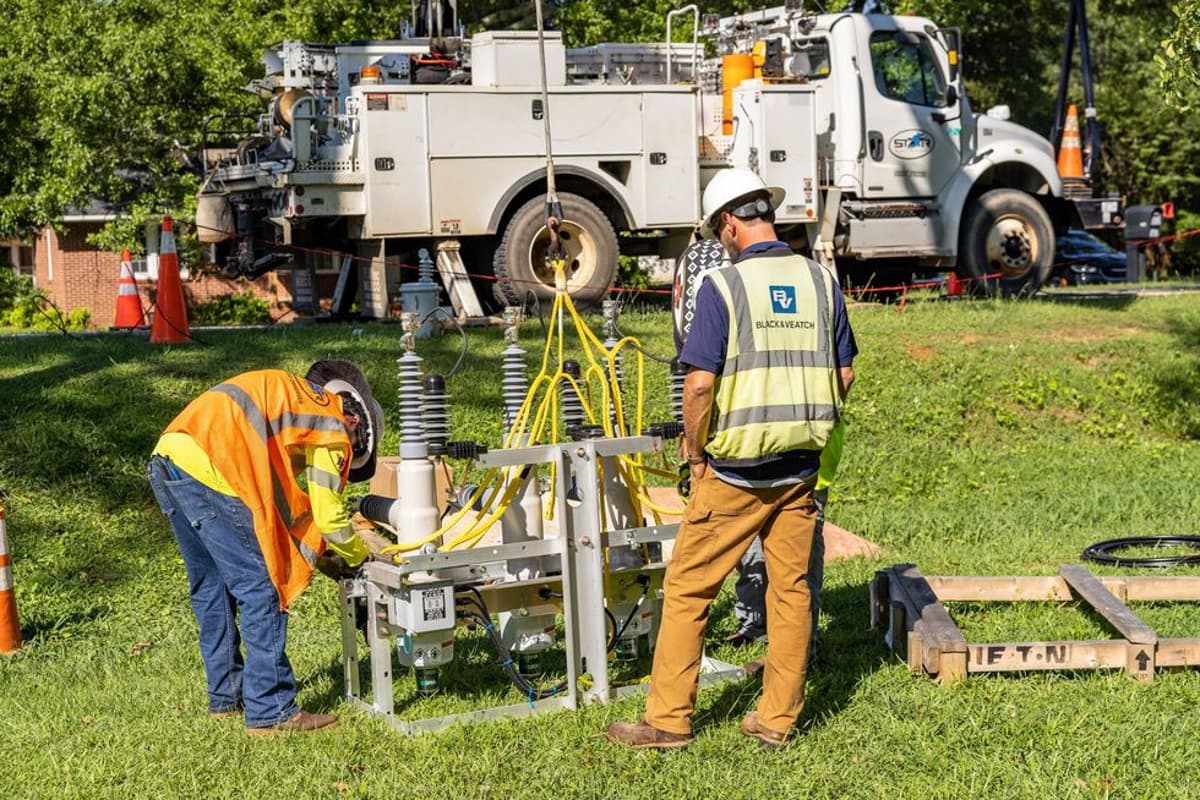
What It Takes for Future-Ready Power Distribution
Why It Matters
The shift redefines utility resilience, forcing rapid investment in automation, DER integration, and cyber‑physical security to meet evolving load patterns and regulatory pressure. Utilities that lag risk higher outage costs, regulatory penalties, and loss of customer trust.
Key Takeaways
- •Outage duration cut 76% after Georgia Power modernization
- •Only 22% of utilities have unified cyber‑physical teams
- •Distribution automation reduces manual restoration and improves recovery targets
- •Just 19% of utilities confident in load‑growth forecasts
- •Edge visibility depends on sensors, AMI, AI, and advanced communications
Pulse Analysis
The traditional model of utility resilience—dispatching crews after a fault—is losing relevance as storms grow more frequent and grid complexity rises. Utilities are now hardening infrastructure with stronger poles, undergrounding, and strategically placed reclosers, while leveraging distribution automation to isolate faults instantly. This upstream approach not only shortens outage durations but also enables utilities to set aggressive restoration targets, translating into measurable cost savings and higher customer satisfaction.
At the same time, the rapid proliferation of distributed energy resources—solar rooftops, battery storage, electric vehicles—has turned feeders into two‑way conduits. When DER output approaches or exceeds a line’s hosting capacity, voltage regulation and fault‑current coordination become unpredictable, forcing utilities to adopt dynamic hosting‑capacity studies and flexible planning models. By integrating DER forecasts, EV adoption curves, and localized load growth into their distribution management systems, utilities can balance supply and demand in real time, turning what was once a threat into a revenue‑generating asset.
The final piece of the puzzle is edge intelligence. Advanced sensors, smart meters, and high‑speed communications feed granular data into centralized analytics platforms powered by AI and machine learning. This visibility allows operators to anticipate conditions, automate switching, and respond proactively. However, the same connectivity expands the attack surface; only 22% of utilities have merged cyber and physical security teams despite a 50% rise in substation attacks. Embedding security into the grid’s architecture from day one is now a non‑negotiable requirement for any future‑ready distribution network.
What It Takes for Future-Ready Power Distribution
Comments
Want to join the conversation?
Loading comments...