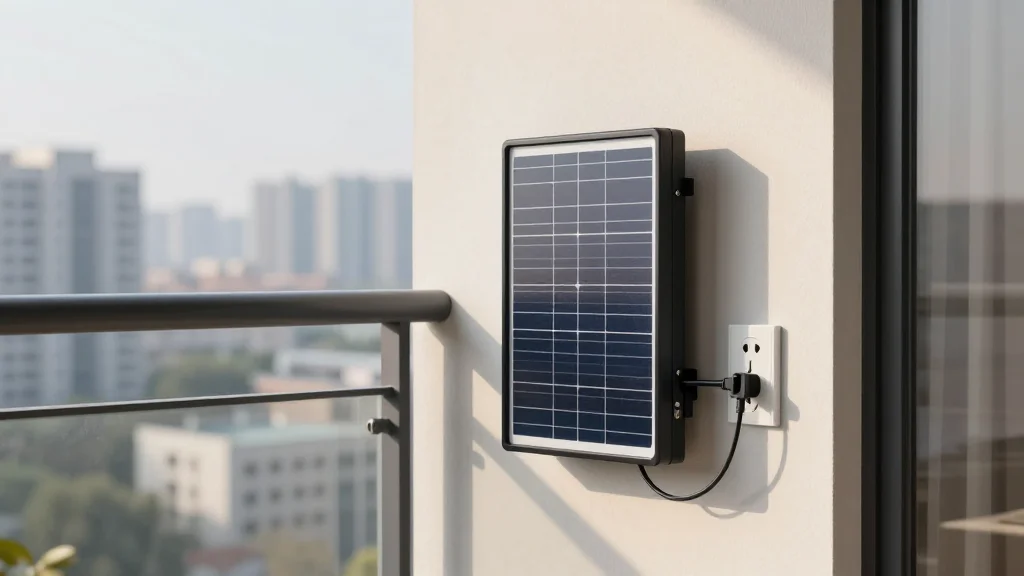
What to Know Before You Get Balcony Solar
Companies Mentioned
Why It Matters
Balcony solar expands clean‑energy access to the 40% of U.S. homes that can’t install rooftop arrays, creating a new distributed‑generation market and reducing grid demand. Certified, safe products could accelerate adoption and drive utility‑scale decarbonization goals.
Key Takeaways
- •Utah passed the first plug‑in solar law in 2025.
- •California’s Bright Saver sells 800‑W units for $1,499.
- •Systems can offset a fridge’s load, saving ~ $500 annually.
- •UL 3700 safety standard aims certification within months, not years.
- •Germany grew balcony solar from 40k to 4 million units (2017‑2025).
Pulse Analysis
The emergence of plug‑in balcony solar marks a shift from traditional rooftop installations toward ultra‑modular, consumer‑grade generation. By connecting a compact inverter directly to a standard 120‑volt outlet, homeowners can capture a meaningful slice of daytime electricity without navigating utility interconnection processes. Early adopters in California report annual savings near $500, translating to a four‑ to five‑year return on investment that rivals many residential solar projects. As states like Utah codify safety and interconnection rules, the market is poised for rapid scaling, especially for renters and multi‑unit dwellings that previously faced barriers.
Safety is the linchpin of broader acceptance. The National Electric Code does not yet address plug‑in systems, leaving a regulatory gray zone that manufacturers have been reluctant to cross. UL Solutions’ new UL 3700 standard, launched in early 2024, establishes rigorous testing for over‑current protection, insulated plugs, and fire‑risk mitigation. Once UL certification becomes commonplace, consumer confidence should rise, prompting manufacturers to accelerate product rollouts. This regulatory clarity also helps utilities plan for distributed generation impacts, reducing the risk of unmanaged back‑feeding and grid instability.
International experience underscores the technology’s potential. Germany’s balcony‑solar fleet exploded from roughly 40,000 units in 2017 to four million by 2025, with negligible safety incidents. That track record, combined with U.S. policy momentum, suggests a near‑term surge in domestic installations. Industry analysts anticipate a wave of innovation—integrated battery packs, smart monitoring, and aesthetic designs—that will make balcony solar a mainstream option for the 40 percent of American households lacking roof space or capital for larger systems. The convergence of supportive legislation, safety certification, and proven demand positions plug‑in solar as a catalyst for the next phase of the clean‑energy transition.
What to know before you get balcony solar
Comments
Want to join the conversation?
Loading comments...