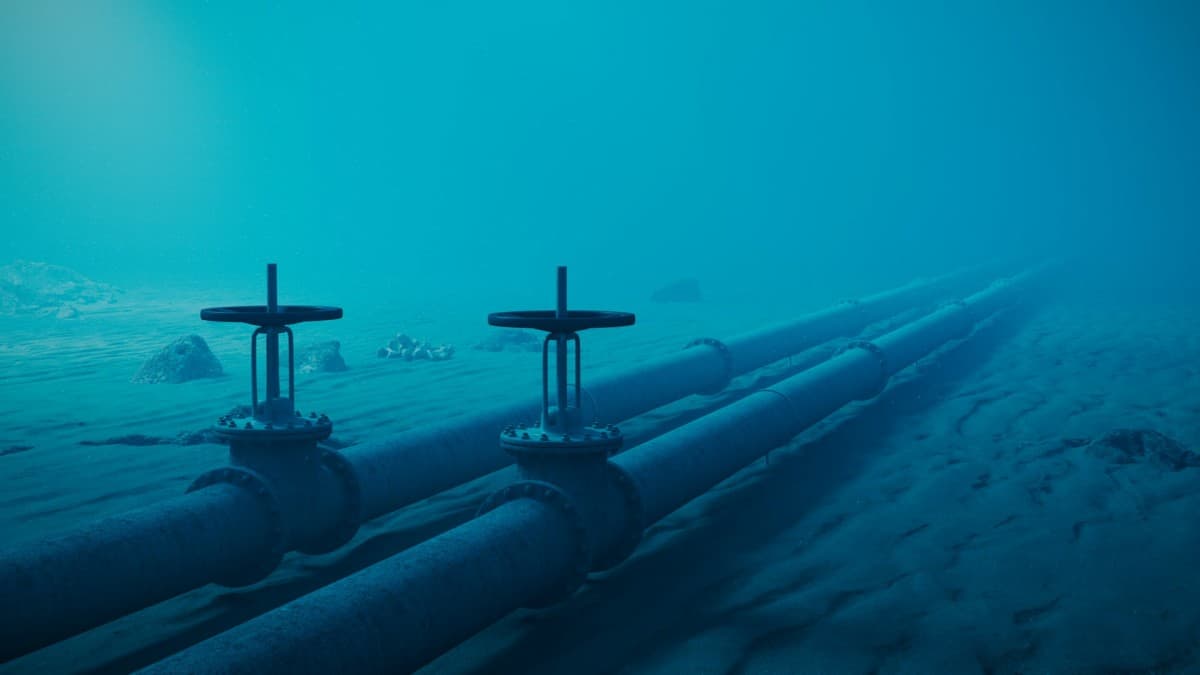
What's Stopping the Trans-Caspian Pipeline After 27 Years?
Companies Mentioned
Why It Matters
If built, the pipeline would reroute Central Asian gas around Russia and Iran, bolstering European energy security and giving Turkmenistan a lucrative export corridor, while its delay preserves existing geopolitical dependencies.
Key Takeaways
- •Turkmenistan needs strong commercial and security guarantees to commit to TCP.
- •China’s $5.1 billion CNPC deal gives Beijing leverage over Turkmen gas decisions.
- •Revised TCP interconnector would transport 10‑12 bcm, costing $0.5‑0.8 billion.
- •US, Turkey, EU back diversification, but Russia and Iran block final investment.
- •Legal and financing hurdles keep the project in limbo after 27 years.
Pulse Analysis
Europe’s scramble for reliable, non‑Russian gas has revived interest in the Trans‑Caspian corridor, a potential shortcut that would link Turkmenistan’s vast Galkynysh field to the Southern Gas Corridor. Unlike overland routes that traverse Russian or Iranian territory, a subsea pipeline could deliver up to 30 bcm of gas directly to Turkey and onward to the EU, supporting the bloc’s green‑energy transition while diversifying supply sources. The concept also aligns with broader strategic aims to create a resilient Eurasian energy network that can adapt to shifting geopolitical pressures.
At the heart of the stalemate is Turkmenistan’s calculated neutrality. While the nation seeks to monetize its fourth‑largest gas reserves, it fears retaliation from Moscow and Tehran if it overtly pivots westward. Beijing’s $5.1 billion partnership to expand the Galkynysh field and develop the Line D pipeline to China gives the PRC a powerful bargaining chip, allowing it to influence Turkmen decisions and keep the TCP on hold. Meanwhile, U.S. officials have publicly pledged support, but without concrete security guarantees or a clear financing framework, Turkmen officials remain hesitant.
A pragmatic compromise under discussion is a lighter interconnector capable of moving 10‑12 bcm of gas at a cost of $0.5‑0.8 billion. Proponents argue this scale reduces financial risk and sidesteps some legal challenges, yet critics warn that the reduced volume may not justify the geopolitical gamble of antagonising Russia and Iran. For the project to advance, Turkmenistan must see a credible commercial return and receive firm protection guarantees, while regional powers need to reconcile competing interests. Success would reshape energy flows across the Caspian, but the current super‑power tug‑of‑war suggests the pipeline’s future remains uncertain.
What's Stopping the Trans-Caspian Pipeline After 27 Years?
Comments
Want to join the conversation?
Loading comments...