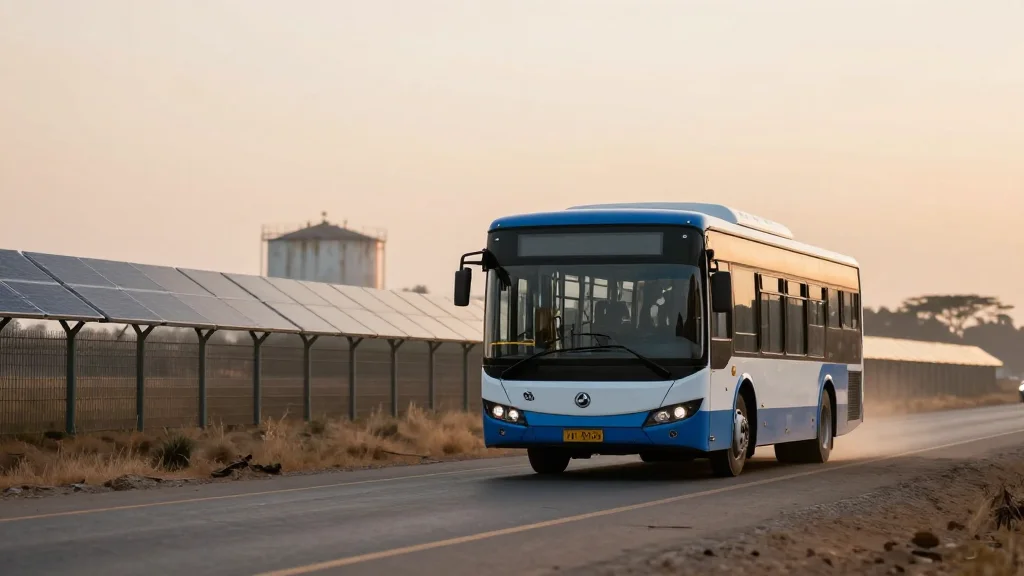
When Oil Shocks Hit Home: Why Africa’s Buses Must Go Electric
Why It Matters
Electrifying public buses reduces Kenya’s foreign‑exchange drain and shields millions of commuters from price volatility, positioning the country for greater energy security and climate resilience. The shift also creates a replicable model for other oil‑dependent African economies.
Key Takeaways
- •Kenya imports $5 billion of fuel annually, draining foreign‑exchange reserves.
- •Diesel prices rose up to 80% in East Africa, squeezing bus margins.
- •Over 90% of Kenya’s electricity is renewable, providing surplus geothermal power.
- •Electric buses now under 1% of Nairobi’s fleet, but could reach 20‑30%.
- •Pay‑As‑You‑Drive models turn electric buses into low‑upfront, cost‑predictable assets.
Pulse Analysis
The latest oil price shock has turned Kenya’s transport sector into a case study of vulnerability. With nearly all fuel imported, a sudden price surge forces bus operators to either absorb costs—eating into already thin profit margins—or pass them on to commuters, inflating daily living expenses. The ripple effect reaches food, medicine and manufacturing supply chains, amplifying the macroeconomic strain on a nation already wrestling with foreign‑exchange pressures.
Kenya’s energy landscape, however, offers a ready-made solution. More than 90% of its electricity generation comes from renewable sources—geothermal, wind, and hydro—creating an average surplus of 800 GWh of under‑utilized geothermal power during off‑peak periods. Electric buses can act as flexible loads, soaking up this excess clean energy while delivering predictable operating costs through Pay‑As‑You‑Drive models. Even before the recent diesel spikes, total cost of ownership for electric buses was approaching parity with diesel, and the volatility now makes the financial case even stronger.
Beyond immediate economics, electrifying the bus fleet advances climate goals and public‑health outcomes by eliminating tailpipe emissions that contribute to urban air pollution. Scaling electric buses to 20‑30% of Nairobi’s fleet would dramatically reduce exposure to global oil shocks, preserve foreign‑exchange reserves, and showcase a pathway for other African cities to achieve energy independence. Policymakers and investors alike are thus urged to accelerate financing, infrastructure rollout, and regulatory support to turn this strategic opportunity into reality.
When Oil Shocks Hit Home: Why Africa’s Buses Must Go Electric
Comments
Want to join the conversation?
Loading comments...