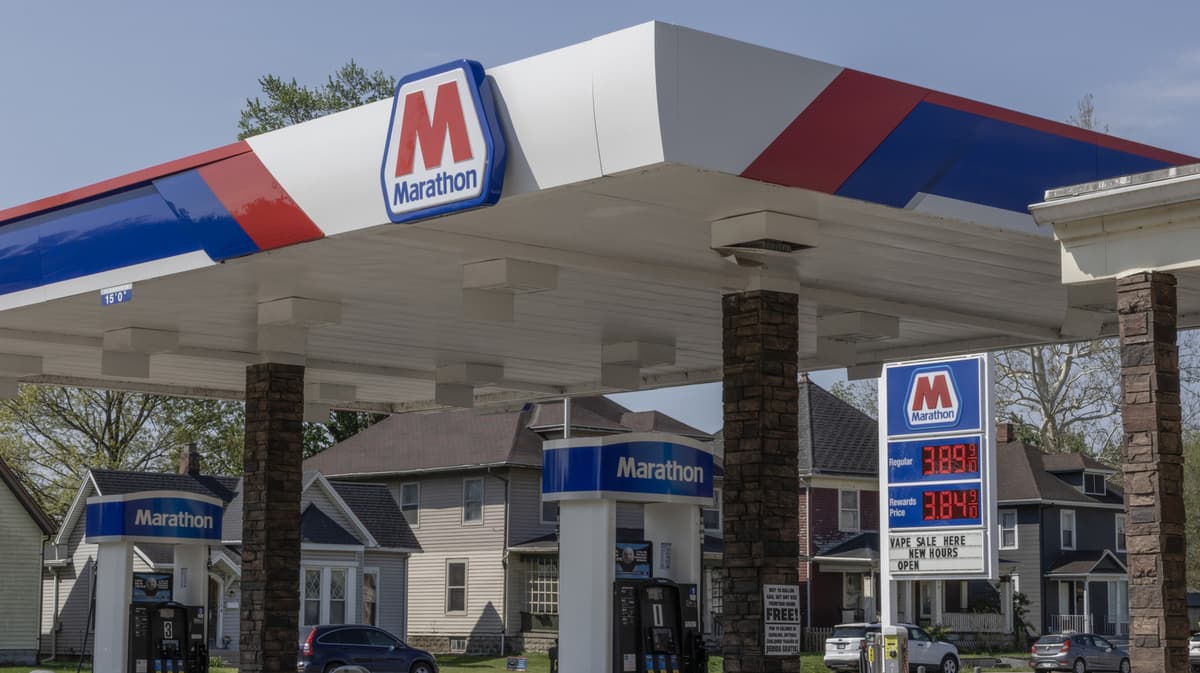
Companies Mentioned
Why It Matters
Marathon’s scale reshapes the U.S. fuel‑retail landscape and its renewable‑energy push signals a broader industry shift toward lower‑carbon fuels amid mounting regulatory pressure.
Key Takeaways
- •Marathon Petroleum operates over 7,000 U.S. gas stations.
- •Acquired Andeavor in 2018, becoming largest U.S. refiner.
- •Sold Speedway to 7‑Eleven for $21 billion in 2021.
- •Investing in renewable natural gas and soy‑based diesel.
Pulse Analysis
Marathon Petroleum’s evolution from a regional oil producer to the United States’ biggest refiner illustrates the relentless consolidation that has defined the downstream sector. The 2018 purchase of Andeavor added ten refineries and thousands of retail sites, giving Marathon control over roughly 20,000 miles of pipelines and a dominant presence from Texas to California. This scale not only strengthens its bargaining power with suppliers and distributors but also positions the company as a critical conduit for any future fuel‑transition policies, making its strategic choices a bellwether for the industry.
In response to mounting climate expectations, Marathon has begun diversifying beyond traditional gasoline. A 2023 investment that secured just under 50% of LF Bioenergy signals a serious commitment to renewable natural gas, while the Green Bison soy‑processing facility produces diesel derived from soybean oil. These initiatives allow Marathon to tap emerging low‑carbon fuel markets, hedge against declining gasoline demand, and potentially qualify for federal incentives aimed at decarbonizing transportation. The company’s dual focus on high‑volume refining and renewable projects reflects a pragmatic transition strategy rather than a full‑scale pivot.
Environmental compliance remains a litmus test for Marathon’s long‑term credibility. A 2023 refinery fire in Louisiana, which forced evacuations and sparked lawsuits, highlighted lingering safety and maintenance gaps. Such incidents amplify regulatory scrutiny and could accelerate the push for stricter oversight of aging infrastructure. As investors and policymakers weigh the risks of legacy fossil‑fuel assets, Marathon’s ability to modernize its operations while expanding its renewable portfolio will be pivotal in determining whether it can sustain profitability in a decarbonizing economy.
Who Owns Marathon Gas Stations?
Comments
Want to join the conversation?
Loading comments...