Why BESS Performance Guarantees Are More Complex than They Seem
Companies Mentioned
Why It Matters
Developers and financiers face unexpected shortfalls and disputes when guarantees don’t reflect actual operating conditions, directly impacting project economics and risk allocation.
Key Takeaways
- •Guarantees often use total‑energy‑throughput, ignoring specific cycling stresses
- •Degradation models rely on accelerated lab tests, not field‑realistic conditions
- •Round‑trip efficiency declines with C‑rate and aging, yet contracts treat it static
- •System‑level availability includes PCS and BOP, not just battery health
- •Calendar aging begins pre‑commissioning; storage conditions can void warranties
Pulse Analysis
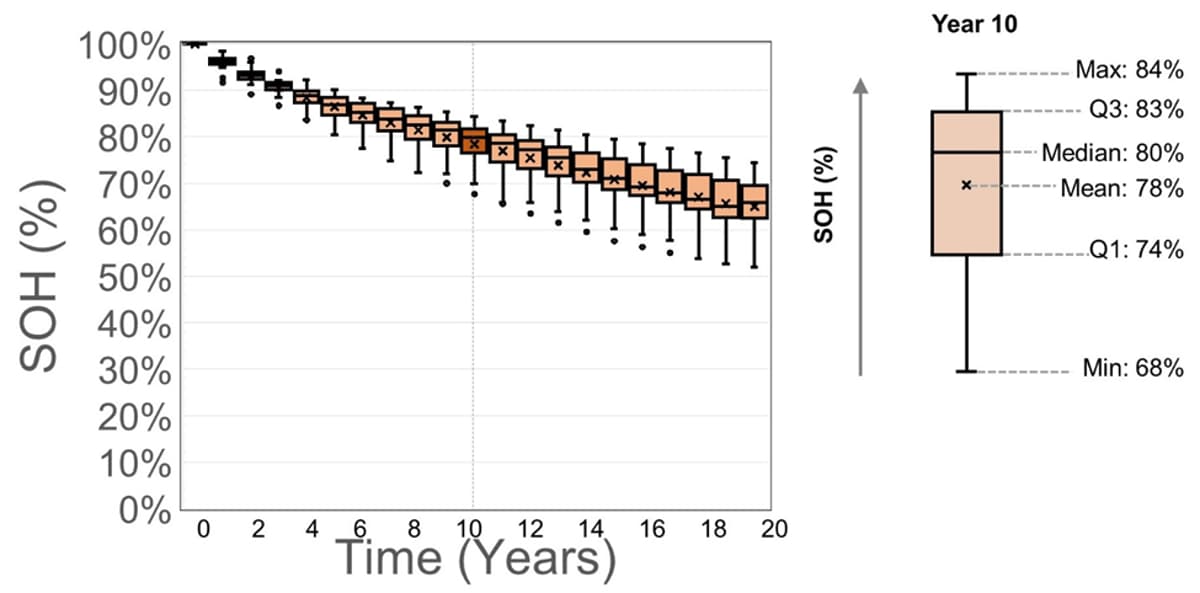
The rapid expansion of utility‑scale battery storage has made performance guarantees a contractual cornerstone, yet many agreements still rely on a one‑size‑fits‑all throughput metric. Suppliers protect themselves with conservative degradation models derived from high‑temperature, high‑C‑rate lab cycles, which can inflate the projected capacity and drive up system sizing. For developers, this translates into higher upfront capital without a commensurate return, especially when the actual use case—such as frequency regulation versus daily energy shifting—subjects cells to different stressors that the generic guarantee does not capture.
Beyond capacity, the financial health of a BESS hinges on round‑trip efficiency and availability. Efficiency is a moving target; as cells age and operating C‑rates vary, the energy lost to heat rises, eroding revenue streams that assume a static efficiency figure. Availability, often quoted at 98 % for battery containers, neglects failures in power conversion, transformers, or cooling systems that can double downtime with a single 1 % drop. These nuances mean that a project’s cash flow model must incorporate not just battery health but the performance of the entire balance‑of‑plant.
To close the gap between contractual language and field reality, developers should demand granular guarantees that specify measurement points, include auxiliary loads, and align degradation assumptions with the intended cycling profile. Detailed monitoring and independent testing during commissioning can verify that storage conditions meet warranty requirements, mitigating calendar‑age losses before the plant goes live. As the market matures, more sophisticated, use‑case‑specific guarantees are emerging, offering clearer risk allocation and protecting both suppliers and investors from unforeseen performance shortfalls.
Why BESS performance guarantees are more complex than they seem
Comments
Want to join the conversation?
Loading comments...