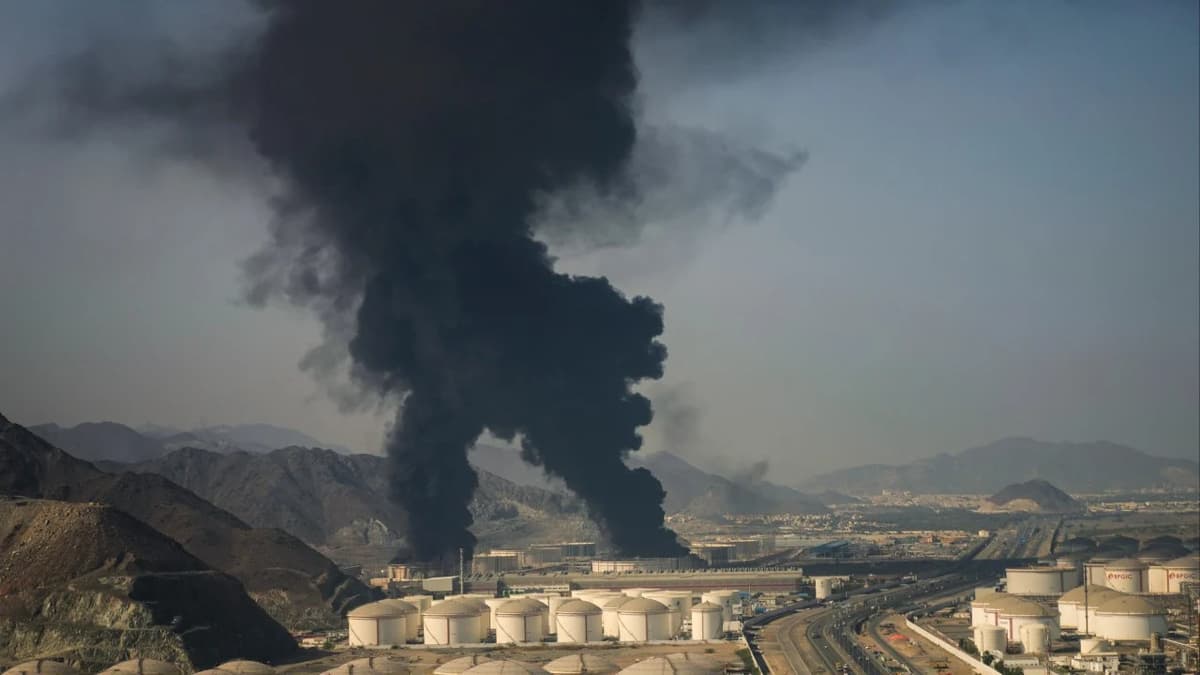
Why the UAE’s Opec Exit Spells the Beginning of the End of Gulf Unity
Why It Matters
UAE’s exit signals that security alliances, not quota discipline, now drive Gulf energy politics, reshaping market stability and geopolitical risk for oil‑importing economies.
Key Takeaways
- •UAE exits OPEC after three‑day notice, citing security, not quotas
- •Israel’s Iron Dome defended Emirati airspace – first non‑U.S. deployment
- •UAE breakeven price <$50/barrel vs Saudi’s >$90 creates strategic split
- •Asian energy planners must reassess Gulf risk after UAE’s realignment
Pulse Analysis
The United Arab Emirates’ abrupt departure from OPEC marks a watershed moment for the Gulf’s oil cartel. Historically, OPEC functioned as a political alliance where post‑colonial states pooled sovereignty to counter Western dominance. The UAE’s decision, however, was driven by a new security calculus forged after the Abraham Accords, where Israel’s Iron Dome system was positioned to shield Emirati skies. This unprecedented cooperation undermines the assumption that Gulf members share a common threat environment, a cornerstone of OPEC’s cohesion.
Financial realities amplify the geopolitical shift. The UAE can sustain production at a breakeven price below $50 per barrel, prompting it to prioritize volume ahead of price support. Saudi Arabia, by contrast, needs oil above $90 to fund Vision 2030, maintain social contracts, and preserve domestic stability. The divergent fiscal thresholds make coordinated quota enforcement untenable, pushing Saudi Arabia to rely on its swing‑producer status while the UAE seeks unrestricted output. This split erodes the traditional price‑discipline mechanism that kept the cartel functional and raises questions about the future of Gulf unity.
The ripple effects extend far beyond the Middle East. China, which routes 37.7% of its crude through the Strait of Hormuz, and Japan, which sources roughly 90% of its energy from Gulf nations, have built energy‑security strategies on the premise of a unified OPEC. The UAE’s alignment with the U.S.–Israel axis and its potential to pump at full capacity reshapes both supply arithmetic and geopolitical risk assessments. Asian policymakers will need to recalibrate Belt and Road calculations and hedge against a more fragmented Gulf, while investors watch for how OPEC adapts to a landscape where security, not quota math, dictates participation.
Why the UAE’s Opec exit spells the beginning of the end of Gulf unity
Comments
Want to join the conversation?
Loading comments...