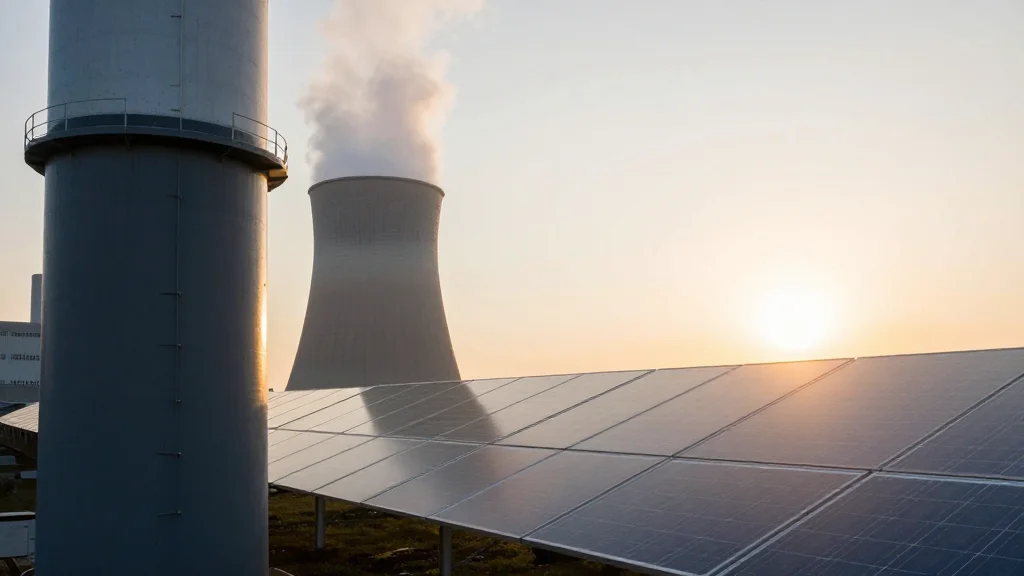
Why Would Someone Prefer Coal Power Over Solar & Wind?
Why It Matters
The subsidy reveals how policy, not economics, can distort energy markets, slowing the transition to lower‑cost, zero‑carbon power. Understanding this bias is critical for investors and policymakers aiming to meet climate goals.
Key Takeaways
- •Coal receives $700 million federal subsidy despite higher generation costs
- •Renewables now cheaper and faster to deploy than new coal plants
- •Political backing, not economics, keeps aging coal plants online
- •Surveys show majority of Americans prefer solar and wind energy
- •Trump administration's policies slow renewable growth while subsidizing coal
Pulse Analysis
The United States has revived coal through a $700 million subsidy, a move that runs counter to the clear cost advantage of solar and wind. Recent levelized cost analyses show utility‑scale solar at roughly $30 per megawatt‑hour, while new coal projects exceed $60 per megawatt‑hour when accounting for fuel, emissions compliance, and financing. By injecting taxpayer money into an outdated technology, the policy creates a market distortion that benefits a narrow set of legacy operators while inflating overall electricity costs for consumers.
Public sentiment aligns with the economics: nationwide polls consistently rank clean energy as the preferred source for new power generation. States such as Missouri, Ohio, and Arizona are witnessing rapid renewable deployments, driven by lower capital expenditures and shorter construction timelines. Meanwhile, coal’s environmental externalities—air pollution, greenhouse gas emissions, and water usage—remain a growing liability for regulators and investors. The juxtaposition of political subsidies against market realities underscores a widening gap between policy rhetoric and consumer demand.
Looking ahead, the sustainability of coal subsidies is doubtful. As financial institutions tighten lending standards for high‑emission projects and corporate ESG commitments intensify, coal’s access to capital will likely erode. Policymakers face a choice: realign incentives to reinforce the cost trajectory favoring renewables, or risk perpetuating an uneconomic, polluting sector. For investors, the signal is clear—long‑term value resides in solar, wind, and emerging storage technologies, not in propping up a declining coal industry.
Why Would Someone Prefer Coal Power Over Solar & Wind?
Comments
Want to join the conversation?
Loading comments...