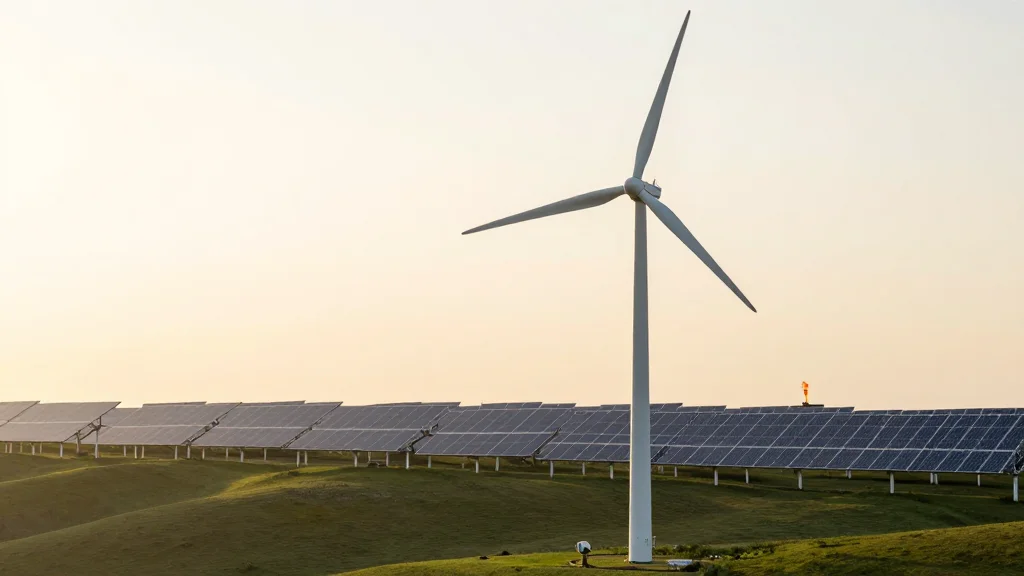
Wind and Solar Generate More Power Than Gas Globally in April, Data Shows

Companies Mentioned
Why It Matters
The April 2026 crossover marks the first time renewable sources have outpaced gas on a global monthly basis, signaling a potential inflection point for the energy transition. If renewables can reliably fill gaps left by volatile gas supplies, investors may accelerate capital toward wind and solar projects, reshaping the power‑generation landscape. For fossil‑fuel markets, the shift introduces pricing pressure on natural‑gas exporters and could hasten the decline of long‑term gas‑of‑ft‑contract volumes. Policymakers may also feel heightened urgency to lock in renewable subsidies and grid‑integration measures to sustain the momentum, especially as geopolitical risks continue to affect fuel availability.
Key Takeaways
- •Wind and solar generated 22% of global electricity in April 2026, overtaking gas at 20%
- •Ember analyst Kostantsa Rangelova linked the crossover to the energy crisis and gas price spikes
- •Strait of Hormuz disruption removed about 20% of global LNG capacity, driving the shift
- •Coal usage rose alongside renewables, highlighting affordability as a key driver
- •Bob McNally warned that volatile oil prices could swing demand for EVs and gasoline
Pulse Analysis
The April data point is less a one‑off anomaly and more a symptom of structural change. Over the past decade, wind and solar capacity has grown at double‑digit rates, but the sector has struggled to displace baseload generation due to intermittency and grid constraints. The current gas supply shock forced utilities to lean on whatever capacity was available, and the rapid deployment of solar farms—often built in months rather than years—provided a quick fix. This demonstrates that renewables have reached a critical mass where they can act as a flexible buffer, not just a long‑term replacement.
Historically, gas has been the bridge fuel for many economies transitioning away from coal. The present episode suggests that bridge‑fuel status may be more fragile than previously thought, especially when geopolitical events curtail supply. If gas prices remain volatile, investors could re‑price the risk of new gas‑fired plants, favoring modular renewable projects and storage solutions. The coal uptick, however, warns that without clear cost parity, renewables alone cannot guarantee a clean‑energy future; policy and market mechanisms must continue to address the price gap.
Looking ahead, the durability of this crossover will hinge on three factors: the speed of LNG flow restoration, the rollout of grid‑scale storage, and the pace of new renewable capacity coming online. Should any of these lag, gas could quickly reclaim its share. Conversely, sustained investment in offshore wind, solar PV, and battery storage could lock in a new baseline where renewables consistently outpace gas, reshaping global energy geopolitics and accelerating climate‑goal attainment.
Wind and Solar Generate More Power Than Gas Globally in April, Data Shows
Comments
Want to join the conversation?
Loading comments...