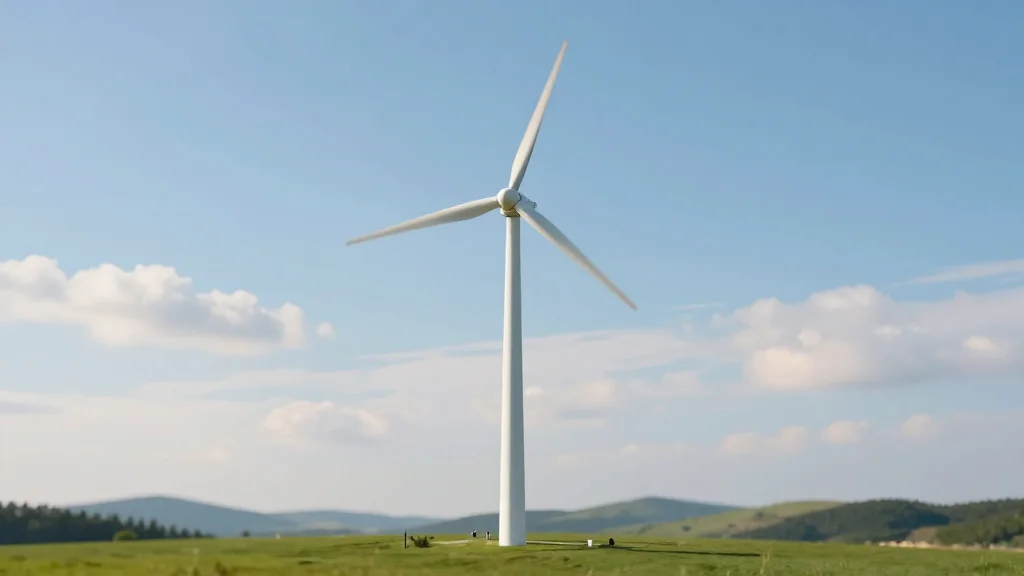
Wind Energy Growth in Germany Rises by Nearly 50 Percent in the First Quarter of 2026 - Wind Power Generation Increases Significantly
Companies Mentioned
Why It Matters
The surge accelerates Germany’s renewable‑energy targets and signals robust demand for offshore wind assets, reshaping the European power market. Investors and policymakers see clearer pathways to decarbonisation and grid integration.
Key Takeaways
- •228 turbines added, 1,533 MW capacity, 49% YoY growth.
- •Offshore installations rebounded with 36 turbines, 468 MW added.
- •Net capacity gain 1,295 MW after decommissioning 238 MW.
- •Wind generation up 27% YoY to 42.8 billion kWh.
- •North Rhine‑Westphalia leads onshore with 332 MW added.
Pulse Analysis
Germany’s wind power landscape entered 2026 with a pronounced acceleration, delivering 1,533 MW of new capacity in the first quarter. While onshore growth mirrored the previous year, the offshore segment rebounded dramatically after a zero‑installation quarter, contributing 468 MW from 36 turbines. This dual‑track expansion lifted total wind generation by 27.4% year‑on‑year, underscoring the sector’s resilience amid favorable wind patterns and a strong pipeline of projects slated for completion later in the year.
Regional dynamics reveal a clear hierarchy among the Länder. North Rhine‑Westphalia topped onshore additions with 332 MW, followed closely by Lower Saxony and Schleswig‑Holstein, reflecting concentrated investment in northern and western corridors where wind resources are abundant. Offshore, the Borkum Riffgrund 3 and EnBW He Dreiht farms are on track for full operation in 2026, together representing nearly 2 GW of capacity once completed. These projects, featuring Siemens’s 11 MW and Vestas’s 15 MW turbines, illustrate the scaling of turbine size and the shift toward higher‑output installations that improve economies of scale.
The broader implication for the German energy transition is significant. The net capacity addition of 1,295 MW, after accounting for decommissioned units, narrows the gap to the nation’s 2030 renewable targets and bolsters grid stability as wind generation becomes a larger share of total electricity supply. For investors, the revived offshore momentum signals attractive long‑term returns and a fertile environment for supply‑chain partners, while policymakers gain leverage to refine subsidy frameworks and grid‑integration strategies. As Germany pushes toward a carbon‑neutral future, the Q1 2026 wind performance sets a benchmark for sustained growth and deeper market confidence.
Wind Energy Growth in Germany Rises by Nearly 50 Percent in the First Quarter of 2026 - Wind Power Generation Increases Significantly
Comments
Want to join the conversation?
Loading comments...